In the dynamic landscape of metalworking, the demand for diverse cross-sectional shapes has been on a constant rise. As a supplier of Metal Sheet Roll Cold Rolling Forming Equipment, I’ve witnessed firsthand the transformative capabilities of our machinery in shaping metal sheets into a multitude of configurations. This blog aims to delve into the question: Can metal sheet roll cold rolling forming equipment form different cross-sectional shapes? Let’s explore the science, technology, and practical applications behind this fascinating process. Metal Sheet Roll Cold Rolling Forming Equipment
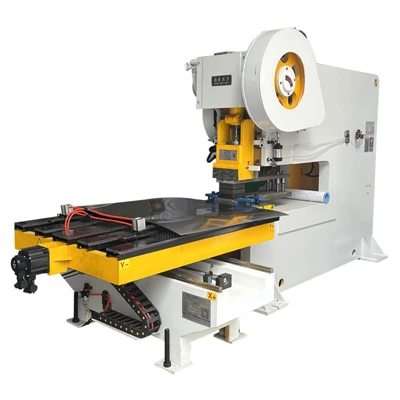
Understanding Cold Rolling Forming
Cold rolling forming is a manufacturing process that involves passing a metal sheet through a series of rollers to gradually shape it into a desired cross-sectional profile. Unlike hot rolling, which is performed at elevated temperatures, cold rolling is carried out at room temperature. This process offers several advantages, including improved surface finish, higher dimensional accuracy, and enhanced mechanical properties of the formed metal.
The key to the versatility of cold rolling forming equipment lies in the design of the roller sets. Each roller set is carefully engineered to impart a specific shape to the metal sheet as it passes through. By adjusting the shape, size, and arrangement of the rollers, it is possible to create a wide range of cross-sectional shapes, from simple profiles like channels and angles to complex geometries such as tubes and custom-designed sections.
Factors Influencing the Formation of Different Cross-Sectional Shapes
Several factors play a crucial role in determining the ability of metal sheet roll cold rolling forming equipment to form different cross-sectional shapes. These factors include:
Material Properties
The type of metal used in the cold rolling process has a significant impact on its formability. Different metals have varying levels of ductility, strength, and hardness, which can affect how easily they can be shaped into different cross-sectional profiles. For example, metals like aluminum and stainless steel are known for their high ductility, making them ideal for forming complex shapes. On the other hand, harder metals such as carbon steel may require more force and specialized tooling to achieve the desired shape.
Roller Design
The design of the rollers is another critical factor in determining the range of cross-sectional shapes that can be formed. The shape and contour of the rollers must be carefully tailored to the specific requirements of the desired profile. For example, rollers with a smooth, rounded surface are suitable for forming curved shapes, while rollers with a more angular design are better suited for creating sharp edges and corners. Additionally, the number and arrangement of the rollers in the forming line can also affect the complexity of the cross-sectional shape that can be achieved.
Process Parameters
The process parameters, such as the speed of the rollers, the pressure applied to the metal sheet, and the temperature of the forming process, also play a crucial role in determining the quality and accuracy of the formed cross-sectional shape. These parameters must be carefully optimized to ensure that the metal sheet is formed smoothly and without any defects. For example, if the speed of the rollers is too high, it can cause the metal sheet to deform unevenly, resulting in a poor-quality finished product.
Examples of Different Cross-Sectional Shapes Formed by Cold Rolling
To illustrate the versatility of metal sheet roll cold rolling forming equipment, let’s take a look at some examples of different cross-sectional shapes that can be formed using this process:
Channels and Angles
Channels and angles are some of the most common cross-sectional shapes formed by cold rolling. These shapes are widely used in construction, automotive, and other industries for structural applications. Cold rolling forming equipment can easily produce channels and angles with a variety of sizes and dimensions, making them suitable for a wide range of applications.
Tubes and Pipes
Cold rolling is also commonly used to form tubes and pipes. By passing a metal sheet through a series of rollers, it can be gradually shaped into a tubular or pipe-like structure. The diameter, wall thickness, and length of the tubes and pipes can be easily adjusted to meet the specific requirements of the application.
Custom-Designed Sections
In addition to standard shapes like channels, angles, tubes, and pipes, cold rolling forming equipment can also be used to create custom-designed sections. These sections can be tailored to the specific needs of the customer, allowing for greater flexibility and innovation in product design. For example, custom-designed sections can be used in the aerospace, automotive, and other industries to create lightweight, high-strength components.
Applications of Cold Rolled Shapes
The ability to form different cross-sectional shapes using cold rolling forming equipment has a wide range of applications across various industries. Some of the key applications include:
Construction
In the construction industry, cold rolled shapes are used for a variety of structural applications, such as beams, columns, and trusses. These shapes provide high strength and durability, making them ideal for use in buildings, bridges, and other infrastructure projects.
Automotive
In the automotive industry, cold rolled shapes are used to manufacture a variety of components, such as body panels, frames, and suspension parts. These shapes offer excellent formability and strength, allowing for the production of lightweight and fuel-efficient vehicles.
Aerospace
In the aerospace industry, cold rolled shapes are used to manufacture critical components, such as wings, fuselages, and landing gear. These shapes must meet strict quality and performance standards, and cold rolling forming equipment provides the precision and accuracy required to produce these components.
Manufacturing
In the manufacturing industry, cold rolled shapes are used to produce a wide range of products, such as furniture, appliances, and machinery. These shapes offer a cost-effective and efficient way to produce high-quality products with complex geometries.
Conclusion

In conclusion, metal sheet roll cold rolling forming equipment is capable of forming a wide range of different cross-sectional shapes. The versatility of this process is due to the careful design of the roller sets, the optimization of the process parameters, and the selection of the appropriate metal material. By leveraging the capabilities of cold rolling forming equipment, manufacturers can produce high-quality products with complex geometries, meeting the diverse needs of various industries.
Molding Main Unit If you are interested in learning more about our Metal Sheet Roll Cold Rolling Forming Equipment or discussing your specific requirements, please feel free to contact us. Our team of experts is ready to assist you in finding the right solution for your business.
References
- ASM Handbook, Volume 14A: Metalworking: Bulk Forming. ASM International.
- Cold Rolled Steel Products Manual. Steel Market Development Institute.
- Metal Forming Handbook: A Practical Guide to Sheet Metal Forming Processes and Die Design. McGraw-Hill Education.
Wuxi Yuanding Machinery Manufacturing Co., Ltd.
We’re well-known as one of the leading metal sheet roll cold rolling forming equipment manufacturers and suppliers in China, also support customized service. Please feel free to buy advanced metal sheet roll cold rolling forming equipment made in China here from our factory. For pricelist, contact us now.
Address: Yaguang Industrial Park, No. 88 Chaoyang South Road, Xishan District, Wuxi City, Jiangsu Province
E-mail: 13861798466@163.com
WebSite: https://www.wxyuanding.com/
