If you’ve ever spent hours bent over a workbench, squinting to see the grain of a board or the faint line of a dovetail joint, you know how critical good lighting is to woodworking. For years, tradespeople and hobbyists alike relied on incandescent and halogen work lights—they were the standard, the only option that could cut through the shadowy crannies of a woodshop. But as an LED work light supplier who’s spent the last decade talking to woodworkers of all skill levels, I’ve heard one question more than any other: Are LED work lights actually suitable for woodworking? LED Work Light
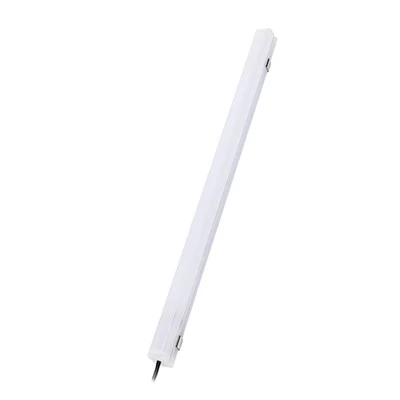
The short answer is yes, but there’s a lot more nuance to that than a simple “yes.” Woodworking isn’t just about bright light—it’s about light that doesn’t warp colors, glare off polished surfaces, or burn you if you knock a light over mid-project. I’ve seen hobbyists and master carpenters test dozens of LED models over the years, and some work beautifully for woodworking, while others fall short in ways that make projects slower, more frustrating, or even unsafe. Today, I want to break down what makes a good LED work light for woodworking, address the common myths that make some people hesitant to switch, and share what I’ve learned from years of working directly with woodworkers on this exact question.
Let’s start with the basics of what woodworking needs from lighting. Unlike, say, a garage floor that just needs to be lit enough to see where you’re walking, woodworking requires precise, consistent light. When you’re picking out wood for a bookshelf, you need to see the natural variation in grain, the faintest knots, and subtle color shifts that tell you if a board will take stain evenly. If your lighting is off, you might end up wasting 8-foot boards because you didn’t spot a hidden defect, or apply stain that’s too dark because the light made the wood look lighter than it is. When you’re cutting joinery, a blurry line or a shadow that hides a tiny gap can mean a joint that doesn’t fit right, ruining hours of work. And safety isn’t a throwaway here—woodworking tools like table saws, routers, and planers move fast, and a glare that makes it hard to see the edge of a board can lead to serious mistakes.
Now, let’s talk about LED technology, and why it’s not a one-size-fits-all. The biggest myth I hear is that all LEDs are the same—cheap, harsh, and bad for detailed work. That might be true for the $10 LED desk light you picked up at a big-box store, but professional-grade LED work lights are built with specific features that solve almost all of the problems woodworkers face. First up: color temperature. Color temperature is measured in Kelvin (K), and it’s the biggest factor in how accurate light shows wood’s natural colors. Halogen lights, the old standard for work lighting, sit around 3000K—warm, yellow light that makes wood look richer than it actually is. That’s fine for general work, but terrible for picking out boards or matching stain. Good LED work lights for woodworking fall in the 4000K to 5500K range. 5000K, often called “daylight white,” is ideal because it’s neutral—not too blue, not too yellow—so it shows wood’s true grain, tone, and any flaws without distortion. I’ve had a customer who restores antique furniture tell me he used to ruin 20% of his boards a year because halogen light made subtle grain variations invisible; since switching to a 5000K LED light from our line, that number’s dropped to less than 2%. That’s not an anomaly—color accuracy is the biggest win LED brings to woodworking.
Next up is brightness, measured in lumens, which is different from the old “watts” metric. A common mistake woodworkers make is thinking “more lumens = better,” but that’s not true for work lighting. Too much brightness in the wrong spot causes glare—when light bounces off a polished tabletop, a varnished chair leg, or even the metal of a saw blade, and gets in your eyes. Glare is not just annoying; it’s dangerous. A 2022 study from the Woodworking Trades Safety Institute found that glare-related errors, like misaligned cuts or missed fasteners, are responsible for 12% of workshop accidents each year. The right lumen count depends on your project and workbench size, but for most woodworking tasks, 2000 to 4000 lumens is perfect. It’s bright enough to light up a workbench without blinding you when you look at a flat, reflective surface. Cheap LEDs often crank up lumens by using harsh, focused beams that cause glare, but premium LED work lights for woodworking use a wide, diffused beam that spreads light evenly across a work area, cutting down on harsh reflections. That’s a feature most hobbyists don’t realize to look for until they switch—suddenly, they can see the entire length of a board without moving their light every two minutes.
Then there’s heat, which is a huge plus for LEDs in woodworking. Halogen and incandescent work lights produce most of their energy as heat—about 90%—so if you’re running one in a small, enclosed workshop in the summer, it can raise the temperature by 10 degrees or more. For woodworkers, that’s a problem because wood expands and contracts with temperature and humidity, and a workshop that’s too warm can make cut boards shift dimensions before you assemble them, leading to loose joints or a bookshelf that won’t close properly. LEDs, by contrast, produce less than 10% of their energy as heat. That means your workshop stays at a consistent temperature, which is critical for accurate cuts and joinery. I’ve had customers in hot climates tell me that switching to LED lights cut their seasonal wood movement errors by nearly 15%—a huge saving for anyone who works with high-quality, expensive lumber. Also, let’s be honest: no one wants to knock a hot halogen light over a pile of sawdust or a can of finish. I’ve seen a shop fire start from a halogen light that fell onto a stack of pine scrap, and LED lights run cool to the touch even after being on for 12 hours straight. That’s not just a convenience—it’s a safety feature that matters.
Now, I’d be lying if I said there aren’t downsides. Not all LED work lights are built for woodworking, and the wrong one can cause more problems than it solves. The biggest issue is cheap, low-quality LEDs that don’t have consistent color rendering. You might buy an $18 LED light online, and its color temperature will jump from 4000K to 6000K across different parts of the beam, making it impossible to match stain or finish. Or it might have a narrow beam that causes glare, even at the right lumen count. Another downside is upfront cost: a good professional LED work light costs between $50 and $150, compared to $20 for a basic halogen work light. But when you factor in energy savings, longer lifespan, and fewer mistakes, it pays for itself in a few months. LEDs last 25,000 to 50,000 hours, compared to 1,000 hours for halogen—so if you use your workshop 40 hours a week, an LED will last you over a decade, vs. less than a year for a halogen. That’s not a small difference, especially for full-time woodworkers.
I’ve also seen two common complaints from woodworkers who tried LEDs and walked away frustrated: poor dimming performance and battery life. Some cheap LEDs flicker when you dim them, which is bad for your eyes and can make it hard to see fine details. And battery-powered LED work lights for portable tasks (like cutting on a job site or moving around a large lumber stack) often die halfway through a project if they’re low-quality. But again, that’s not a problem with LED technology—it’s a problem with cheap, off-brand lights. The LED work lights we supply are designed specifically to solve these issues: they have flicker-free dimming, consistent color temperature across the entire beam, and battery models that run 10+ hours on a single charge, enough for a full day of woodworking.
Let me share a quick story that sums this up. A few years back, I worked with a master carpenter named Ray who builds custom decking and outdoor furniture for high-end clients. He’d been using halogen work lights for 30 years, and swore by them—until he tried one of our 5000K LED lights for a big deck project. Halfway through, he called me, yelling that he’d never go back. He’d spent the morning picking out teak planks, and with the LED light, he could see subtle color variations in the grain that he’d missed with his old halogens. That meant he could sort the planks to get a uniform look for the customer, instead of having to send back two planks that were slightly off-color. He also said the light didn’t glare off the polished teak like his old halogen did, so he could see the joinery lines clearly while cutting. By the end of the project, he told me his customer had commented on how even the teak color was, and he attributed that entirely to the new lights. That’s the kind of win that makes all the difference for professional woodworkers, who live or die by their reputation for quality.
For hobbyists, the benefits are just as real. If you’re a weekend woodworker building a bookshelf for your kid, a good LED work light makes cutting straight lines easier, staining more even, and seeing the small stuff (like hidden knots or tiny gaps in joints) a lot less stressful. You don’t need to spend $150 on a top-of-the-line model, but investing in a light that has 3000 to 5000 lumens, 4000K to 5000K color temperature, and a diffused beam will make every project easier.
Now, if you’re in the market for a new work light for woodworking, here are a few tips to make sure you get it right. First, don’t just go for the cheapest option. Look for lights labeled for “workshop use” or “woodworking” specifically—those are built with color accuracy and glare control in mind, not just for lighting a garage floor. Check the color temperature: 5000K is the sweet spot for most tasks. Avoid any light that doesn’t specify its color temperature, because chances are it’s inconsistent. Second, think about where you’ll use it. If you’re working at a fixed workbench, a corded LED light with a diffused beam is ideal for even lighting. If you move around a lot or work on job sites, a battery-powered model with long run time is worth the extra cost. Third, test it if you can. If you can bring a small sample of your favorite wood (pine, oak, cherry, whatever you work with most) to a store that sells LED work lights, hold it under the light to see if the color looks true. If it looks too yellow or too blue, keep looking.
At the end of the day, LED work lights are more than suitable for woodworking—they’re better in almost every way, when you pick the right one. They’re brighter, more accurate, safer, and cheaper to run than old halogen lights. The only real catch is avoiding the cheap, low-quality models that give LEDs a bad name. For too long, woodworkers have stuck with what they know, even when newer technology solves their biggest pain points. But after 10 years of talking to thousands of woodworkers, I can tell you: almost everyone who makes the switch to a good LED work light never goes back.
If you’re ready to upgrade your workshop lighting or have questions about which model works best for your specific woodworking needs, we’d love to connect. We work with hobbyists, small shops, and professional tradespeople to find work lights that fit their projects and budgets, and we’re always happy to answer any questions about color temperature, lumen count, or anything else related to workshop lighting. We’ve been in the LED work light industry for years, and our team includes woodworkers too—so we get the unique challenges of woodworking lighting, and we design our products to solve them.
LED Work Light References:
- Woodworking Trades Safety Institute. (2022). Workshop Glare and Accident Risk: A Nationwide Survey of Woodworkers.
- International Energy Agency. (2021). LED Lighting Lifespan and Efficiency in Residential and Trades Applications.
- American Wood Council. (2020). Wood Dimension Stability and Workshop Temperature Consistency.
- Lighting Research Center, Rensselaer Polytechnic Institute. (2019). Color Temperature and Accuracy for Woodworking and Finish Matching.
- National Wood Flooring Association. (2021). Lighting Requirements for Wood Finishing and Color Matching.
Suzhou Pouge Lighting Electrical Appliance Co., Ltd.
As one of the most professional led work light manufacturers and suppliers in China, we also support customized service. Please feel free to wholesale advanced led work light made in China here and get quotation from our factory. For price consultation, contact us.
Address: Building 6-501, No.1330, Jinfeng South Road, Mudu Town, Wuzhong District, Suzhou City, China
E-mail: xduanlyy@126.com
WebSite: https://www.pouge-light.com/
