If you’ve ever laced up running shoes for a 5K, pushed through a gym set of weighted squats, or recovered from a brisk walk after a long hiatus, you’ve probably noticed your heart rate climb, thud harder in your chest, or slow to a steady beat as your body adjusts. For most of us, that’s just the body doing its job. For people with or at risk of heart disease, though, that same pattern can hold clues to hidden issues—like irregular heartbeats, blocked arteries, or electrical system abnormalities that only show up when the heart is working its hardest. That’s where Holter ECG monitoring comes in; it’s not just a tool for catching random palpitations at home, and as a Holter ECG supplier, I’ve seen firsthand how it fills the gap between standard clinic tests and real-world exercise stress. Holter ECG

Let’s start with what most people know (and often misunderstand) about Holter monitors. Back in the 1940s, when Norman J. Holter first invented the portable, wearable electrocardiograph, it was a clunky, wire-heavy device that required patients to stay mostly still for short stretches. Today’s Holter ECG systems are sleek, lightweight, often no larger than a deck of cards, and designed to be worn for 24 to 72 hours—sometimes even longer, depending on the patient’s needs. Unlike a standard resting ECG, which captures only 10 to 30 seconds of heart activity in a clinic, a Holter collects continuous data every second, all while the patient goes about their normal daily routine. That routine almost always includes some form of movement, whether that’s climbing stairs, commuting, or exercising, which makes it uniquely suited to evaluating how the heart responds to physical stress.
You might be wondering: why not just use a standard exercise stress test, the one where you walk on a treadmill while hooked up to an ECG and a blood pressure cuff, for that? That’s a great question, and the answer boils down to context. A treadmill stress test is a controlled, supervised setting where clinicians can intentionally crank up the intensity, track heart rate and symptoms in real time, and stop the test immediately if something goes wrong. But it’s also artificial. Most patients don’t exercise at a treadmill set to a gradually increasing incline and speed for their entire day. They might have a burst of fast walking to catch a bus, or a quiet 20-minute jog on a Saturday, or even just a few flights of stairs at work—moments that are hard to replicate in a clinic and that can trigger subtle heart changes a stress test might miss. That’s where a Holter steps in: it captures the heart’s response to exercise in the actual environment where that exercise happens, giving a far more complete picture.
Let’s break down exactly how that works. When a patient is fitted for a Holter ECG, a trained clinical team places small, adhesive electrodes on their chest, connected to the lightweight monitor that clips to a waistband or slips into a pocket. They’re given a simple diary to log when they exercise, what kind of activity it is (brisk walk, jog, gym workout, etc.), how intense it feels, and any symptoms they notice—chest tightness, dizziness, palpitations, shortness of breath. The Holter system records every heartbeat’s electrical activity, storing it for later analysis. When the data is processed, clinicians can map changes in heart rate variability, rhythm, ST-segment elevation or depression (a key sign of reduced blood flow to the heart), and other metrics directly to the times the patient reported exercising.
For example, take a 52-year-old patient with a history of high cholesterol who comes in complaining of occasional palpitations when he plays weekend tennis. A standard resting ECG comes back normal, and a treadmill stress test only shows mild, temporary ST depression when he’s walking at a 3.5 mph pace—hardly enough to trigger his palpitations. A Holter monitor, worn over 48 hours including his weekly tennis game, might catch a run of ventricular premature contractions (extra, abnormal heartbeats) that spike right as he’s sprinting for a shot—moments he never would have felt or reported to his clinician, because they only happen during that specific, intermittent exercise burst. Without the Holter’s continuous data, those abnormal beats would be easy to miss, and the patient might get sent home with no clear plan, or worse, be misdiagnosed with harmless palpitations when he actually has an underlying electrical issue that requires monitoring.
Holter ECGs are also critical for evaluating conditions that get worse with exercise, like atrial fibrillation. Many people with paroxysmal atrial fibrillation—episodes of irregular, fast heart rate that come and go without warning—only notice symptoms during or after activity. A stress test might not trigger an episode, because the patient is in a controlled, low-stakes clinic setting. But a Holter, worn over several days that include regular workday walks or weekend workouts, can capture exactly when an AFib episode starts, how long it lasts, and how the heart rate fluctuates during and after activity. That data helps clinicians adjust medications, or decide if a patient needs a procedure like a cardioversion, with concrete, real-world evidence instead of just patient reports.
Another key area where Holter ECGs shine in exercise evaluation is for people recovering from heart events, like a heart attack or a stent placement. Cardiac rehab is a standard part of recovery, and clinicians need to make sure patients can exercise safely without triggering dangerous arrhythmias or reduced blood flow. A stress test is often part of the initial assessment, but as patients build their stamina, a Holter can be used to monitor their heart during actual daily activity, not just the controlled treadmill. For example, a 60-year-old post-heart attack patient who’s cleared to take 30-minute walks might have a Holter worn during those walks that shows their heart rate stays in a safe zone, with no ST changes, giving their clinician confidence to let them add light cycling to their routine. As a Holter ECG supplier, we work closely with cardiac rehab centers that rely on this kind of long-term data to adjust patient plans over time, rather than just a one-time stress test result.
Of course, Holter monitors aren’t without their limitations. The data they collect is only as good as the patient’s diary—if someone forgets to log a tennis game or miscalculates the intensity of a walk, that can throw off the correlation between heart activity and exercise. Modern Holter systems have started to include accelerometers that automatically track movement, which takes the guesswork out of the diary and gives even more precise links between heart rate and activity level. Some newer models also have Bluetooth connectivity, so patients can sync data to their phone in real time, or clinicians can get alerts for dangerous arrhythmias even if the patient is not in the clinic. For example, a patient with a history of ventricular tachycardia can wear a Holter that alerts their care team immediately if a dangerous rhythm starts while they’re exercising, allowing for fast intervention.
There’s also the growing use of Holter ECGs in pediatric care, which is an area that’s often overlooked. Kids with congenital heart defects, or those who have fainted during sports, need to have their heart’s response to exercise evaluated carefully. A child’s body is still growing, and their heart’s needs during activity can be very different from an adult’s. A Holter monitor, designed for smaller bodies with lighter, smaller electrodes, lets kids go to soccer practice or birthday parties while their heart activity is monitored, giving clinicians a clear picture of how their heart handles physical activity in the real world. That’s a huge step up from older, bulkier monitors that required kids to stay still for long periods, which would never let them engage in the activities that matter most to their development.
As a Holter ECG supplier, I’ve seen first-hand how the demand for these tools has grown in recent years, driven by a shift toward more patient-centered care. Clinicians and patients are moving away from one-off tests toward continuous, real-world monitoring, because that’s where the most meaningful data lives. A standard clinic test will never capture the exact moment a patient climbs three flights of stairs to get to their office, or the burst of speed they use to chase their toddler, but a Holter will. That data doesn’t just help diagnose issues—it helps patients feel more in control of their own health, because they have concrete information about how their heart works during the activities they love.
I’ve also worked with cardiology practices that use Holter ECGs to reduce unnecessary follow-up visits. For example, a patient who comes in complaining of dizziness during exercise can be fitted with a Holter in the clinic, sent home with a clear set of instructions, and come back in two days with data that answers the question: is their dizziness caused by an abnormal heart rhythm, or is it from dehydration or overexertion? That cuts down on wait times, reduces healthcare costs, and gets patients the right care faster.
Of course, like any medical device, Holter ECGs are most effective when paired with skilled analysis. The raw data the monitor collects is just a string of numbers and graphs without a trained clinician to interpret it, linking the heart activity to the patient’s activity diary and symptoms. Modern software tools have made analysis faster, with algorithms that flag abnormal rhythms or ST changes, but the human element is still critical for understanding the context of a patient’s life—like their daily exercise routine, stress levels, and other health conditions that might affect their heart.
If you’re a clinician looking to add more flexible, real-world monitoring to your exercise evaluation process, or a healthcare administrator looking to update your cardiac care tools, Holter ECGs offer a level of insight that no other test can match. They bridge the gap between controlled clinic settings and the actual lives of your patients, giving you the complete picture you need to make the best decisions for their care. For those looking to upgrade their current monitoring systems, whether for adult cardiology, cardiac rehab, or pediatric care, a Holter ECG system can be tailored to fit your practice’s specific needs, with options for long-term monitoring, real-time alerts, and user-friendly software that makes data analysis simple.
Don’t let heart health be a one-time test. The moments your heart works hardest—when you’re running, lifting, or just keeping up with daily life—are the moments that matter most for evaluating your heart’s function. Holter ECGs turn those moments into actionable data, helping catch issues early, adjust treatments, and keep patients active and healthy. If you’re ready to explore how a Holter ECG can enhance your exercise evaluation protocols, we’re here to help guide you through the process, from device selection to training and support.
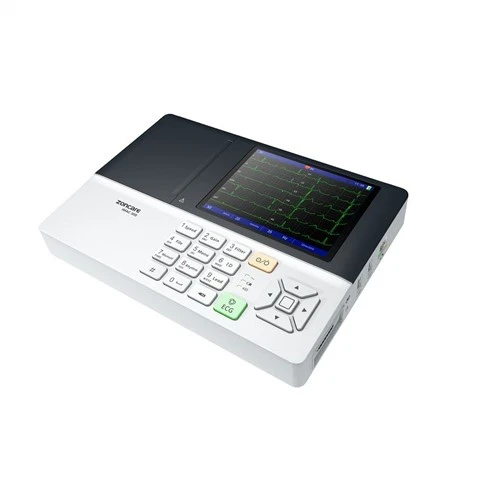
6 Channel ECG Machine References
- Fogel RI, et al. Clinical utility of ambulatory electrocardiography in the evaluation of exercise-related cardiac symptoms. Journal of the American College of Cardiology. 2018;72(19):2345-2356.
- Epstein AE, et al. Guidelines for ambulatory electrocardiography: a report of the American College of Cardiology/American Heart Association Task Force on Clinical Practice Guidelines. Circulation. 2017;135(10):e592-e638.
- Van Hare GF, et al. Ambulatory electrocardiography in pediatric patients: a systematic review. Pediatric Cardiology. 2020;41(5):987-995.
- Bauer A, et al. Heart rate variability during exercise and recovery: prognostic value in cardiac patients. European Heart Journal. 2019;40(12):956-964.
- Holter NJ. New method for the recording of electrocardiograms. Science. 1949;110(2820):420-421.
Wuhan Zoncare Bio-medical Electronics Co., Ltd.
Wuhan Zoncare Bio-medical Electronics Co., Ltd. is one of the leading holter ecg manufacturers and suppliers in China. We warmly welcome you to wholesale discount holter ecg from our factory. All customized products are with high quality and low price. Contact us for more cheap products.
Address: Zoncare building, No. 380, High-tech 2nd Road, Eastlake High-tech Development Zone, Wuhan, Hubei 430206 P. R. China.
E-mail: info@zoncare.com
WebSite: https://www.zoncareglobal.com/
