As someone who’s spent the last decade working as an industrial fan regulator supplier—meeting with plant managers, maintenance teams, and operations directors across industries from food processing to metal fabrication—I can’t tell you how often this question comes up: “What’s the safe operating temperature range for an industrial fan regulator?” It’s not a trivial question. Push a regulator beyond its thermal limits, and you’re not just risking downtime; you’re risking damaged equipment, unsafe working conditions, and costly production delays. Today, I’m breaking down the science, the real-world caveats, and how as a supplier, we design our regulators to handle the environments you rely on them for. Industrial Fan Regulator
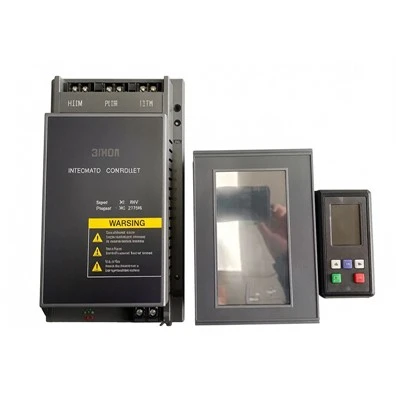
First, let’s start with the basics: an industrial fan regulator is far more than the wall-mounted dial you might have in your home. It’s a precision electronic (or, for heavy-duty use, electromechanical) device that controls fan speed, airflow, and energy consumption for industrial ventilation systems, exhaust fans, and HVAC units in large facilities. Its core components—capacitors, semiconductors, resistors, and wiring—are all sensitive to temperature. Unlike consumer fans, which sit in climate-controlled spaces, industrial regulators are often mounted in unheated warehouses, outdoor utility closets, or near hot machinery like furnaces or boilers. That’s why their operating temperature range isn’t a random number; it’s a balance of component durability, regulatory standards, and real-world performance.
When we design an industrial fan regulator, we follow two key sets of standards: IEC 60947 (Low-voltage switchgear and controlgear) and ANSI/UL 508 (Industrial control equipment). These standards don’t just pick a temperature range out of thin air. For most general-purpose industrial fan regulators, the standard operating temperature range is -10°C (14°F) to 50°C (122°F). Wait, that’s a big span—so why does that matter? Let’s break down the low end first. At temperatures below -10°C, the lubricants used in electromechanical components like potentiometers and relays thicken, slowing their movement and causing inconsistent speed adjustments. Semiconductors in electronic regulators (like TRIACs, which are core to solid-state regulators) can also lose conductivity at frigid temperatures, leading to erratic fan performance or even failure to start. We once had a customer in northern Canada who ignored this: they installed a standard regulator on an outdoor exhaust fan in January, and the temperature dropped to -18°C. The regulator’s potentiometer seized, and the fan wouldn’t spin at all—costing them 12 hours of downtime while we replaced it. That’s why, for environments regularly below -10°C, we offer cold-rated regulators tested down to -40°C (-40°F), with special low-temperature lubricants and metal components that resist brittleness.
Now the high end is where most of the issues arise. Industrial environments are hot: a steel mill might have adjacent spaces where regulators are mounted near 60°C (140°F) from furnace exhaust, and food processing plants have hot washdown areas that can hit 55°C. Standard regulators can’t handle that consistently. Why? Semiconductors generate heat during operation, and if the ambient temperature is already high, that heat has nowhere to go, leading to overheating. TRIACs, for example, have a maximum junction temperature (the temperature inside the semiconductor chip) of around 125°C. If the ambient temperature is 50°C, the regulator’s heat sinks can dissipate enough heat to keep the junction below that threshold. But if ambient temperature climbs to 60°C, the junction temperature spikes, triggering thermal protection circuits (a feature we build into all our regulators) that cut power to the fan to prevent damage. That’s a safeguard, but it means the fan stops working, which can create unsafe air quality in facilities with hazardous fumes or dust. For that reason, we design heavy-duty high-temperature regulators with larger heat sinks, thermal interface materials that improve heat transfer, and components rated for 70°C (158°F) ambient operation. These are tested in climate chambers where we crank the temperature up to 80°C for 1000 hours to simulate long-term use—something most suppliers skip, but it’s non-negotiable for industrial settings.
But wait—temperature isn’t just about ambient air. Humidity plays a huge role, too. A regulator operating at 50°C and 95% humidity is at far higher risk of corrosion and electrical arcing than one at 50°C and 40% humidity. That’s why our high-temperature regulators are sealed with IP54 enclosures, protecting them from dust and moisture. We’ve seen cheap, unregulated units fail in coastal plants where salt air causes corrosion on wiring terminals, even if the ambient temperature is within the “standard” range. So when we talk about operating temperature, it’s never a standalone number; it’s paired with humidity, vibration, and other environmental factors. That’s a key point most generic guides miss, and it’s why working with a supplier that customizes to your facility is better than grabbing a one-size-fits-all regulator.
Let’s talk about a common misconception: “Can I run a regulator outside its rated range for short periods?” The answer is yes, but only if you limit the duration. For example, if you have a one-day process where a temporary fan is needed in a space that hits 55°C, a standard regulator might hold up for 8-12 hours, but running it there for weeks will shorten its lifespan by 50% or more. We’ve had customers push regulators beyond their range temporarily to avoid downtime, but when they finally let us inspect them, we found corroded terminals and warped heat sinks—costs that far outweigh the small savings of not replacing a regulator early. That’s why we always advise clients to share their facility’s typical temperature, and we’ll recommend the right regulator: standard for mild environments, cold-rated for northern climates, high-temperature for hot process areas, and outdoor-rated for units mounted directly in sunlight (which can add 10°C to ambient temperature, even on a cool day).
Another factor: the regulator’s load. A regulator running at 100% load (full fan speed, for 24/7 operation) will run hotter than one at 50% load. So a unit in a warehouse that runs its fan at 70% speed in 45°C is working harder and needs a higher temperature rating than a unit in an office that runs at 30% speed. We factor load into our testing too—our high-temperature regulators are tested at 100% load in 70°C ambient, a standard most competitors don’t meet. That’s the difference between a regulator that fails after 6 months and one that lasts 7+ years, which is the average lifespan of our industrial fan regulators.
Let me give you a real example to make this tangible. Last year, a chemical plant in Texas reached out to us because their existing regulators kept failing on their exhaust fans near their reactor rooms, where ambient temperatures regularly hit 65°C. They were using standard regulators with a 50°C max rating, and every 3 months, a TRIAC burned out. We supplied them with our high-temperature heavy-duty regulators, rated for 0°C to 70°C, with upgraded heat sinks and sealed enclosures. It’s now 18 months later, and they haven’t had a single failure. They saved over $12,000 in replacement costs and downtime in that time. That’s the value of getting the temperature range right—not just for the regulator, but for your entire operation.
So what should you do when choosing an industrial fan regulator? First, map your facility’s hottest and coldest operating spaces. If your regulator goes in a utility closet near a loading dock that gets to -12°C in winter, you need a cold-rated unit, not a standard one. If it’s near a processing line that hits 58°C, go high-temperature. Second, don’t rely on generic online guides. As a supplier, we test every unit in real conditions, not just in labs, so we can tell you exactly how our regulators perform in your specific environment. Third, factor in load and duration: if you’re running 24/7 at high speed, pick a regulator with a 10-15°C buffer above your typical ambient temperature, to account for the heat generated by the regulator itself.
I’ll wrap this up by saying: the operating temperature range of an industrial fan regulator isn’t a marketing buzzword. It’s a critical specification that protects your equipment, your workers, and your bottom line. Too many facilities take this for granted, using consumer-grade parts in industrial spaces, and they pay the price. As someone who’s built my business on designing regulators that stand up to real industrial conditions, I can tell you that investing in a regulator with the right temperature range for your space isn’t an expense—it’s a smart decision.
If you’re currently having issues with fan regulator failures due to temperature extremes, or you’re planning a new ventilation system and need to pick the right regulator for your facility, we’re here to help. We work with facilities of all sizes, from small food processing plants to large manufacturing complexes, to match our regulators to your specific environmental needs. Don’t wait for another shutdown caused by a misrated regulator—reach out to us to discuss your requirements and find the right solution for your operation.
Stretch Wrapper Control System References
IEC 60947-4-1:2020, Low-voltage switchgear and controlgear – Part 4-1: Contactors and motor-starters – Electromechanical contactors and motor-starters
ANSI/UL 508:2021, Industrial Control Equipment
Industrial Ventilation: A Manual of Recommended Practice, American Conference of Governmental Industrial Hygienists (ACGIH), 2022
TRIAC Application Notes: Thermal Design for Industrial Power Control Devices, Texas Instruments, 2021
Wuxi Rstar Electric Co., Ltd.
With abundant experience, we are one of the most professional industrial fan regulator manufacturers and suppliers in China. Welcome to wholesale bulk customized industrial fan regulator at competitive price from our factory. If you have any enquiry about quotation, please feel free to email us.
Address: 9th Floor, Building 9, Shengfeng Lianzhi Valley, No.67 Zhujiang Road, Xinwu District, Wuxi City
E-mail: rstarbz@163.com
WebSite: https://www.rstar-wx.com/
