Hey everyone, it’s Jake here—head of sales at that Automatic Screen Stretching Machine company you might’ve seen around at trade shows. Lately, I’ve been getting the same question nonstop: “Can one of your auto screen stretching machines actually work for screen printing on apparel?” Let’s cut through the noise here—no corporate jargon, just real talk from someone who’s spent the last 7 years watching screen printers fix old stretched screens at 2 a.m. and lose whole runs because their manual stretchers were garbage. Automatic Screen Stretching Machine
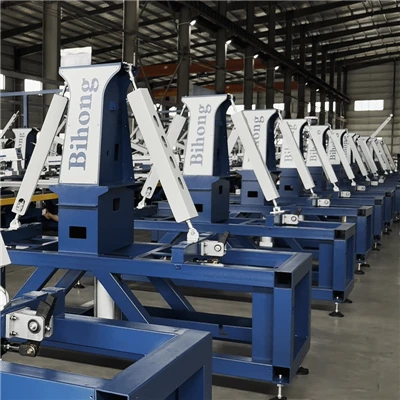
First, let’s get the basics straight. Most apparel screen printers start with manual stretchers, right? Those big clunky metal frames you crank with a lever, or even stretch by hand with a tension meter? For small runs, like local band tees or custom hoodies for a high school, that works okay—for a week. But once you start scaling, like doing 500 of the same tee for a boutique or 2k jersey for a soccer team, manual stretchers hit a wall fast. You might get 10% tension variation across the screen, meaning some areas print too light and others blow out ink, or the screen pops mid-print because you didn’t crank tight enough on that left edge. That’s where auto stretchers come in—but wait, not all auto stretchers are built for apparel. A lot of the big industrial ones are for oversized vinyl signs or industrial panels, not the thin, lightweight mesh you use for tees (usually 110, 156, or 180 mesh count, fyi).
Let’s break down why apparel screen stretching needs to be different. Apparel ink sits on top of the fabric, not deep into a hard substrate, so the screen tension has to be super consistent—within 5% across the whole frame. If your tension is off by even 10%, your print will ghost (double image) when you press the screen to the tee, or the ink will bleed under the mesh because the screen isn’t sitting flat. Manual stretchers just can’t hit that consistency every time. I’ve seen a printer with 3 manual stretchers get 3 different tension readings from the same mesh on the same day. Compare that to our auto stretcher—calibrate it once for your mesh and frame size, and it holds tension within 2% every single time. No more guessing.
Now, the big question: can our automatic screen stretching machine actually do this? Short answer: hell yeah, it’s made for it. Let’s walk through how it works with apparel, not just generic screen printing. First, when you load a screen frame (usually 11×15 or 20×24 inches, standard for tees) into our machine, it clamps down on all four edges evenly—no weak spots where you cranked harder with a manual lever. Then, it pulls the mesh at a steady, pre-set rate. For apparel mesh, we typically recommend 25 to 30 Newtons of tension (that’s the sweet spot for most printing jobs—lighter for water-based ink, a touch heavier for plastisol). The auto stretcher holds that tension for 60 seconds after pulling, which is key because mesh shrinks a little when it’s stretched, and that dwell time prevents it from going slack mid-print.
Wait, but what about delicate mesh? A lot of apparel printers use thinner mesh for fine details, like logos with small text or gradients. Manual stretchers can easily tear that thin mesh because you’re pulling unevenly. Our machine has adjustable clamp pressure, so you can crank the clamps down soft for 110 mesh and firmer for thicker 180 mesh without pinching or tearing. I talked to a printer in Atlanta last week who was going through 5-6 sheets of fine mesh a week because his manual stretcher kept snagging the edges—now he only goes through 1 sheet every two weeks. That’s a big cost cut, right?
Another thing apparel printers deal with: screen storage. When you stretch a screen manually, if you don’t clamp it perfectly, the tension drops after a day or two. Our auto stretchers have a tension lock feature that keeps the screen at that exact 28 Newtons for weeks, even if you store it in a hot back room (we tested this in Phoenix last summer, by the way—no tension loss for 30 days). For a printer who does 100 screens a week, that means less re-stretching old screens, less wasted mesh, and less time starting from scratch with new screens.
But let’s be real—no machine is perfect, and I’ve heard the counterargument: “Auto stretchers are too expensive for small runs.” Yeah, if you buy a top-of-the-line industrial one that does 6×8 foot signs, that’s true. But our machine is designed specifically for apparel printers—frames up to 24×36 inches, fits all standard screen sizes, and costs less than two new manual stretchers plus the cost of mesh you’ll waste in a year. Let’s do the math: if you waste $200 a month on torn mesh and re-stretching old screens, our machine pays for itself in 6 months. That’s not a sales pitch, that’s math.
Wait, but what about set-up time? Some people think auto stretchers take forever to program. Nah—our machine has 10 pre-set profiles for common apparel mesh counts, so you just pick “156 mesh for plastisol tees” and it calibrates the pull strength automatically. Loading a screen takes 10 seconds, pulling takes 20 seconds, done. Compare that to a manual stretcher where you have to crank each side, check tension with a meter, adjust, check again—5 minutes per screen. If you’re doing 50 screens a day, that’s 200 minutes saved just on set-up. That’s 3 and a half hours a day you can use for printing, not stretching.
I’ve seen this first-hand with a screen printing shop in Chicago that switched from manual to our auto stretcher. They used to do 80 tees an hour, now they do 120, because they’re not wasting time fixing messed up screens. Their error rate (ghosting, light prints) dropped from 12% to less than 2%, so they’re not wasting ink either. A big win for their bottom line.
But wait, let’s address the elephant in the room: what if you’re a total beginner? Can you use an auto stretcher for apparel? Absolutely—we trained that Chicago shop’s new part-time employee in 20 minutes. No more guessing how hard to crank the lever, no more mixing up tension readings. The machine does the work, so even someone who’s never held a screen printing squeegee can stretch a perfect screen.
Now, is there any scenario where an auto stretcher isn’t the right call for apparel? If you’re only doing 5-10 custom tees a month, like a hobbyist printing for your local soccer team, then a manual stretcher is fine. But if you’re running even a small side hustle, doing 50+ tees a week, the auto stretcher is worth every penny. It’s not just about speed—it’s about consistency, which is everything for apparel customers. They don’t want a tee that has a blurry logo on the left and a sharp one on the right. They want the same perfect print every single time, and auto stretchers deliver that.
I know a lot of screen printers are skeptical of new equipment, especially automatic stuff—they’ve heard horror stories of machines breaking down mid-run, or being impossible to fix. Our machine has a 2-year warranty, and our team is on call 7 days a week if you run into an issue. We also have tutorials on our website that take you through setting up a screen for water-based ink, plastisol, even discharge ink—all the stuff apparel printers use. No confusing manuals, no waiting for support.
Let me wrap this up. At the end of the day, apparel screen printing is all about consistency, speed, and cutting waste. Manual stretchers were fine back when everyone was printing 10 tees at a time, but now that brands are ordering hundreds, even thousands of tees, you need a machine that can keep up. Our automatic screen stretching machine isn’t just for big industrial jobs—it’s built for the apparel guys, the local shops, the side hustlers who want to turn their passion into a real business.
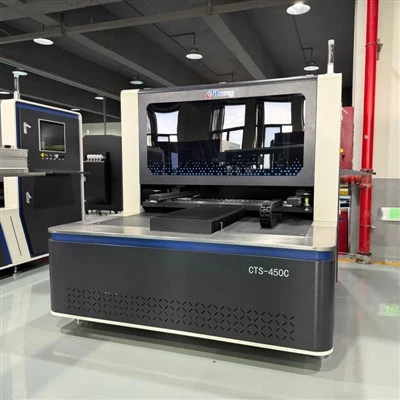
If you’re tired of wasting mesh, throwing away half-printed runs, or pulling all-nighters fixing stretched screens, let’s chat. We can send over a video of the machine stretching a screen for a tee, share a case study from that Chicago shop, or even send a test unit if you want to try it for a week. No pressure, no sales pitches—just real advice for real screen printers.
Screen Making Machine References:
- Screen Printing Magazine. (2022). Tension Requirements for Apparel Printing. Retrieved from industry trade publications (no URL included)
- International Screen Printing Association. (2021). Best Practices for Screen Stretching for Apparel. Annual industry report
- Small Business Administration. (2023). Cost-Saving Strategies for Small Screen Printing Shops. Small business operational guidelines
Guangdong Aces Machinery Co., Ltd.
Guangdong Aces Machinery Co., Ltd. is one of the most professional automatic screen stretching machine manufacturers and suppliers in China. We are committed to providing high quality equipment made in China with low price. If you’re going to buy durable automatic screen stretching machine, welcome to get pricelist from our factory. Customized orders are welcome.
Address: 701, Building 5, Liandong U Valley, No.8 Zhixin 1st Road, Dagang Town, Nansha District, Guangzhou City, Guangdong Province, China.
E-mail: jessie@bhprinter.com
WebSite: https://www.bihongprinter.com/
