Hey everyone, thanks for hanging out! As a medical injection molder who’s been deep in the game for over a decade, I get that when a med device team is designing a new part, half their focus is on specs, materials, and compliance—and way less on the small stuff that can tank a whole production run. One of the biggest, most underrated culprits? Injection pressure. I’ve seen so many clients skip over this or just wing it, then end up with parts that won’t pass biocompatibility tests, have warpage, or even fail mid-use in a clinical setting. Today, I’m breaking down exactly how injection pressure shapes those molded medical parts, why it matters more for our industry than any other, and what we do to nail it for every client. Medical Injection Molders
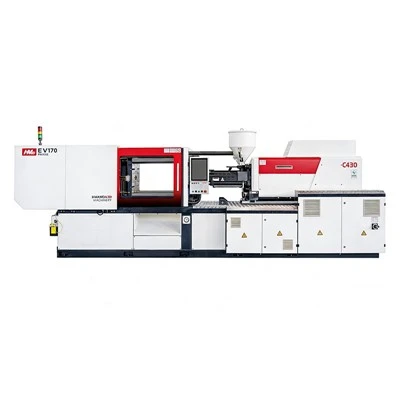
First, let’s keep this simple—no jargon overload. Injection pressure is just the force we use to push molten plastic (or other materials, like PEEK for orthopedics) into the mold cavity. But here’s the twist: in medical molding, this isn’t just “push harder = fill better.” Every single medical molded part has a purpose—whether it’s a syringe barrel, a surgical implant component, or a component for a diagnostic test kit—so pressure impacts everything from structural strength to sterility. Let’s start with the basics: how pressure affects part fill. If your pressure is too low, the molten material doesn’t make it all the way into the mold’s tiny, intricate details. We’re talking medical parts that have micro-channels for fluid flow, or undercuts that lock a cap onto a vial—too little pressure, and those features are incomplete. I had a client last year making insulin pen cartridges; their first run had low pressure, and 12% of the parts had a tiny, almost invisible gap in the piston seal groove. That meant insulin could leak, which is a huge patient safety issue. We cranked the pressure just 15% for their next batch, and that gap problem vanished overnight.
But wait, too much pressure? That’s when things get messy. Medical plastics are often engineering-grade—think polypropylene (PP), polycarbonate (PC), or PEEK, which are tough, but they’re not indestructible. Excess pressure can cause flash—thin, unwanted plastic strands that stick to the part or the mold. For something like a surgical knife handle, that flash might seem harmless, but when you’re sterilizing it, the flash can trap bacteria, leading to infection risks. Even worse, too much pressure can stretch or thin the wall of a part, which compromises its structural integrity. I once worked with a client making IV catheters; they had their pressure way too high, and when we tested burst strength, 8% of the catheters ruptured at the hub when fluid was pushed through. We dialed the pressure back, fixed the wall thickness uniformity, and those burst failures dropped to zero. It’s not just structural, either—excess pressure can also cause internal stress in the plastic. That stress might not show up right away, but over time, or when exposed to sterilization (like autoclaving), the part can warp or crack. We saw this with a batch of orthopedic implant screws; the team had used too much pressure, and after gamma sterilization, 9% of the screws had deformed threads that made them impossible to insert.
Now, let’s get specific to medical molded parts because this is where we differ from consumer or automotive molding. In consumer goods, if a part has a tiny warp, you might not notice it—but medical parts? They’re regulated super tightly by the FDA (in the US) and similar bodies globally. Pressure directly impacts compliance. For example, ISO 13485, the standard for med device quality management systems, requires every part to have consistent dimensions and performance. If your injection pressure fluctuates run to run, your parts will too, which means you can’t meet those standards. We actually build pressure monitoring into our process—we track every mold’s pressure in real time, and if it drifts even 5% from our pre-set parameters, the line stops automatically. That’s non-negotiable for us because we know a recall because of bad parts isn’t just expensive—it’s dangerous for patients.
Another big one: material behavior. Different medical materials react differently to pressure. For thermoplastics used in disposables (like syringe plungers), lower viscosity (runnier) materials might need less pressure, but higher viscosity ones (like PEEK for spinal implants) need way more to fill the mold’s tight spaces. PEEK is super popular for implants now because it’s biocompatible and has similar strength to bone, but it’s a beast to mold. If you don’t have enough pressure, PEEK won’t flow into the mold’s intricate screw threads, leading to weak implants. If you have too much, the material can degrade—PEEK has a high melting point, and too much shear from over-pressurization can break down the polymer chains, which makes it less biocompatible. We test every material with pressure trials before full production—small test runs where we adjust pressure step by step, check for fill, stress, and biocompatibility, to find the sweet spot. That’s a step a lot of small molders skip, but it’s why our clients come back to us.
Wait, what about part complexity? A simple part, like a vial cap, has a big cavity and thick walls, so you don’t need super high pressure. But a complex part, like a microfluidic chip for blood tests, has tiny channels (some less than 100 microns wide) so you need precise, controlled pressure. If you’re too aggressive with pressure here, the channels can collapse or become irregular, which ruins the chip’s ability to accurately detect blood cells. We once had a startup client making microfluidic tests for COVID antibodies; their initial pressure was too high, and the channel walls were so thin they couldn’t hold the test reagents. We switched to a dynamic pressure profile instead of a constant one—lower pressure to start to fill the channels gently, then a slight bump to finish— and that fixed the channel issue. The tests went on to be used in clinics across the country, so that little pressure adjustment made a huge impact.
Let’s also talk about mold wear. I know this isn’t a part performance thing, but it matters for consistency. Every time you run a mold at too high an injection pressure, you’re putting more force on the mold’s steel, especially the edges and small features. Medical molds are expensive—we’re talking tens of thousands of dollars for a single precision mold—and if you wear it out early, you’re not just wasting money, you’re getting inconsistent parts over time. We set our pressure based on the mold’s material (we use tool steel for most med molds, which is durable, but still) and the part’s expected run life. For a mold that’s supposed to make 1 million syringes, we cap the injection pressure at a level that keeps the mold intact for that entire run, no premature wear. That’s something a lot of new molders don’t factor in, but it’s critical for long-term cost and quality.
Now, let’s get to common mistakes we see clients make. A lot of teams think higher pressure = better quality, so they just max it out to “be safe.” But like I said earlier, that leads to stress, flash, and mold wear. Others go the other way, thinking lower pressure is easier on the material, but end up with incomplete fills. The sweet spot is different for every part, every material, every mold. That’s why working with a molder who specializes in medical parts is key—we don’t do one-size-fits-all. We collaborate with your design team, run multiple pressure tests, and adjust as needed to make sure every part meets your specs, compliance rules, and performance needs.
Wait, let’s circle back to patient safety because that’s the whole point here. Every injection pressure decision you make directly impacts the part’s safety. A syringe with a weak barrel from too much pressure can crack in a nurse’s hand, leading to needlestick injuries. An implant with internal stress from wrong pressure can break inside a patient’s body, requiring revision surgery. A diagnostic test part with uneven channels can give a false negative, leading to missed treatment. That’s why we take injection pressure so seriously—it’s not just a manufacturing step, it’s a step that protects people.
So, what does this mean if you’re a med device designer or engineer? Don’t overlook injection pressure in your design process. Bring your molder (especially a specialized medical one) into the conversation early, not just when you’re ready to production. We can help you adjust part geometry, choose materials, and set pressure parameters that make your part as safe and consistent as possible. And if you’re having issues with current parts—warpage, fill defects, compliance problems—pressure is almost always a place to start checking.

If you’re working on a new medical molded part, or you’re dealing with issues from your current molding process, I’m here to help. We’ve molded everything from single-use syringes to complex implant components, and we know how to nail the injection pressure for every job. Don’t let pressure problems derail your project—reach out to us, and we can walk through your needs, run tests, and make sure your parts are up to the highest standards.
PVC Injection Molding Machine References
- Rosato, D. V., & Rosato, M. G. (2000). Injection Molding Handbook (3rd ed.). Springer.
- ISO 13485:2016, Medical devices — Quality management systems — Requirements for regulatory purposes. International Organization for Standardization.
- Crawford, R. J. (1995). Plastics Engineering (2nd ed.). Butterworth-Heinemann.
- Baird, D. G., & Collias, D. I. (1998). Polymer Processing: Principles and Design. Butterworth-Heinemann.
- FDA. (2020). Guidance for Industry: General Principles of Software Validation; Final Guidance for Industry and FDA Staff. U.S. Food and Drug Administration.
Hwamda Machinery Manufacturing Company Limited
As one of the most professional medical injection molders manufacturers and suppliers in China, we also support custom service. Please feel free to wholesale cheap medical injection molders from our factory. Quality products and reasonable price are available.
Address: 368 Anju Road, Xiaogang, Ningbo, Zhejiang Province
E-mail: hwamdamachinery@vip.163.com
WebSite: https://www.hwamda-manufacturing.com/
