If you’ve ever stared at a box of furnace accessories on your garage floor, wondering whether to crack open the manual and tackle the install yourself or call a tech, you’re not alone. As a furnace accessories supplier who’s spent 12 years working directly with homeowners, HVAC technicians, and even the occasional panicked renter who thought replacing their furnace filter was “no big deal,” I’ve heard every version of that question. Last winter, for example, a customer reached out at 8 p.m. because he’d tried to install a new flame sensor for his gas furnace himself, only to trigger a safety lockout that left his family without heat in 20-degree weather. He did save $150 on a service call—for, uh, about four hours of panicked troubleshooting at 1 a.m. That story stuck with me, not because it’s funny, but because it’s a perfect example of the fine line between a DIY fix and a costly (or dangerous) mistake when it comes to furnace accessories. Let’s break down why professional installation isn’t just a “nice-to-have” for many of these parts, and when you might be able to dip your toe in DIY waters—while making sure you’re not putting your home or family at risk. Furnace Accessories
First, let’s get clear on what we’re even talking about here. Furnace accessories aren’t just the cheap, disposable parts like air filters (though even those have nuanced install rules). We’re talking about the stuff that keeps your furnace running safely and efficiently: flame sensors, pressure switches, igniters, limit controls, humidistats, vent dampers, and carbon monoxide (CO) detectors hardwired to your furnace system. These parts don’t exist in a vacuum; they’re integrated into a complex network of gas lines, electrical circuits, and venting systems that operate at high temperatures and, when working correctly, keep harmful fumes from seeping into your home. The idea that all these parts can be swapped like a lightbulb is a myth I see perpetuated every day, usually by big-box store signage that frames every furnace part as a “10-minute DIY fix.”
Let’s start with the most critical category: gas-related furnace parts. A flame sensor, for instance, is a small metal rod that checks whether your furnace’s burners are lit before letting gas flow. If it’s dirty or installed wrong, it can either shut off gas when it’s supposed to run (leaving you shivering) or, worse, let gas accumulate in the combustion chamber if it doesn’t detect a flame—until that cloud of gas ignites when the furnace kicks on, creating a potentially explosive situation. Last year, I worked with a local fire department that responded to a home in the next county where a homeowner replaced their flame sensor with an off-brand part from a big-box store, skipping the calibration step. The sensor was mounted at the wrong angle, so it never detected the flame during the initial cycle. Over two hours, gas filled the basement, and a spark from the water heater ignited it—resulting in $40,000 in damage, and a new furnace for the family. That wasn’t a flaw in the part itself; it was a flaw in installing it correctly. Calibrating a flame sensor means adjusting its position so it’s directly in the path of the burner flame, and testing its amperage output to make sure it meets the manufacturer’s specifications. For a professional, that takes 10 minutes; for a DIYer, it takes hours, if not days, of guessing.
Pressure switches are another gas-related part that’s often misunderstood. These small, diaphragm-controlled parts regulate the flow of air through the furnace’s venting system, making sure exhaust gases are properly flushed outside before combustion starts. Installing a pressure switch wrong—whether it’s connecting the wrong hoses, calibrating the switch pressure, or mounting it to a vibrating part of the furnace—can lead to incomplete combustion. Incomplete combustion means your furnace is running inefficiently, wasting energy and producing more CO, a colorless, odorless gas that’s the leading cause of poisoning deaths in the U.S. each year. A 2022 study from the American Society of Heating, Refrigerating and Air-Conditioning Engineers (ASHRAE) found that improperly installed gas furnace components are responsible for 17% of residential CO leaks annually. That’s not a statistic to brush off. When a tech installs a pressure switch, they don’t just plug it in—they test for proper vent flow, adjust switch settings to match your specific furnace model, and run a combustion analysis to confirm no CO is leaking into your home. That level of testing isn’t something a DIYer can do with a $20 part they picked up at the hardware store.
Now, what about electrical furnace accessories? Things like igniters, limit controls, and programmable thermostats? On the surface, these seem simpler—they’re usually low-voltage parts, right? But even here, mistakes can add up. A hot surface igniter, for example, is what replaces the old-standing pilot light in modern furnaces. Installing an igniter too tight can crack the ceramic element, making it fail within a week. Installing it too loose can cause it to arc, which is not only a fire hazard but can also damage your furnace’s control board—an expensive part that can run $500 or more to replace. Limit controls, which shut off the furnace if it overheats, have precise temperature specifications that vary by furnace model. If you install a generic limit control instead of one matched to your furnace, it might shut off too early (leaving you cold) or not shut off at all (leading to overheating and a furnace fire).
I know what you’re thinking: “I’ve replaced my own furnace filter a hundred times, why can’t I swap out my igniter?” Fair point. Disposable air filters are one furnace accessory that almost any homeowner can install safely—if you follow a few basic rules. Make sure you get the right size (check the sticker on your furnace, don’t guess), install it with the airflow arrow pointing toward the furnace (not the other way around), and replace it every 90 days for standard filters, or every 30 days if you have pets, allergies, or live in a dusty area. But that’s the exception, not the rule. Every other accessory that connects to gas lines, electrical circuits, or venting systems is in a different category.
Let’s talk about accessories that are often sold as “easy DIY fixes” but really aren’t: whole-house humidistats. A whole-house humidifier is a great addition to your furnace, keeping dry winter air from chapping skin, damaging wood floors, and worsening allergy symptoms. But installing a humidistat— the part that controls how much humidity is released—isn’t just about mounting it on your wall and connecting it to the humidifier. It requires low-voltage wiring that needs to be run through your walls without damaging other electrical lines, and calibrated to work with your furnace’s fan cycle. I once had a customer who tried to install a whole-house humidistat himself, running the wiring through the attic of his 100-year-old home and accidentally nicking a power line. He didn’t know until he turned on the furnace and heard a loud spark that caused a small fire in the attic. The damage was minimal, but it was totally preventable with a basic electrical test a technician would have done before turning the system on.
Another common accessory: vent dampers, which can help regulate airflow in your home, saving energy. Installing a vent damper might seem like drilling a hole in the wall and mounting a device, but if it’s not sized correctly for your ductwork, it can restrict airflow so much that it causes your furnace to overheat, or force air into parts of your home that don’t need it, leading to uneven heating. A HVAC technician will perform a duct pressure test to make sure the damper is sized and installed correctly, something you can’t do with a tape measure and a drill.
Now, let’s get real about cost. I know that price is a huge factor for most homeowners. A common argument I hear is: “Professional installation costs almost as much as the accessory itself, so why bother?” Let’s run the numbers. Suppose you buy a flame sensor for $30, and a tech charges $150 to install it. If you try to install it yourself and get it wrong, you could end up with a $1,000 furnace repair, or even worse, a CO leak that leads to medical bills. That’s a risk not worth taking. I once had a customer who spent $200 on a DIY pressure switch, installed it wrong, and ended up with a $800 service call to fix the damage he caused, plus a $100 CO detector he had to buy after testing showed elevated levels in his home. In the long run, professional installation saves you money, even if it costs more upfront.
That said, there are a small number of furnace accessories that are safe for DIY installation, if you’re comfortable with basic tools and follow the manufacturer’s instructions explicitly. Let’s list them: disposable air filters (with proper size and airflow direction), stand-alone CO detectors that plug into outlets (hardwired CO detectors are better left to pros), and portable humidifiers (not whole-house systems). For these, the risk of injury or major damage is low, as long as you read the manual and don’t cut corners. But if you’re looking at any accessory that connects to gas lines, has electrical wiring, or is integrated into your furnace’s control system, err on the side of professional installation.
As a furnace accessories supplier, my job isn’t to tell you what to do—it’s to give you the information you need to make a safe, informed decision. I’ve sold thousands of furnace parts over the years, and I’ve seen firsthand what happens when a DIY install goes wrong. I’m not here to shame anyone for trying to save a few bucks; I’m here to help you avoid the headaches, costs, and dangers that come with mistakes. When you’re shopping for furnace accessories, ask yourself: Does this part connect to gas lines? Does it require electrical wiring? Is it integrated into my furnace’s safety system? If the answer to any of those is yes, you should strongly consider hiring a licensed HVAC technician.

When you do hire a pro, here are a few tips to make sure the installation is done right. First, get multiple quotes. A reputable tech will explain exactly what they’re doing, why they’re doing it, and what safety tests they’ll run after installation. Second, ask for proof of licensing and insurance. HVAC work is regulated in most states, so make sure the tech is licensed to work on furnaces in your area. Third, ask about warranties. Most reputable furnace parts come with a manufacturer’s warranty, but that warranty is often void if the part is not installed by a professional. Don’t let the work you do yourself void the protection you paid for.
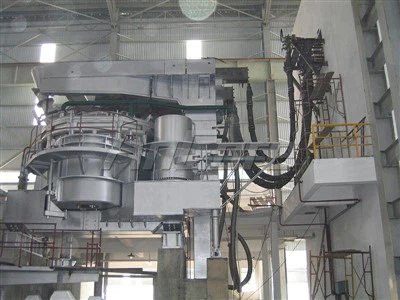
LF/VD/VOD Refining Furnace At the end of the day, your furnace is one of the most important systems in your home, especially during the cold winter months. It keeps your family warm, safe, and comfortable. Taking the time to make sure its accessories are installed correctly isn’t just a good idea—it’s a necessity. If you’re not sure whether to tackle an installation yourself or call a pro, feel free to reach out to our team for guidance on the right parts for your system, and recommendations for reputable technicians in your area. We’re here to help you make the best choice for your home and your family.
References
- American Society of Heating, Refrigerating and Air-Conditioning Engineers (ASHRAE). 2022 Residential Indoor Air Quality Guidelines.
- U.S. Consumer Product Safety Commission (CPSC). 2023 Statistics on Home Heating-Related Injuries and Fatalities.
- National Fire Protection Association (NFPA). 2022 Home Structure Fire Statistics Involving Furnaces and Heating Equipment.
Xi’an Ancore Furnace Complete Set Of Equipment Co., Ltd.
As one of the most professional furnace accessories manufacturers and suppliers in China, we’re featured by quality products and good price. Please rest assured to buy durable furnace accessories made in China here from our factory. We also accept customized orders.
Address: Yongli 11007, No.6 Jinye 1st Road, Yan Ta District, Xi’An City, Shan Xi, China
E-mail: info@ancorefurnace.com
WebSite: https://www.ancorefurnace.com/
