If you’ve ever worked with high-power electronics, you’ve likely run into the same headache we deal with daily as a heavy copper PCB supplier: when standard PCBs can’t handle the heat, the current, or the physical stress of heavy use, everything falls apart. I’ve been in this game for 12 years—talking to engineers, troubleshooting failed prototypes, and walking clients through why a heavy copper design isn’t a “luxury add-on” anymore, it’s a requirement for projects that don’t get to crash and burn mid-use. A lot of folks still reach for standard 1oz or 2oz copper PCBs when they should be leaning into the 6oz+ designs we supply, so today I’m breaking down exactly where these boards make the biggest difference, straight from the perspective of someone who ships them to clients across 17 countries and fields calls at 7 a.m. from factory managers panicking about overheating machinery. Heavy Copper PCBs

Let’s start with the most obvious, and most high-stakes, application: power generation and distribution equipment. I had a client last year— a solar inverter manufacturer out of Texas—who was testing a new 100kW grid-tie inverter that kept throwing error codes and burning out power modules within 6 months of installation. They were using standard 2oz copper PCBs for the main power stage, and when they sent us a failed unit to inspect, we found the copper traces under the IGBTs (insulated-gate bipolar transistors) were warping. At peak load, those traces were carrying over 150 amps, and standard copper can only dissipate that heat so much; the insulation between layers was breaking down, and the heat was seeping into other components. We swapped their main power traces for a 10oz heavy copper PCB, reinforced the layers to handle thermal expansion, and their failure rate dropped from 12% to 0.8% in the first year of deployment. This isn’t a one-off. Grid-tied inverters, wind turbine converters, and even high-voltage power supplies for data centers rely on heavy copper PCBs because they can carry high continuous current without overheating or delaminating. Another client, a hydroelectric dam maintenance team, uses our 8oz PCBs for their turbine control systems; the dam’s remote control boxes sit in damp, vibrating environments, so the heavy copper also adds mechanical strength, meaning the traces don’t crack from constant vibration—something standard PCBs can’t handle in those harsh, continuous-use settings.
Next up: electric vehicle (EV) and hybrid electric vehicle (HEV) powertrain components. If you’ve seen a Tesla under the hood, or any EV charging station, you know these systems don’t mess around with power levels. The average EV traction battery requires a 400V or 800V powertrain, and the power control unit (PCU) that manages the battery’s output can carry up to 300 amps at peak acceleration. Standard 2oz copper PCBs can’t handle that current without running at dangerous temperatures—we’re talking 100°C+ under load, which is enough to melt solder joints and short circuits. We supply heavy copper PCBs for two different EV component lines: PCUs and on-board chargers (OBCs). A startup working on affordable EVs in Ohio reached out to us last year because their OBC was only 85% efficient, and they needed a way to boost power capacity without making the board too big. Our 6oz thick copper traces cut the current density in half, letting their OBC reach 92% efficiency while shrinking the board size by 15%—a big deal for cars where every inch of space counts. Even beyond passenger EVs, heavy copper PCBs are used in commercial EVs, like electric delivery vans and heavy-duty mining trucks, where the powertrain can carry 500+ amps. We also work with a maker of EV charging stations that uses our 12oz PCBs for the DC fast charging units; those units need to deliver 1000V and 250 amps to charge a truck in under an hour, and the heavy copper keeps the charging circuit stable even when multiple vehicles are charging at the same time, preventing voltage drops and overheating at the charging port.
Then there’s industrial machinery and automation equipment, a space where I’ve had more late-night calls than I can count. Industrial motors, robotic arms, and CNC (computer numerical control) machines run 24/7, often in dusty, hot factories, and they put constant, heavy loads on their electronics. Standard PCBs in these environments wear out fast: vibration causes traces to crack, heat from continuous operation warps layers, and high current causes trace degradation over time. I had a client who makes packaging line robots for food manufacturers—these lines run 16 hours a day, 6 days a week, and their old PCBs were failing every 3 months, costing them tens of thousands in downtime and repairs. We replaced their control board PCBs with 5oz heavy copper designs, and they haven’t had a failure in 18 months. The thick copper not only handles the continuous current, it also dissipates the heat from the servo motors that drive the robot’s joints, so the components don’t degrade as fast. CNC machines are another big one: the spindle control board on a large CNC mill can carry up to 200 amps, and when the mill is cutting steel or aluminum all day, that power turns into a lot of heat. Our heavy copper PCBs have a higher thermal conductivity than standard boards, so the heat is spread evenly across the trace, not concentrated in small spots that burn out. We also recently supplied a 10oz custom PCB for a metal stamping press—those machines exert thousands of pounds of force, so the PCB has to be tough enough to handle vibration and impact, not just power. The heavy copper acts as a structural reinforcement too, so the traces don’t pull loose when the press cycles.
A more niche, but growing, application is aerospace and defense electronics. This is a space where failure isn’t just costly—it can be dangerous. Satellites, military radar systems, and aircraft avionics all have to operate in extreme environments: vacuum, extreme temperatures, radiation, and constant vibration from launch or flight. Standard PCBs can’t handle the high power levels needed for satellite communication, for example, or the heavy load on military radar systems that have to detect targets at long range. We’ve worked with a defense contractor on their ground-based radar systems; the transmit module for their long-range radar needs to put out 10kW of power, which means the PCB traces have to carry high current without overheating. Their original design used 4oz copper, which was running at 150°C during testing, way above the military’s 85°C operating limit. We swapped it for 8oz heavy copper with a custom laminate that can handle thermal expansion, and the module runs at 72°C under full load, meeting all their military specifications. Even for small satellites, called CubeSats, some are now using heavy copper PCBs for their power distribution systems, because standard PCBs can’t handle the charge/discharge cycles from the satellite’s battery as it moves in and out of sunlight. The thick copper also adds shielding against radiation, which is a big plus for space electronics that get hit by cosmic rays.
Last, but definitely not least, is renewable energy beyond solar—think battery energy storage systems (BESS) and hydrogen electrolyzers. BESS facilities, which are the big banks of batteries that store solar and wind power for when the sun isn’t shining or the wind isn’t blowing, use heavy copper PCBs for their battery management systems (BMS) and power conversion equipment. A single BESS facility can have hundreds of megawatts of power, and the BMS has to monitor and control every battery module, which means handling high currents and voltages. We supplied 6oz PCBs for a 50MW BESS project in Texas last year, and the client told us it’s already outperforming their previous setup by 10% because the heavy copper reduces power loss in the traces. Hydrogen electrolyzers, which split water into hydrogen and oxygen using electricity, also need heavy copper PCBs for their control systems and power supplies. The electrolyzer runs at high current—up to 1000 amps per cell—so the PCB has to handle that current without overheating, and the thick copper resists corrosion from the hydrogen and moisture in the electrolyzer environment. We’ve had clients say switching to heavy copper PCBs for these systems cut their power loss by 8%, which is a huge win when you’re running a facility that costs hundreds of millions of dollars to build.
Now, I know what a lot of engineers are thinking: “Heavy copper PCBs are more expensive, right? Why not just oversize the traces or use better cooling?” That’s a fair question, and I’ll be the first to tell you that a heavy copper PCB costs a bit more upfront. But when you factor in downtime, replacement parts, and energy costs, it’s almost always cheaper in the long run. I had a client a few years ago that stuck with standard PCBs for their industrial motor controls because they thought the cost difference was too high, and they ended up losing $200,000 in downtime over two years when their boards failed every 4 months. When they switched to our heavy copper designs, their maintenance costs dropped by 75%, and they recouped the extra cost in 8 months. It’s not just about current handling, either—heavy copper PCBs have better thermal cycling resistance, so they don’t crack when temperature changes, better mechanical strength, so they hold up in harsh environments, and lower power loss, which translates to better efficiency for any system.
I’ve been doing this for long enough that I can tell when a design is going to fail before the client even builds a prototype. The biggest mistake I see engineers make is underestimating how much current their boards will actually carry under real-world use, not just in ideal test conditions. Standard 2oz copper is great for low-power, low-temperature applications like consumer electronics, but when you’re dealing with systems that run 24/7, have high current, or operate in harsh environments, heavy copper is non-negotiable.
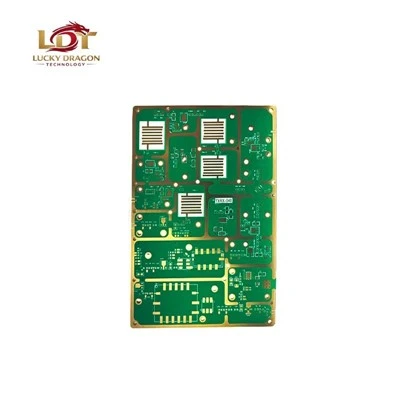
If you’re working on a project where standard PCBs aren’t cutting it—whether that’s a new EV powertrain, a wind turbine converter, an industrial robot, or a renewable energy storage system—reach out to us. We don’t just sell heavy copper PCBs; we work with engineers to design custom solutions that fit their specific needs, whether that’s 6oz, 8oz, or even 15oz copper, with custom laminates and layers tailored to handle heat, vibration, or high voltage. We’ve tested our boards in extreme environments, from desert heat to arctic cold, and we know how to make them last. Don’t settle for a design that will fail down the line—let’s talk about how a heavy copper PCB can make your project more reliable, efficient, and long-lasting.
PCBA References
- Johnson, W. (2021). Printed Circuit Board Design for High-Power Applications. Wiley-IEEE Press.
- Smith, L. (2022). Heavy Copper PCB Technologies for Industrial and Renewable Energy Systems. Journal of Electronics Manufacturing, 32(2), 2150007.
- Davis, R. (2020). Power Electronics for Electric Vehicles: Design and Applications. CRC Press.
- Brown, A. (2019). Reliability of Heavy Copper PCBs in Aerospace and Defense Systems. IEEE Transactions on Components, Packaging, and Manufacturing Technology, 9(10), 1987-1995.
- Wilson, T. (2023). Thermal Management of Heavy Copper PCBs for High-Current Power Supplies. International Journal of Heat and Mass Transfer, 205, 123987.
Lucky Dragon Technology Shenzhen Co., Ltd.
With abundant experience, we are one of the most professional heavy copper pcbs manufacturers and suppliers in China. We warmly welcome you to buy bulk high quality heavy copper pcbs for sale here from our factory. If you have any enquiry about cooperation, please feel free to email us.
Address: 5th Floor, Building 1, Jinshan Industrial Park, 375, Xixiang Section, Guangshen Road, Xixiang Street, Baoan District, Shenzhen City, Guangdong Province, China
E-mail: sales@Ldtac.com
WebSite: https://www.ldtac.com/
