If you’ve ever spent time on the road with a mobile sports setup—whether it’s a weekend youth soccer tournament in a small town that only has a tiny, overcrowded field, a late-night pickup basketball league that needs consistent lighting to keep the games going, or a pop-up beach volleyball event where the sun dips fast and players need extra visibility to compete—you’ve probably run into the same problem: the lighting is either too dim to play safely, too bright that it glares in players’ eyes, or so bulky it’s impossible to haul to remote spots. For years, the go-to fix was big, permanent stadium lighting or flimsy, temporary work lights that die halfway through a tournament. That’s where sports LED trailers come in. As a sports LED trailer supplier, I get asked one question more than any other: Are sports LED trailers available in different sizes? The short answer is yes—and that range of sizes is exactly what makes these trailers so versatile, because not every sports event has the same space, power, or audience needs. Let’s break down the size options, what each is best for, and how picking the right size can make or break your event. Sports LED Trailer
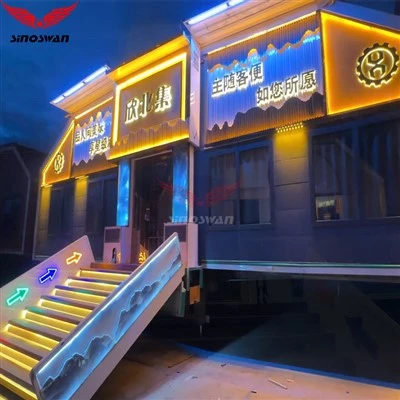
First, let’s start with why size actually matters for sports LED trailers, beyond just fitting in a parking spot or a field. These trailers aren’t just boxes with lights on top—they’re mobile power stations, too. Most are outfitted with high-capacity batteries, solar panels, and sometimes backup generators, so their size ties directly to how much lighting they can provide, how long they can run, and how easy they are to transport. A 5,000-seat soccer stadium needs a lot more light than a 10-court youth basketball tournament in a empty lot, and a trailer that works for a professional rugby match might be way too big (and too costly) for a small local lacrosse league. That’s why manufacturers, including the ones we partner with as a supplier, build these trailers in a spectrum of sizes, tailored to every type of sports event you could imagine.
Let’s start with the smallest size we offer, often called the compact utility sports LED trailer. These trailers are built on a standard single-axle frame, usually between 10 and 12 feet long, with a total height when lit of around 18 to 20 feet—small enough to tow with a regular pickup truck or even a full-size SUV, no special licensing needed. For context, that’s smaller than most camper trailers you’d see at a national park. If you’ve ever been to a small-town high school soccer JV game, a neighborhood tennis league, or a weekend flag football tournament on a vacant city lot, this is the size that works best. The lighting on a compact trailer isn’t as powerful as larger models, but it’s more than enough for small fields: these trailers typically illuminate 1 to 2 standard soccer fields (or 4 to 6 tennis courts) evenly, with no dark spots that cause players to trip or refs to miss calls. Another big benefit of the small size is mobility: you can tow these through narrow residential streets, load them into a freight truck for cross-country transport, or even squeeze them into a small parking lot at a community center where a full-size trailer wouldn’t fit. We recently had a college club rugby team reach out to us for one of these compact trailers; they travel to different schools for weekend matches, and their old lighting setup was too big to fit through the gate at some of the smaller campus fields they use for away games. The compact trailer let them set up light in 30 minutes, run the entire match, and tow it back to their team house without any hassle.
Next up is the mid-size sports LED trailer, the most popular option with our clients, from high school athletic departments to regional sports tournament organizers. Mid-size trailers run between 18 and 22 feet long, with a total height when lit of 25 to 28 feet—still towable with a standard pickup, though some models might need a slightly larger truck to handle the extra weight (around 3,500 to 4,500 pounds, compared to 2,500 to 3,000 pounds for compact models). What makes this size so versatile is the lighting capacity: a mid-size trailer can illuminate 3 to 4 standard soccer fields, or an entire indoor court for basketball, volleyball, or pickleball, with enough brightness to handle both competitive play and even small spectator stands (up to around 1,500 people, depending on the setup). We’ve seen mid-size trailers used for everything from county high school football playoff games that don’t have permanent stadium lights to weekend 3-on-3 basketball tournaments that draw hundreds of players and families. One of our local clients used a mid-size trailer for a youth baseball tournament last summer; their local park’s permanent lights had broken right before the tournament, and a mid-size trailer was small enough to fit between the two fields at the park, while providing enough light for 10 games running at the same time. They also had space to add a small sound system and a snack bar on the back of the trailer, which is a common add-on for mid-size models. The run time is another win: mid-size trailers have larger battery banks, so they can run for 12 to 16 hours on a single charge, no generator needed—perfect for overnight tournaments or games that run late into the evening.
Then there’s the full-size heavy-duty sports LED trailer, built for the biggest, busiest sports events. These trailers are 28 to 35 feet long, with a total height when lit of 35 to 40 feet—they’re big, and they do require a heavy-duty pickup or even a flatbed truck to tow, but their capacity is unmatched. Full-size trailers can illuminate up to 8 standard soccer fields, or a full-size professional football, soccer, or rugby stadium with seating for 10,000 to 20,000 people. These are the trailers you see at professional exhibition matches, large college stadiums that don’t have permanent lights, major outdoor track meets, or even cross-country athletic events held in rural areas. The lighting on these trailers is calibrated to meet professional sports standards: no glare that distracts players, even light across the entire field, and brightness levels that match or exceed permanent stadium lighting. They also have built-in backup generators for long events, large battery banks that can run for 24 hours straight, and even room for control rooms, media booths, or team bench areas as add-ons. Last year, we worked with a organization that hosts a annual outdoor lacrosse tournament in a rural part of the Midwest; their usual venue had a temporary setup that took 8 hours to assemble and required 10 different light sources, but swapping in two full-size trailers cut setup time to 2 hours and provided consistent light for all 12 fields at once. The only catch with full-size trailers is that they need more space to transport and set up: you need a wide, flat access road to tow them to the venue, and at least an acre of flat ground to park them, since you can’t tuck them into a small city lot like a mid-size or compact model.
But here’s the thing about size: it’s not just about the length of the trailer, or how many fields it can light. As a supplier, we also build adjustable-height towers and dimmable lighting systems into every size, which means you can customize even a single trailer to fit your event’s needs. For example, if you rent a mid-size trailer for a 1-field high school soccer game, you can lower the lighting towers to half their height to avoid glare for nearby residential homes, or dim the lights for a youth game where players don’t need maximum brightness. If you need more light than one trailer provides, you can combine multiple sizes: a compact trailer for a practice field, a mid-size for the main game, and a full-size if you’re setting up a tournament with multiple fields. A common mistake we see new event organizers make is renting a full-size trailer for a small local match, which not only wastes money (full-size models cost more to rent or buy, and use more power) but can also be overkill, creating unnecessary glare for players and spectators. On the flip side, renting a compact trailer for a 4-field tournament means you’ll have dark spots on the edges of the fields, and the light will be too dim for refs to make accurate calls.
Another factor that ties into size is portability, which is huge for events that move around. If you’re a traveling sports team, a youth sports association that hosts tournaments in different towns, or a pop-up sports brand that does events across the country, compact and mid-size trailers are the way to go. They’re lightweight enough to tow long distances, easy to load onto a freight truck if you’re shipping them cross-country, and can be set up in under an hour, which is a massive time saver for event days. Full-size trailers are better for permanent or semi-permanent event locations, or for events that stay in one place for several days (like a 5-day tournament), since the extra setup space and power is worth it for the number of attendees.
Let’s talk about durability too, because size and construction go hand in hand. All sports LED trailers, regardless of size, are built to withstand harsh outdoor conditions: rain, wind, snow, and extreme heat. But larger trailers often have reinforced frames and heavier axles to handle the extra weight of the lighting towers and power systems, while compact trailers are designed to be lightweight for easy towing, but still built with rust-resistant steel and weather-sealed components. For example, a compact trailer used for beach volleyball tournaments gets hit with salt spray and high winds, so it has a coated steel frame and sealed LED lights that don’t corrode, while a full-size trailer used for mountainous outdoor events has reinforced wind bracing to keep the towers stable in gusty conditions. That’s a key point for anyone considering a trailer: the size isn’t the only choice, but within each size, you can customize the features to match your event’s environment.
I’ve worked in this industry for over 10 years, and I’ve seen firsthand how picking the right size of sports LED trailer can turn a messy, underlit event into a smooth, enjoyable one. Early in my career, we had a client who organized a state high school soccer tournament, and they rented two full-size trailers thinking more light was better. But the trailers were so large that they blocked the view of spectators sitting in the back of the temporary stands, and they cost 30% more than a combination of four mid-size trailers would have. They ended up swapping them, and the tournament ran perfectly—no glare, no dark spots, and the extra space let spectators actually see the games. That’s why we always take the time to ask clients about their event: how many fields do they have? How many people are attending? Do they need to tow the trailer to different venues? Are there any space restrictions at the venue? We don’t just push the biggest trailer we have, because that’s not always the best fit.
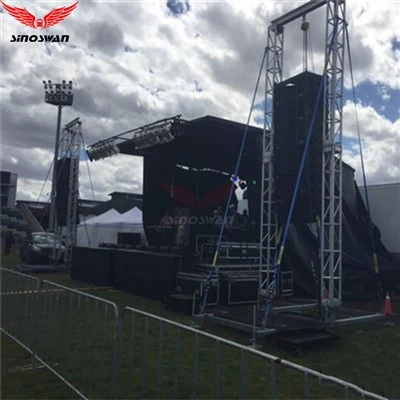
If you’re in the market for a sports LED trailer, whether you’re a school athletic director, a tournament organizer, a pop-up sports brand, or a sports team that needs reliable lighting on the road, don’t assume all trailers are the same. The range of sizes means there’s an option for every need: compact for small, mobile events, mid-size for versatile, medium-sized tournaments, and full-size for large, professional events. To find the right size, start by mapping your event space, attendee count, and transport needs—if you’re still not sure, reach out to us to discuss your requirements. We’ll walk you through each size, the features that come with each, and help you pick a trailer that fits your budget and your event’s needs. Whether you’re hosting a casual neighborhood flag football game or a major college football playoff, there’s a sports LED trailer size that’s perfect for you. Don’t settle for flimsy temporary lights or permanent stadiums that don’t exist for your venue—invest in a sports LED trailer that’s built to fit your event, not the other way around. Contact us today to discuss your project and find the right solution for your sports lighting needs.
Gospel Stage Trailer References:
- National Federation of State High School Associations. (2022). Guide to Outdoor Athletic Facility Lighting.
- Portable Venue Solutions Association. (2023). Mobile Lighting Equipment Capacity and Use Case Report.
- International Association of Sports Events. (2021). Best Practices for Temporary Sports Lighting.
- Trailer Manufacturers Association. (2022). Size and Load Capacity Standards for Mobile Sports Equipment Trailers.
Zhengzhou Sinoswan Tech Co., Ltd.
Zhengzhou Sinoswan Tech Co., Ltd. is one of the most professional sports led trailer manufacturers and suppliers in China. We are committed to providing high quality customized products for global clients. We warmly welcome you to wholesale durable sports led trailer for sale here from our factory. Also, quotation is available.
Address: No.21 Shangdu Road, Zhengzhou, Henan Province, China
E-mail: info@sinoswan.com
WebSite: https://www.electiontruck.com/
