If you’re in the market for low voltage switchgear, you’ve probably heard the term “trip settings” thrown around a lot—and if you’re not an electrician or someone who works with circuit breakers daily, it can feel like total gibberish. I’m the guy who runs day-to-day operations at a low voltage switchgear supplier, and let me tell you: getting trip settings right isn’t just a technical box to check. It’s what keeps your facilities, your team, and your gear from ending up in a really bad, costly mess. Low Voltage Switchgear
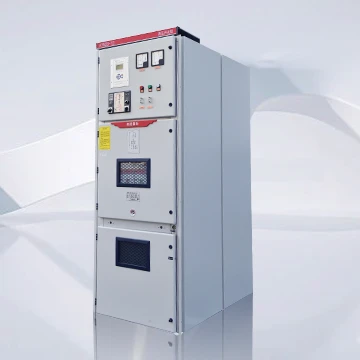
First off, let’s keep this simple. Low voltage circuit breakers (LV CBs) are the unsung heroes of any electrical system—they stop overloads, short circuits, and other faults before they turn into fires, fried equipment, or worse. Their trip settings are basically the rules that tell the breaker, “Hey, when to shut off the power to keep this system safe.” Mess those up, and you’re either tripping way too often (shutting down your whole warehouse for no reason at 2 a.m.) or not tripping when you actually need it (a faulty machine sparks, and the breaker just… does nothing).
Over the years, I’ve seen way too many clients try to wing their trip settings, and 9 times out of 10, they regret it. Once, a small manufacturing shop we work with tried to use a generic breaker setting for their new packaging line—next thing we heard, their line’s motor burned out because the breaker didn’t trip fast enough during a startup surge. That’s $12k in motor parts alone, not to mention 3 days of downtime. So let’s break this down like we’re chatting over a coffee, no jargon overload.
First step: Know your system’s specs before you even touch the breaker. You can’t set a trip unless you know what you’re protecting, right? Every LV CB has two main trip settings: the overload trip (for sustained, lower-current issues—like a fridge pulling too much power all day) and the short circuit trip (for sudden, massive surges—like a frayed wire touching a metal frame). Both depend entirely on what’s connected to the breaker.
Let’s make this concrete. Let’s say you’ve got a lighting circuit in a 10,000 sq ft office. That’s 120V, right? The total load on that circuit is, say, 15 amps worth of lights and outlets. Your overload trip can’t be set lower than 15 amps (otherwise, it’ll trip when you plug in a space heater for the winter, which isn’t a fault) and can’t be set higher than 20 amps (per NEC rules, for 15/20A circuits—we’ll get to code stuff in a sec). If you set it to 25, that space heater fault? It’ll blow the circuit wiring before the breaker trips. That’s a fire hazard, full stop.
For short circuit settings, it’s trickier. That packaging line I mentioned earlier? Their startup current was 8x the normal running current—motors do that, it’s called inrush. If the short circuit trip was set to trigger at 10x running current, it would’ve let the 8x inrush pass through, no problem. But they set it to 5x to “be extra safe” during faults, and when the motor started, the breaker tripped every 10 minutes. Total nightmare for their productivity. So short circuit settings need to balance “not tripping on normal inrush” and “tripping fast when there’s a real short.” That balance is where 90% of people mess up.
Next up: code and standards, because this isn’t a DIY thing where you can guess. I’ve worked with clients in offices, warehouses, hospitals, even breweries—each has to follow local electrical codes, but most of North America uses NFPA 70 (NEC) and Canada uses CSA C22.2. For us as a switchgear supplier, we don’t just pick a setting out of thin air—we cross-check every proposed trip setting against the load type, the wiring size, and local code.
Wait, load type is a big one I almost missed. A commercial kitchen has totally different loads than a server room. Kitchens have heavy, constant loads—ovens, fryers, dishwashers—that might pull consistent 20-30% above their rated current for minutes at a time. Set the overload trip too low, and your kitchen will be dark mid-rush hour. Servers, though? They hate even tiny surges—unplanned downtime for a server farm costs thousands per minute, so their overload trip might be set just high enough to avoid nuisance trips, but their short circuit trip is set extra fast to shut down a fault before it fries a motherboard. We had a client who ran a data center, and their original settings were set for an office—we had to adjust both trips so they didn’t lose $15k worth of data during a minor fault. That’s the kind of value we bring, not just selling breakers, but getting the settings right.
Now, let’s talk about breaker type, because not all LV CBs are the same. There’s molded case circuit breakers (MCCBs) for lower-power circuits, air circuit breakers (ACBs) for bigger systems like factory switchgear, and miniatures (MCBs) for small stuff like home outlets—but even within these, trip settings vary. For example, an ACB for a 480V warehouse has adjustable long-time trip (that’s the overload, basically), short-time trip, and instantaneous trip settings, whereas an MCB might only have one or two. We’ve had clients who bought the wrong breaker type because they thought “all breakers are the same”—that’s a mistake. A 100A MCB for a residential circuit can’t handle the 100A constant load of a commercial compressor, and its trip settings won’t be calibrated for that.
Pro tip from our team: Don’t just set the trips once and forget them. Every 2-3 years, schedule a trip test. We offer this as part of our post-install service, and it’s saved a lot of clients from disasters. A breaker’s internal parts wear out over time—springs weaken, sensors get dirty, so a setting that was perfect 3 years ago might be off now. Last year, we did a test for a food processing plant, and their overload trip was off by 15% because a dust buildup in the breaker’s mechanism threw the calibration off. If we hadn’t checked, they would’ve had a motor fault that shut down their production line during canning season. That’s why we push hard for post-install checks—trip settings aren’t a set-it-and-forget-it thing.
Another common mistake: over-sizing the breaker. I see this all the time—someone buys a 50A breaker for a 20A circuit because “it can handle more power,” and sets the trip to 50A. Let’s do the math: 20A circuit, wiring rated for 25A. If that circuit had a short, the 50A breaker would take too long to trip, and the 25A wire would overheat and melt the insulation. Boom, fire. The breaker’s job is to protect the wiring, not just the equipment, so the trip setting has to match the wiring’s rating. Our team always does a quick load calculation before suggesting settings—we don’t just sell you the breaker, we make sure it’s matched to every part of your system.
What about when you have a parallel system? Like, two breakers running the same circuit for extra power. Then you have to coordinate their trips, right? If one breaker trips at 30A and the other at 25A, the 25A one will trip first during a fault, leaving the other to carry the load, which could overheat. We’ve had industrial clients with parallel switchgear who didn’t coordinate their trips, and they ended up with a partial outage that cost them a shift. Our standard process for parallel systems is to set the trip times so lower-current breakers trip first, higher-current ones only step in if the fault is bigger—so you don’t lose power unnecessarily, but you still get protection.
Let’s make this relatable with a real example from our work. A local brewery came to us a few months back. They were installing a new 10-barrel brewing system, which has 3 pumps, 2 fermentation tanks, and a pasteurizer. The electrical contractor had set the main breaker’s trip to 200A, but when the pasteurizer turned on, it pulled 180A of inrush current, and the breaker tripped. We did a quick load calculation: the total running load was 160A, so the overload trip should’ve been set to 180A (1.125x running load, which is code-compliant for motors) and the short circuit trip to 400A (2.5x running load, which is enough to avoid nuisance tripping on inrush but fast enough for a real fault). We adjusted that, and they haven’t had a trip in 6 months—perfect for their production schedule, since they can’t afford downtime during brewing days.
Now, if you’re trying to figure this out on your own (no judgment, a lot of clients want to know the basics), here’s a quick cheat sheet:
- Measure your total running load on the circuit/breaker.
- Check your wiring’s maximum amp rating (that’s printed on the wire itself, like #12 wire is 20A max, #10 is 30A, etc.).
- Follow code: for overload trips, set between 100-125% of running load for constant loads (motors, kitchen equipment), up to 150% for non-constant (lighting, office outlets).
- For short circuit trips, set between 200-300% of running load—higher for systems with big inrush (motors), lower for sensitive electronics.
- Test every 2-3 years, or after any electrical work.
But here’s the thing: while that cheat sheet works for small, simple systems, most of us dealing with commercial or industrial switchgear don’t have time to dig into NEC codes, calculate inrush, test breakers regularly. That’s where we come in. As a low voltage switchgear supplier, our team doesn’t just pack breakers into a box—we work with you to nail those trip settings, so your system runs smooth, stays compliant, and doesn’t cost you downtime.
I can’t tell you how many times a client has come to us after a bad experience with another supplier, who just sold them a breaker without checking the settings. We take the time to ask questions: what’s on that circuit, is it a motor or lighting, how often does the power get interrupted, what’s your downtime cost if something goes wrong? Those answers are what we use to tweak the trip settings, not just a generic number off a spec sheet.

If you’re in the market for new low voltage switchgear, or you’re having issues with nuisance trips or faulty breakers, don’t guess at the trip settings. We’ve got the techs who’ve been doing this for 10+ years, know the codes, and work with all types of systems—offices, breweries, warehouses, data centers, whatever. Hit us up to chat through your needs, no pressure, no sales pitches. We’ll help you get those trip settings right the first time, so you can stop worrying about your breaker and get back to running your business.
Battery Charger Panel References
- National Electrical Code (NEC), Article 240 for Overcurrent Protection, NFPA, 2023
- CSA C22.2 No. 14, Low-Voltage Circuit Breakers, Canadian Standards Association, 2021
- Low Voltage Switchgear Application Guide, International Electrotechnical Commission (IEC), 2022
- Trip Coordination Guidelines for Molded Case and Air Circuit Breakers, Electrical Construction and Maintenance (EC&M) Magazine, 2023
Worldwide Electric Stock Co., Ltd.
As one of the most professional low voltage switchgear manufacturers and suppliers in China, we have world-leading production equipment and strong manufacturing capabilities. Please feel free to buy advanced low voltage switchgear at competitive price from our factory.
Address: No. 1 Wanzhou Road, Xiangyang City, Hubei Province, China
E-mail: sales@worldwide-electric.com.cn
WebSite: https://www.wwegroup-electric.com/
