If you’ve ever picked up a reusable water bottle, chances are you’ve seen the letters “BPA” tossed around—either as something to avoid, or a harmless industry staple. As a water bottle supplier who’s spent 12 years sourcing materials, testing products, and talking to customers every day, I’ve learned there’s a lot of confusion about what BPA actually is, how it ends up in bottles, and what that means for people who use them. Let’s break this down, no jargon, no fear-mongering, just the real story from someone who’s in the middle of it. Water Bottle

First, let’s start with the basics: BPA stands for bisphenol A. It’s a chemical that’s been around since the 1950s, created to make hard, clear, shatter-resistant plastics. Before BPA, the plastics used for everything from baby bottles to food containers were brittle, costly, and easy to break. BPA changed that—it’s a key ingredient in polycarbonate plastic (that’s the “PC” you see on plastic recycling labels, or the #7 recycle code, which often includes BPA) and epoxy resins, used to line metal cans and water bottle lids back in the day.
Here’s how it works in water bottles: For decades, most reusable plastic bottles were made with polycarbonate because it was lightweight, could handle cold and warm temperatures (though not boiling, important note), and didn’t leak. Epoxy resins made with BPA were also used to coat the inside of metal bottles and bottle caps to prevent rust and keep water from picking up a metallic taste. That combination made BPA ubiquitous in water bottles from the 1970s all the way through the early 2010s.
Now, the conversation around BPA took a turn in the 2000s when researchers started studying its impact on human health. BPA is classified as an endocrine disruptor, meaning it can mimic or block hormones in the body—specifically estrogen, a hormone that plays a big role in development, metabolism, and reproductive health. Early lab studies on animals (rats, mice, etc.) found that even low levels of BPA exposure could lead to issues like altered brain development in fetuses, increased risk of certain cancers, and metabolic problems like insulin resistance.
The big question, though, has always been: Do those same results apply to humans? That’s the part that’s been hotly debated, and as a supplier, I’ve watched regulatory bodies and science evolve on this front. By the late 2000s, countries including Canada, the European Union, and eventually the U.S. banned BPA from baby bottles and sippy cups, citing the risks to developing bodies. For adult reusable water bottles, the rules were slower to change, but consumer demand started shifting fast. By the mid-2010s, most major brands—including ours—had already phased out BPA from our entire line of water bottles.
But here’s what a lot of people don’t know: BPA doesn’t just disappear when you “get a BPA-free” bottle. A lot of BPA-free bottles use other bisphenols as replacements—like BPS, BPF, or BPAF. There’s been some pushback on that too, because early research on these alternatives suggests they might have similar endocrine-disrupting properties, though studies are still ongoing. As a supplier, we decided early on that we wanted to skip all bisphenols, so now all our bottles are made with other materials that avoid that entire category.
Another common myth: BPA leaches into water when you drink from a bottle. How much leaches, and under what conditions, matters a lot. Studies have found that BPA leaches more easily when plastic is scratched, heated, or used with acidic liquids (like juice or sports drinks, which many people put in their water bottles). If you leave a BPA-containing bottle in a hot car all day, that also increases leaching. The amount that actually ends up in your drink, though, depends on the age of the bottle, how well it was made, and the storage conditions.
Regulatory agencies like the U.S. Food and Drug Administration (FDA) have set “safe” limits for BPA exposure. The FDA’s current estimate is that the average adult’s exposure to BPA from food and drink is well below that safe limit, but they also note that more research is needed on cumulative exposure over a lifetime, especially for vulnerable groups like pregnant people, infants, and children. That’s why we’ve prioritized removing all bisphenols from our products—we don’t want to rely on “safe limits” when we can offer a bottle that’s completely free of these compounds, no matter who’s using it.
Let’s also talk about the difference between plastic and stainless steel bottles, because that’s a big part of what we sell. For a long time, metal bottles were lined with epoxy resins that included BPA. Even stainless steel bottles, which don’t use polycarbonate, had that inner lining. Today, most high-quality stainless steel bottles (ours included) use BPA-free linings—usually made from food-grade stainless steel alloys or epoxy that’s formulated without bisphenols. That’s a key point for anyone who prefers metal over plastic, but still wants to avoid BPA.
As a supplier, I’ve talked to thousands of customers who come to us confused. Some are parents who want a safe bottle for their kid’s lunchbox, others are outdoor enthusiasts who’ve used plastic bottles for years and want to switch, and some are cafes or gyms looking for bulk bottles for their staff or customers. The questions always circle back to BPA: Is this really safe? Did my old bottle have BPA? How do I tell if a bottle has BPA?
Here’s how to check, in case you’re curious: Look for the recycle code. Codes 1 through 6 are generally BPA-free, while code 7 is the catch-all that includes polycarbonate and other plastics, some of which have BPA. But keep in mind, even code 7 can be BPA-free these days, so if a bottle is marketed as BPA-free, that’s the easiest guarantee. If you have an old bottle made before 2012, it’s a safe bet it’s made with polycarbonate (so it likely has BPA), unless the packaging explicitly says otherwise.
For us, removing BPA wasn’t just a regulatory requirement—it was a customer demand. We started researching alternative materials back in 2010, when we noticed more and more customers asking for bottles that didn’t have BPA. We tested dozens of materials: Tritan copolyester (which is BPA-free, BPS-free, and durable), food-grade stainless steel, even food-safe glass. We had to make sure these materials didn’t just avoid BPA, but also stood up to daily use—no cracking after a few months, no weird tastes, easy to clean. It took two years of testing, but by 2012, we launched our first line of BPA-free bottles, and we haven’t looked back.
One thing I’ve learned over the years is that there’s no such thing as a “perfect” bottle, when it comes to safety. Every material has pros and cons: Plastic is lightweight and shatterproof, but some plastics have chemicals. Stainless steel is durable and non-leaching, but it can be heavier. Glass is safe and easy to clean, but it breaks if you drop it. That’s why we offer a range of options, so customers can choose what works for their lifestyle—all of them free of BPA, all tested to meet global food safety standards.
If you’re still wondering about your own water bottle, here’s a simple rule: If you bought it after 2013, it’s almost certainly BPA-free. If you have an older one, check the packaging or the recycle code. If it’s a pre-2012 plastic bottle with code 7 marked, you might want to consider replacing it, especially if you use it daily. The good news is that BPA-free bottles are now affordable and widely available, so there’s no need to stick with an old product if you’re unsure.
For anyone in the market for bulk water bottles—whether you’re a cafe, a school, a fitness brand, or a corporate office—we’ve got you covered. We work with businesses of all sizes to create custom branded bottles, bulk orders for events, and durable options that hold up to heavy daily use. All our products undergo third-party testing to confirm they’re free of BPA, BPS, BPF, and other bisphenols, so you can feel confident sending them to your customers or staff.
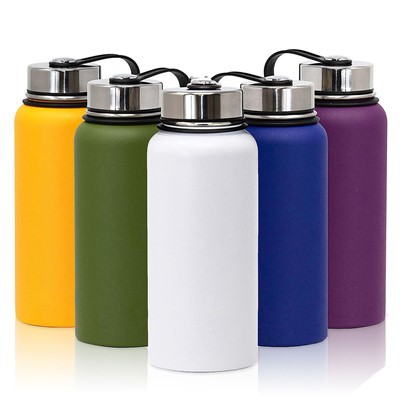
If you’re looking to source high-quality, safe water bottles for your business, don’t hesitate to reach out to discuss your specific needs. Whether you need a small batch of branded bottles for a promotional campaign or a large bulk order for a resort, we can customize options to fit your requirements, materials, and budget.
Silicone Water Bottle References:
- U.S. Food and Drug Administration. (2023). Bisphenol A (BPA) in Food Contact Applications: Status Update.
- European Food Safety Authority. (2022). Update on the safety of bisphenol A (BPA) in food contact materials.
- Centers for Disease Control and Prevention. (2021). Bisphenol A (BPA) Exposure in the U.S. Population.
- National Toxicology Program. (2018). NTP Monograph on the Health Effects of Bisphenol A.
- World Health Organization. (2019). Bisphenol A in Drinking-Water: Background Document for Development of WHO Guidelines for Drinking-Water Quality.
Polywell International
Polywell International is one of the most professional water bottle manufacturers and suppliers in China, featured by quality products and good price. Please rest assured to buy advanced water bottle made in China here and get quotation from our factory. Customized orders are welcome.
Address: Building 3, Chengzhou Industrial Zone, No.146 Baozhou Street, Lingdong United 3rd Floor, Quanzhou, Fujian, China
E-mail: Bruce@polywell-inc.com
WebSite: https://www.cndrinkware.com/
