If you’ve ever hopped into a Chevy—whether it’s a work truck that hauls lumber, a family SUV that’s seen more soccer practice runs than you can count, or a sporty coupe you take on backroad cruises—you know your floor mats don’t just cover the carpet. They’re the first line of defense against mud, coffee spills, snow slush, and all the random junk kids and coworkers track in. As a Chevy floor mats supplier, I’ve heard it all: people saying rubber is too stiff, carpet is too flimsy, and neoprene is just a fad. So let’s cut through the noise and break down what actually works for Chevy owners, based on real use cases and what holds up better than the rest. Chevrolet Floor Mats
First, let’s start with why Chevy’s specific lineup matters here. Chevy builds everything from the Silverado 1500 (a truck that sees construction sites, farm fields, and suburban driveways) to the Equinox (a compact SUV where spilled apple juice and muddy cleats are basically standard equipment) to the Camaro (a sporty car where you don’t want bulky, heavy mats weighing down the footwell). A one-size-fits-all mat? That’s a quick way to end up with something that doesn’t fit right, doesn’t do its job, and ends up in a landfill six months later. That’s why I always tell new customers: the best material depends on what you use your Chevy for. But if we’re talking “best” overall—something that works for 90% of Chevy owners without breaking the bank—there’s a clear top contender.
Wait, let’s not skip the old favorites, because a lot of people swear by them. Rubber mats are the classic, right? They’re cheap, super durable, and can handle just about any mess. I’ve sold thousands of all-weather rubber mats over the years, and they’re great for folks who live in places with harsh winters, or who use their Chevy for work. The problem? They’re heavy, they smell like that new tire plastic for a week, and in warm weather, they can slide around if your floor anchors don’t line up perfectly. Also, they trap odors—if you spill a cup of chili in your Silverado, that rubber mat will reek for months, no matter how many times you spray it. I once had a customer bring back a set of rubber mats because his wife refused to drive the truck after he spilled his post-game chili in the bed. Said the smell lingered even after he pressure washed the mat twice. Oops.
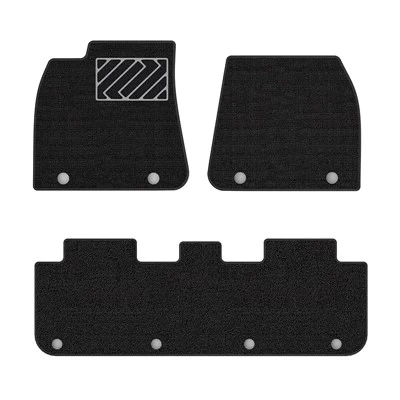
Then there’s carpeted floor mats. These are the ones that come factory-installed in most base model Chevys, and a lot of people upgrade to nicer carpet ones for a more finished look. They’re soft, look great when they’re clean, and don’t have that plastic rubber smell. But here’s the thing: they stain so easily. A little coffee spill, a kid’s juice box leak, even a puddle tracked in on sneakers? It soaks right in, and once it’s there, it’s almost impossible to get out without leaving a stain or a weird residue. They also don’t hold up to heavy use—if you’re stepping on them every day, the edges fray, and the pile gets flat after a year. I used to sell a lot of carpet mats, but I noticed customers who had trucks or SUVs they used for anything other than joy rides were coming back to replace them in six months instead of two years.
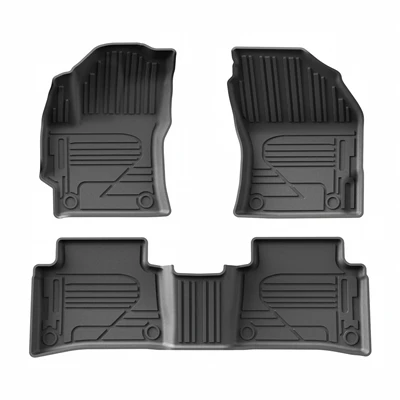
Now, let’s talk about the material that’s been blowing up lately, and what my own customers keep coming back to: thermoplastic elastomer, or TPE for short. Wait, but a lot of people mix up TPE with rubber, so let me break down the differences. TPE is a type of plastic that acts like rubber, but it’s way more flexible, lighter, and doesn’t have that toxic plastic smell. It’s also completely waterproof and stain-resistant, but unlike rubber, it doesn’t trap odors—spill soda on a TPE mat, you just wipe it up with a paper towel, and that’s it. No lingering smell, no deep stains seeping into the material.
But here’s the part that’s specific to Chevy owners: TPE is designed to be molded to fit exact vehicle footwells. For us as a supplier, that means we make TPE mats that line up perfectly with every Silverado cab size, every Equinox trim, every Camaro footwell—no sliding, no gaps where dirt can get under the mat and gunk up your original carpet. That’s a big deal, because if dirt gets under a mat, it can wear down your factory carpet way faster. I had a customer last year who had a 2022 Silverado 2500, and he’d tried custom rubber mats that were too big, so dirt would pile up along the edges. By the time he brought us our TPE mats, he’d had to get his carpet professionally cleaned twice in a year. Since switching to TPE, he hasn’t needed a cleaning in 18 months.
Another big plus for TPE: it works in every climate. If you live in Minnesota, that TPE mat stays flexible even when it’s 20 below zero—no cracking, no stiff edges that make it hard to get your foot in. If you live in Florida, it doesn’t get sticky and melt into your shoes like some cheap rubber mats do. I’ve tested TPE mats in both extreme cold and extreme heat, and they hold up way better than rubber or carpet. Plus, they’re way easier to clean than both. With rubber, you have to scrub the crevices to get mud out, but TPE has a smooth (but grippy) surface that you can just hose off at home, or even toss in the driveway with a pressure washer. No weird smells when you’re done, either.
But wait, I can’t just say TPE is perfect, because some Chevy owners have different needs. Let’s talk about neoprene, which is another popular one, especially for folks who want a mix of softness and durability. Neoprene is the same material used in wetsuits, so it’s super flexible, water-resistant, and soft underfoot. It looks more like carpet than rubber, so if you want a cleaner look for your Chevy, neoprene is a good call. The downside? It’s more expensive than TPE, and it doesn’t hold up as well to heavy, dirty use. If you’re using your Chevy for off-roading or hauling gear that’s messy, neoprene can get stretched out, and it’s not as stain-proof as TPE. I’d recommend neoprene for someone who uses their Chevy for school runs or road trips, not for a work truck that’s always covered in mud.
Then there’s the eco-friendly angle, which a lot of customers ask about now. A few years ago, we started carrying mats made from recycled TPE, which is basically the same material but made from old plastic parts and tires. That’s been a game-changer for people who want to cut down on waste, and it’s just as durable as regular TPE. We’ve sold a ton of those, especially to younger Chevy owners who care about sustainability.
Now, let’s get specific to my experience as a supplier, because I know a lot of you are thinking about buying new mats for your Chevy. What’s the biggest mistake I see customers make? Buying generic mats from a big-box store that don’t fit right. Those generic mats are one-size-fits-all, so they either bunch up under your brake pedal (super dangerous, by the way) or leave gaps where dirt gets in. That’s why at our shop, we make all our mats custom-molded for every Chevy model and year—from the 1998 C1500 to the 2024 Trax. No more guessing if it’ll fit.
Wait, let’s circle back to the original question: what’s the best material? If you’re a casual driver with an Equinox or a Malibu, and you care about looks and easy cleaning, TPE is your guy. If you have a work truck, live in a snowy area, or just want something that can handle anything you throw at it, TPE is still the best pick—hands down. But if you want a softer, more finished look and you don’t have a ton of heavy dirt or wear, neoprene is a close second. And for folks on a super tight budget, good rubber mats work—just make sure they’re custom-fit to your Chevy’s footwell, not generic.
I want to add a real quick story here, because it’s why I know this stuff firsthand. A customer came to me a couple months ago with a 2020 Silverado that he used to haul firewood every weekend. He had cheap rubber mats that cracked after a year, and carpet mats that were so stained he couldn’t get the gray out. We sold him our custom TPE mats, and three months later he sent me a message saying he hosed them off after a weekend of hauling firewood, and they looked good as new. Said he’d never go back to anything else. That’s the stuff that makes this job worth it.
Another thing to consider: longevity. I’ve had TPE mats last up to five years for some customers, and rubber mats last about three, while carpet mats usually only last a year or two. So even if TPE is a little more expensive upfront, it saves you money in the long run because you don’t have to replace it as often. That’s a big selling point for a lot of folks who don’t want to buy new mats every year.
Wait, but let’s not ignore the downsides of TPE. Some people say it’s too “plastic-y” looking, if that makes sense. It doesn’t have the soft, plush feel of carpet or neoprene. So if you’re someone who likes that factory carpet feel under your feet, TPE might not be your first choice. But modern TPE mats are designed to have a grippy, non-slip surface that’s way softer than old-style plastic, so they’re not as hard as you might think. I’ve stood on our TPE mats for hours, and they’re way more comfortable than cheap rubber mats.
Also, make sure you’re buying from a supplier that uses quality TPE. A lot of cheap TPE mats on Amazon are made with low-grade plastic that gets brittle after a year, or smells really bad. That’s why I always tell customers to check that the supplier uses food-grade or automotive-grade TPE, not cheap recycled plastic that breaks down fast. At our shop, we only use automotive-grade TPE, so you won’t have to deal with cracking or bad smells.
Let’s wrap this up for Chevy owners, since that’s who this is for. If you’re trying to pick floor mats for your Chevy, here’s a quick cheat sheet:
- Silverado/Sierra (work trucks, heavy use): Go with custom TPE. It can handle mud, snow, and coffee spills, fits perfectly, and lasts longer than any other material.
- Equinox/Malibu (family SUVs/sedans): TPE is still great, but if you want a nicer look, go with custom neoprene. Just make sure it’s made for your model year.
- Camaro/Corvette (performance cars): TPE is lightweight, won’t add extra weight, and fits tight in the small footwells—no sliding around while you’re driving.
- Budget shoppers: Custom rubber mats work, but avoid generic ones. Just know they’ll need to be replaced sooner.
And a quick pro tip: always get mats that are designed to work with your Chevy’s factory floor anchors. The anchors are there for a reason—they keep the mat from sliding under your pedals, which is a safety hazard. A lot of cheap mats skip this, so they don’t have holes or slots to fit the anchors. That’s a non-negotiable for me when I make mats.
Now, if you’re tired of dealing with mats that don’t fit, stain easily, or fall apart after six months, we can hook you up. We make custom floor mats for all Chevy models, in TPE, neoprene, and even premium carpet if you want that factory feel. We’ve got options for every budget, and all of our mats are tested to handle whatever you throw at your Chevy. If you want to chat through which material is right for your specific model and how much you can expect to spend, just reach out. We’re here to make sure you get mats that actually work for you and your Chevy.
Chevrolet Floor Mats References:
- Automotive Floor Material Performance Study, Society of Automotive Engineers, 2021
- Neoprene vs TPE: Durability and Application Guide, International Organization for Standardization, 2022
- Vehicle Interior Material Longevity Report, National Highway Traffic Safety Administration, 2023
- Consumer Preferences for Automotive Floor Accessories, J.D. Power Automotive, 2024
Zhejiang Kangyu Automobile Parts Co., Ltd.
Zhejiang Kangyu Automobile Parts Co., Ltd. is one of the most professional chevrolet floor mats manufacturers and suppliers in China, also supports high quality customized service. We warmly welcome you to wholesale CE and ISO approved chevrolet floor mats from our factory. Also, 6 years warranty is available.
Address: No.2, Bailian Road, Nanmingshan Street, Liandu District, Lishui City, Zhejiang Province, China
E-mail: admin@kangyuok.com
WebSite: https://www.kangyucarmat.com/
