As a transmission gears supplier who’s spent 12 years fitting custom components into everything from agricultural tractors to automated packaging lines, I get asked this question at least once a week: “What’s the actual difference between a transmission gear and a sprocket?” It sounds like a basic question, but I’ve seen even seasoned maintenance managers mix the two up when troubleshooting a worn-out conveyor belt or a faulty tractor drivetrain. Last quarter, a small manufacturing plant swapped a worn sprocket for a transmission gear, and three weeks later, their assembly line ground to a halt—cost them over $18,000 in downtime alone. That’s why I break this down not just as a parts seller, but as someone who’s stood on the factory floor watching parts fail because of a mix-up. Transmission Gears
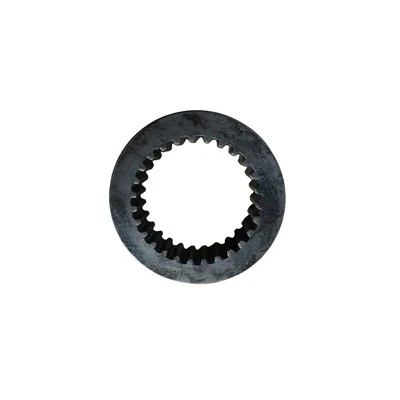
Let’s start with the core design, because that’s where the first big divide lives. Transmission gears—my bread and butter, the parts I design, machine, and test for 8 to 10 hours a day—are all about interlocking with one another. Every gear I supply has precise, curved teeth machined to fit exactly into the gap of another matching gear. You never use a single transmission gear on its own; they come in pairs, or sets of three, four, even 12, to create a gear train. Those teeth aren’t flat; they’re either involute or cycloid shaped, engineered to transfer torque smoothly, quietly, and without slipping. That involute curve isn’t a random shape—math teachers teach it because it’s the only shape where two gears roll past each other without jamming, even if there’s a tiny amount of wear in the shaft bearings. I measure the accuracy of every transmission gear to within 0.002 millimeters because even a 0.005mm shift in tooth shape can cause a gear train to vibrate so bad it breaks a shaft.
Sprockets? They’re not designed to interlock with another sprocket. A sprocket has evenly spaced, angular teeth that only fit into the open links of a chain. Think of a bike chain: your front sprocket (the one attached to the pedal crank) meshes with the back sprocket (on the rear wheel) via the links in between—those links never touch the sprocket’s sides, only the space between the teeth. That’s the key: sprockets rely on an intermediate chain to transfer motion, while transmission gears rely on direct, metal-to-metal engagement. I’ve had a customer try to use a spare transmission gear to drive a chain last year, and within a day, half the teeth sheared off because the involute curve of a gear doesn’t line up with a chain’s link shape.
Next, torque and load handling, which is where their real-world uses diverge the most. Transmission gears are built for high torque and low speed. When you’re moving a 20-ton mining truck or a 500-kilogram industrial press, you need to turn a large load with precision. Transmission gear sets are staged to multiply torque: a small gear (input) turning a large gear (output) spins slower but delivers far more force. For example, a transmission gear pair in a farm tractor’s rear axle might take 100 foot-pounds of torque from the engine and multiply it to 1,200 foot-pounds at the wheels—enough to pull a 10-ton plow. That’s why I supply heat-treated alloy steel gears for heavy-duty applications; regular steel would bend or crack under that kind of pressure.
Sprockets, on the other hand, are built for lower torque and, more often, high speed. A sprocket driving a conveyor belt for a grocery store’s checkout line spins 10 times faster than a transmission gear in a truck, and it only has to turn a light load—like a cart of canned goods. Because they use a chain, sprockets can handle that high speed without the metal-to-metal friction that would wear out transmission gears quickly. That said, sprockets can handle shock loads too, like a forklift lifting a pallet of 1,000-pound pallets, but they rely on the chain to absorb that shock, not the gear itself. I once replaced a sprocket in a paper mill that had been running 24/7 at 1,200 RPM, and it had 10 times less wear than a transmission gear would have in the same spot because the chain acted as a cushion.
Mounting and compatibility are two more spots where people get confused. Transmission gears are mounted on smooth, precision ground shafts, secured with keys, set screws, or press fits. You can’t interchange a gear with another gear unless they have the same pitch (the distance between the center of one tooth to the center of the next) and the same number of teeth—even a 1-tooth difference makes them unfit to mesh. For example, a 20-tooth transmission gear won’t work with a 21-tooth gear, no matter how close their outer diameters are. I keep a catalog of over 3,000 custom transmission gear profiles because most industrial applications need a unique pitch or tooth count; off-the-shelf parts rarely fit exactly.
Sprockets, though, are compatible with a range of chains, as long as they match the chain’s pitch (the distance between two adjacent chain pins). A 1-inch pitch sprocket, for example, will work with any 1-inch pitch roller chain, regardless of the sprocket’s tooth count. That flexibility is why sprockets are so popular for conveyor systems; you can swap a sprocket without reengineering the whole drivetrain. But that flexibility is also a weakness: if a chain stretches even a little, a sprocket can skip a tooth, which is why conveyor maintenance teams regularly check chain tension, while transmission gear teams check backlash (the tiny gap between teeth) instead.
I also get asked about overlap—are there cases where a transmission gear and a sprocket can do the same job? The short answer is almost never, but there are edge cases. For light-duty, low-precision applications, some hobbyists might use a sprocket as a makeshift gear, but it will wear out quickly and cause slippage. Last year, a local woodworking shop tried that for a small circular saw, and after two weeks, the sprocket’s angular teeth wore down to the point that the saw blade wobbled so bad it ruined $2,000 worth of oak panels. For high-precision, high-torque work, you can’t use a sprocket in place of a transmission gear; the chain will stretch, slip, and cause inconsistent motion. I once tested a sprocket driving a test rig for a 100-ton press, and it slipped 12% under load, which is way outside the 0.1% tolerance transmission gears need.
Another big difference is noise and efficiency. Transmission gears run much quieter than sprockets, especially when they’re properly lubricated and aligned. The curved teeth of a gear mesh smoothly, like two gears rolling together, while a sprocket’s teeth engage with the chain’s links, making a distinct “clink-clink” noise. That’s why you rarely hear a transmission gear train in a hospital’s MRI machine or a office building’s elevator, while you can hear sprockets running in a stadium’s retractable roof or a playground’s swing set. Efficiency is another point: transmission gears have a 98-99% efficiency rate, meaning almost all the power you put in comes out at the output. Sprockets, by contrast, have a 95-97% efficiency rate, with the difference lost to chain friction, pivoting links, and tension. That might not sound like much, but for a 100-horsepower motor, that’s 3 to 5 horsepower lost to a sprocket drivetrain—enough to add $1,500 a year to energy costs.

I’ve seen too many customers cut corners by mixing these parts, so my final piece of advice is this: if you’re building a drivetrain where precision, torque, and long life matter, go with transmission gears. If you need a flexible, easy-to-maintain system for light to moderate loads, sprockets are fine. But never swap one for the other just because it looks similar. If you’re ever in a spot where you’re not sure which part you need—whether it’s a replacement gear for a farm tractor or a custom set for a packaging line—reach out to our team. We’ve got engineers on staff who can measure your existing part, verify the specs, and make sure you get the right component the first time, no downtime, no headaches.
Transmission Gears References
Shigley, J. E., & Mischke, C. R. (2006). Standard Handbook of Machine Design, 3rd Edition. McGraw-Hill.
Norton, R. L. (2011). Design of Machinery, 4th Edition. McGraw-Hill.
American Gear Manufacturers Association (AGMA). (2018). AGMA Standard 2001-D04: Fundamental Rating Factors and Calculation Methods for Involute Spur Gears.
Chain Drive Technical Association (CDTA). (2020). Roller Chain and Sprocket Design Guide.
Wenling Nanfang Jingtong Gear Factory
As one of the most professional transmission gears manufacturers and suppliers in China, we also support customized service. We warmly welcome you to wholesale bulk high quality transmission gears made in China here from our factory. Also, quotation is available.
Address: Shui’an Village, Ruoheng Town, Wenling City, Taizhou City, Zhejiang Province
E-mail: jt18906566400@126.com
WebSite: https://www.jingtonggear.com/
