If you’ve ever watched a pneumatic cylinder extend and retract smoothly on a factory assembly line, a packaging machine, or a robotic arm handling delicate components, you’ve probably witnessed the quiet work of glide rings—small, unassuming parts that play a huge role in how pneumatic assemblies perform. As a pneumatic seal supplier who’s talked to dozens of engineers, maintenance technicians, and plant managers over the last decade, I’ve seen first-hand how misunderstood these components can be. Many people mistake glide rings for a afterthought, a cheap add-on they can skip to save a few bucks, but that choice often leads to costly downtime, premature wear, and even complete assembly failure. Today, I want to break down exactly what glide rings do, why they matter, and how getting them right can transform the reliability of your pneumatic systems. Pneumatic Seal
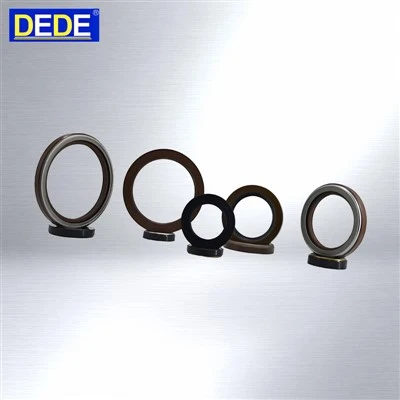
Let’s start with the basics. Pneumatic assemblies rely on compressed air to generate linear or rotary motion, right? The core of most linear pneumatic cylinders is a piston and a piston rod that moves back and forth inside a metal or composite barrel. When compressed air pushes the piston, the rod extends, and when the air reverses, it retracts. Simple enough, but there’s a big problem here: the piston rod and the inner walls of the cylinder barrel aren’t perfectly smooth, and they definitely don’t align perfectly. Even with tight manufacturing tolerances, every metal surface has minor imperfections—micro-scratches, tiny burrs, or slight warps from machining. Plus, when the piston is under load (like pushing a heavy pallet in a warehouse or lifting a mold in a factory), it can tilt at a small angle inside the barrel, creating uneven friction. That’s where glide rings come in.
At their core, glide rings are low-friction, wear-resistant annular seals (though technically, they’re not primary seals—they’re secondary wear components) designed to separate moving parts in a pneumatic assembly. Their primary purpose is twofold: first, to prevent metal-to-metal contact between the piston rod (or piston, depending on where the ring is installed) and the inner surface of the cylinder barrel, and second, to guide the moving parts evenly, centering them within the barrel as they move. That might sound straightforward, but let’s unpack why that single function solves so many common pneumatic problems.
Take metal-to-metal contact first. If you don’t have a glide ring, the piston rod will rub directly against the cylinder wall every time it moves. Over time, that friction causes two issues: the rod will develop deep grooves or scoring, and the barrel wall will wear thin in spots. Even worse, that friction generates heat, which can break down primary seals (like our polyurethane or rubber rod seals) far faster than normal. A rod seal’s job is to keep compressed air on one side of the piston, but if the seal is bouncing or dragging on a rough rod surface, it can’t do its job. We’ve seen countless cases where a plant manager skipped adding a glide ring to cut costs, only to replace a $20 rod seal every three months instead of every two years—and that adds up fast. Multiply that across 50 or 100 cylinders on a production line, and you’re talking thousands of dollars in annual maintenance, not to mention the lost production time while you’re swapping parts.
Next, guiding the moving parts evenly. Pneumatic cylinders aren’t rigid, and under load, they can deflect a little. A heavy load on the end of a piston rod, for example, can cause the rod to bend or tilt, which throws off the alignment between the rod and the barrel. This misalignment creates what’s called side load—uneven pressure on the rod seal, the piston, and the barrel walls. Without a glide ring to distribute that load, side load will cause the rod seal to wear unevenly, leading to air leakage, reduced cylinder force, and eventually, seal failure. Glide rings act as a buffer here, spreading the side load across the entire circumference of the rod or piston, keeping alignment tight and reducing stress on every other component in the assembly.
Now, not all glide rings are the same, and that’s a point I see people miss all the time. The material you choose for a glide ring directly impacts its performance, lifespan, and compatibility with your pneumatic system. We supply three main types of glide rings, each tailored to different applications, and I always advise customers to pick based on their specific operating conditions, not just the lowest price.
First, there’s fabric-reinforced glide rings, made with a core of woven synthetic fibers (like PTFE or aramid) impregnated with a low-friction resin. These are the workhorses of industrial pneumatic systems—they’re durable, can handle moderate temperatures (up to around 250°F, give or take), and offer excellent wear resistance in dry or lightly lubricated air applications. They’re great for general-purpose cylinders on assembly lines, conveyor systems, and packaging equipment, where the load is consistent and not extremely heavy. I remember a customer in the automotive industry who was using nylon glide rings in their assembly line cylinders; those rings were wearing out every six months, causing the rod seals to leak. Swapping to our fabric-reinforced PTFE glide rings cut that wear rate to once every three years, and their seal failures dropped by 90%. That’s the kind of ROI we love to see.
Second, there’s polyurethane glide rings, which are stiffer than fabric-reinforced ones, making them ideal for higher side load applications. If you have a cylinder that’s lifting heavy parts, like stamping dies or large pallets, polyurethane glide rings can handle the extra stress without deforming. They also have good chemical resistance, so if your compressed air has minor oil contaminants (common in systems that use lubricated air), they hold up better than some other materials. The downside? Polyurethane has a higher friction coefficient than PTFE-based rings, so it’s not the best for fast-moving cylinders or applications where energy efficiency is a priority. We’ve seen robotics manufacturers opt for polyurethane glide rings in their heavy-lift arm cylinders, where the extra stiffness prevents rod tilt during high-force operations.
Third, there’s PTFE (polytetrafluoroethylene) glide rings, often called Teflon rings, which are the lowest friction option. PTFE is naturally slippery, so these rings are perfect for fast-cycle pneumatic systems, where the cylinder is extending and retracting hundreds of times an hour. They also work well with dry air systems, since they don’t rely on lubrication to reduce friction—unlike some other glide ring materials. The catch here is that PTFE is softer, so it’s more prone to wear if you have extreme side load or abrasive contaminants in your compressed air, like dust or metal shavings. We recommend PTFE rings for applications like pick-and-place robots, lab equipment, or small packaging machines where speed and smooth motion matter more than maximum load capacity.
Another common question we get: do glide rings need to be lubricated? The short answer is, it depends on the material and your application. PTFE glide rings are self-lubricating, so they don’t need any added oil in the compressed air. Fabric-reinforced and polyurethane glide rings, though, benefit from a light lubricant to reduce friction and extend their lifespan. Even a light coat of petroleum-based or synthetic air lubricant can cut wear by 30% or more, according to industry testing. But here’s a word of caution: too much lubricant can backfire. Excess oil can attract dust and debris, which act like abrasives on the glide ring and rod surface, causing more wear over time. It’s a balance, and that’s why we work with customers to match the right glide ring and lubrication schedule to their specific setup.
Now, let’s talk about a mistake we see all too often: mismatched glide rings for the application. A few months ago, a customer in the food and beverage industry reached out to us with a problem: their pneumatic cylinders for bottling line cap feeders were failing every few weeks. They were using cheap nylon glide rings, which are softer and cheaper than the options we supply, but nylon isn’t compatible with the food-grade cleaning chemicals they used to sanitize the line. The chemicals were breaking down the nylon, causing the ring to swell and drag on the rod, which wore out the rod seal immediately. We swapped in our food-grade fabric-reinforced PTFE glide rings, which are resistant to common sanitizers, and their failure rate dropped to zero. That’s exactly why we emphasize that glide ring selection shouldn’t be an afterthought—material compatibility with your environment is just as important as wear resistance.
So, what happens if you skip glide rings entirely? We’ve heard horror stories from maintenance teams about that: a cylinder barrel scoring so badly that the entire assembly had to be replaced, a piston rod bent beyond repair because there was nothing guiding it, or a production line shut down for 12 hours because a seal failed and leaked compressed air. In one case, a customer told us they saved $15 total by skipping a $2 glide ring on a cylinder, but the downtime to fix the damaged rod and barrel cost them over $12,000. That’s a cost no plant manager wants to absorb, and it’s all preventable with a properly sized, material-matched glide ring.
Let’s wrap this up with a few key takeaways to keep in mind: glide rings aren’t disposable parts—they’re a critical component that protects your pneumatic seals, extends the life of your cylinders, and reduces maintenance costs. The right glide ring depends on your load, cycle speed, operating temperature, and environment, so don’t just grab the cheapest option off the shelf. If you’re experiencing frequent seal failures, uneven cylinder motion, or unexpected downtime, it’s worth checking if your glide rings are the right fit for your application.
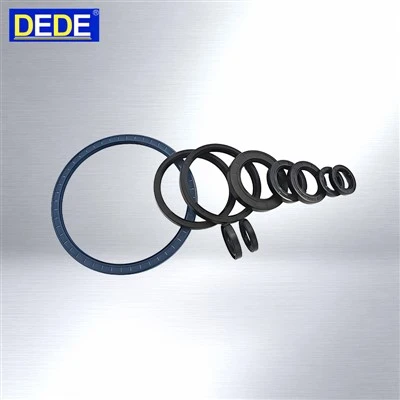
If you’re looking to upgrade your pneumatic assemblies, troubleshoot persistent component wear, or just want to make sure you’re choosing the right glide rings for your systems, I’d encourage you to reach out. We work with everything from small custom machinery builders to large industrial plants, so no matter the size of your operation, we can help you find the right solution to keep your pneumatic systems running smoothly and reliably.
Stainless PTFE Shaft Seal References
- Pneumatic Technology Association. “Design & Maintenance Guidelines for Pneumatic Cylinder Assemblies.” 2021.
- Society of Tribologists and Lubrication Engineers. “Wear Performance of Glide Ring Materials in Linear Pneumatic Actuators.” 2019.
- Industrial Seal Manufacturers Association. “Selection Criteria for Secondary Wear Components in Pneumatic Systems.” 2022.
DEDE SEAL Co., Ltd.
DEDE Seal Co., Ltd. is one of the most experienced pneumatic seal manufacturers and suppliers in China for over 35 years, featured by quality products and good price. Please feel free to buy bulk customized pneumatic seal made in China here from our factory. Welcome to contact us for pricelist.
Address: Hunan Road, Pudong New Area, Shanghai, China
E-mail: info@dedeseal.com
WebSite: https://www.dedesealing.com/
