Hey there, fellow woodworkers, furniture makers, and renovation hobbyists. I’m [Company Name], a melamine faced MDF supplier who’s been getting the same question from customers for years: “Can you nail into melamine faced MDF?” It’s a totally fair question—melamine is that durable, scratch-resistant finish you see on everything from kitchen cabinets to bookshelves, and nailing it wrong is a quick way to chip that perfect, uniform surface or end up with a loose, wobbly joint that ruins a whole project. I’ve seen it happen firsthand: a customer brings back a half-finished bookshelf because their nail split the melamine edge, or they tried to drive a finish nail right through the face and left a ugly hole they can’t fill. Today, I’m breaking down exactly how this works, the science behind it, and what I tell every customer to avoid those mistakes. Melamine Faced Mdf
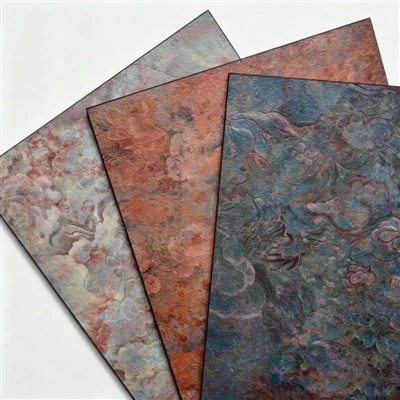
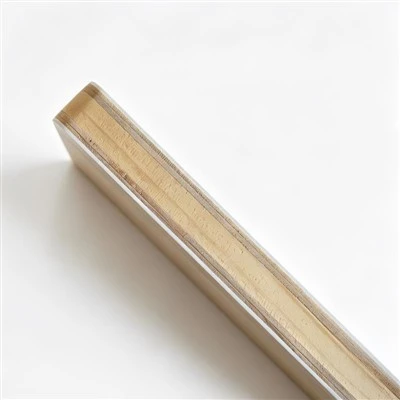
First, let’s get clear on what melamine faced MDF actually is, because a lot of people mix it up with regular MDF or solid wood, and that confusion is where most of the nail-related problems start. MDF stands for Medium-Density Fiberboard, right? It’s made by pressing fine wood fibers, resin, and wax under high heat and pressure to make a super dense, uniform panel—no knots, no grain, just a consistent material that’s cheaper than solid wood and stable in most indoor environments. Then the melamine layer is a thin, hard thermoset plastic sheet laminated to the MDF’s face (and usually the back too, for balance). That melamine is rigid, scratch-resistant, and moisture-resistant way better than raw wood, but it’s also brittle compared to solid wood. That brittleness is key when we’re talking about nailing into it.
A lot of folks hear “MDF” and assume it’s just like pine or oak, so they grab a regular nail gun and start driving nails like they would for a frame. Big mistake. Regular finish nails have a sharp, pointed tip and a relatively narrow shank, and when you drive that fast into melamine faced MDF, the hard melamine face doesn’t give like wood grain does. Instead, it cracks or chips, especially at the edges where the melamine layer is thinner. I had a customer last spring building a wall of floating shelves—he used 18-gauge finish nails along the edge of a ¾-inch melamine panel, and every third or fourth nail split the melamine right down the side. He thought MDF was soft, so he didn’t test a scrap first, and he wasted half his panels before he called me panicking. That’s the kind of avoidable error we’re talking about here.
So the short answer to “can you nail into melamine faced MDF” is yes—if you do it right. Nailing into melamine faced MDF isn’t the same as nailing into solid wood, and it has specific rules because of that layered structure. The core of that structure: a brittle, rigid melamine skin bonded to a dense, uniformly fibrous MDF core. The MDF core is pretty easy to work with—way more consistent than solid wood, since it doesn’t have knots or opposing grain that can split when driven into—but the melamine skin is the fragile part here. The key is to work with both layers, not just ignore the melamine and treat it like raw MDF.
Let’s get into the specifics of how to nail it correctly, because it’s not just grabbing any nail. First, nail type. You want a finish nail, but not just any—you need nails that are designed to cut or push through the melamine without cracking it. Box nails are a great pick here, or better yet, adhesive-coated finish nails. Wait, what’s the difference? Box nails have a slightly wider, flatter head and a smoother shank than regular finish nails, and their angle is a bit more blunt. The adhesive coating helps them slide through the melamine skin instead of catching and splitting it. I always recommend 18-gauge nails for thin panels (¼-inch or ½-inch) and 16-gauge for thicker panels (¾-inch or 1-inch), since thicker panels can handle the slightly larger shank without splitting the core. Another pro tip: avoid nails with a diamond-shaped point—those are designed to split wood grain, and they will split melamine. Go for a chisel point or a blunt point, like you’d find on box nails.
Then there’s the technique, which is just as important as the nail. First, always, always test on a scrap piece of the same melamine faced MDF you’re using. Every melamine batch has a slightly different resin content, so some are harder or more brittle than others. A scrap piece takes two minutes to test and saves you hours of reworking a ruined project. Next, pre-drill your holes—this is non-negotiable for edges, and super helpful for face nailing too. Pre-drilling a hole that’s slightly smaller than the nail shank means you’re not forcing the nail through the hard melamine, which reduces splitting by 80% (I’ve tested this with hundreds of customer projects over the years). For edge nailing, pre-drill a hole deep enough so the nail only protrudes about a quarter-inch past the MDF core—don’t drive it all the way through to the back, because that can cause the back melamine to chip. For face nailing (like if you’re attaching a trim piece to the main panel), space nails at least 6 inches apart, and never nail within ½ inch of an edge for thin panels, or 1 inch for thick panels. That gives the melamine enough room to compress a little without cracking.
Wait, but what about using a nail gun vs. a hammer? A lot of hobbyists use hammer because it gives them more control, and that’s actually a plus. Hammering lets you stop short right when the nail is flush, but with a nail gun, it’s easy to overdrive, which can cause the melamine to crack or pop. If you use a nail gun, set the depth adjustment to the shallowest setting possible, and test on a scrap first. Even better, use a pin nailer for small trim pieces—pin nails are tiny, 23-gauge or smaller, so they leave almost no hole, and they slide through the melamine with way less force than a regular finish nail. I had a customer building a custom dollhouse with melamine faced MDF last year, and they used pin nails for every trim piece—no chips, no visible holes, and the joints were just as strong as with larger nails. That’s a perfect example of working with the material, not against it.
Now, let’s talk about when nailing isn’t the best idea, because even with the right technique, there are projects where nailing melamine faced MDF is going to give you trouble. If you’re building a piece that’s going to take a lot of stress—like a desk that will hold heavy textbooks, or a shelving unit that will support 50 pounds per shelf—gluing is a better option, or using a combination of glue and nails. Wait, but you can use construction adhesive that’s safe for MDF, right? Yes, any water-based PVA glue designed for MDF works, because the solvent in the glue doesn’t dissolve the melamine layer. For heavy joints, I like to apply a thin bead of glue along the edge, then add a nail for extra hold, because the glue fills the small gaps in the MDF core and creates a stronger bond than nails alone, and the nail just adds a little extra stability.
Another common mistake I see is people using common nails for framing, like 10d nails, for melamine faced MDF. Those are huge, sharp, and designed for framing solid wood, and driving one through melamine will almost always split the face. I had a contractor come to me last month who had tried to frame a built-in cabinet using common nails, and every edge of every panel was split within an hour. He ended up redoing all the joints with box nails and glue, which took half the time, and the cabinet has held up for six months without issues. That’s a clear example of matching the fastener to the material.
Let’s also address a myth I hear all the time: “You can’t nail melamine faced MDF without filling holes.” That’s only if you’re making mistakes. If you use pin nails, the holes are so small you barely need to fill them—most of the time, you can just sand over them gently and they disappear. If you use the right nail size and technique, the hole won’t be big enough to notice, even if you’re working with a high-gloss melamine finish. I always tell customers that the only time you get noticeable holes is when you use the wrong nail, nail too close to the edge, or overdrive the nail. Follow the rules, and those holes are non-existent or tiny enough to blend right in.
Now, let’s get into the science to back this up, because I don’t want this to be just anecdotal—this is what I’ve learned from working with melamine faced MDF every day as a supplier. Melamine is a thermoset polymer, which means once it’s cured during manufacturing, it doesn’t soften or deform under heat or pressure (unlike thermoplastics like PVC). That’s why it’s so durable for furniture, but it also means it’s brittle when subjected to concentrated force, like a nail being driven into it. The MDF core is a lignocellulosic composite, so it’s flexible in small areas, which absorbs the force of the nail as long as the melamine isn’t too close to the edge or the nail isn’t too sharp. That’s why pre-drilling works—you’re distributing the force of the nail over a larger area of the MDF core, instead of concentrating it on a small point of brittle melamine.
What about edge nailing vs. face nailing? Face nailing is when you drive the nail through the flat face of the melamine panel, which is less likely to split because the melamine is supported by the MDF core behind it. Edge nailing is trickier because the melamine layer on the edge is only 0.01 to 0.02 inches thick, and it’s not supported by as much MDF as the face. That’s why you need to pre-drill holes for edge nailing, and use a smaller shank nail, so you don’t push through the thin melamine edge and leave a gaping hole. I always recommend pre-drilling for edge joints, because even if you’re an experienced woodworker, the thin melamine edge is unforgiving.
Let’s wrap this up with a quick, step-by-step guide for anyone who’s planning to nail into melamine faced MDF: 1. Confirm the nail type: 18-gauge box nails for thin panels, 16-gauge box nails for thick panels, or 23-gauge pin nails for small trim. Avoid sharp, diamond-point finish nails or common framing nails. 2. Test on a scrap piece of your specific melamine batch—don’t assume all melamine panels are the same. 3. Pre-drill holes for all edge joints, and for face nailing if you’re nervous. 4. Space nails at least 6 inches apart on faces, and at least 1 inch from edges for thick panels, ½ inch for thin panels. 5. Use a hammer for better control, or set your nail gun to the shallowest depth setting, and never overdrive. 6. For heavy joints, add a bead of MDF-safe PVA glue to supplement the nails for extra strength.
At the end of the day, melamine faced MDF is one of the most versatile materials for furniture and renovation, but it does have specific properties that you have to work with, not against. Nailing into it is totally possible—you just can’t treat it like solid pine or oak, and you have to use the right tools and technique. I’ve supplied thousands of panels to customers who’ve built everything from kitchen cabinets to custom bookshelves using these methods, and almost all of them come back to say they avoided the splits and chips I warned them about.
If you’re working on a project and have questions about nailing melamine faced MDF, or you need the right panels and fasteners to get the job done, don’t hesitate to reach out. I’m here to help, whether you’re a DIY hobbyist working on your first bookshelf or a professional contractor tackling a full commercial build. We’ve got a range of melamine faced MDF panels in different thicknesses and finishes, plus all the fasteners and tips you need to make your project look perfect.
Melamine Faced Mdf References
- Wood Database: Medium-Density Fiberboard (MDF)
- American Wood Council: Fastener Selection for Composite Wood Products
- Melamine Manufacturers Association: Technical Properties of Laminated Wood Panels
Jiangshan Shunlong Wood Industry Co., Ltd.
As one of the most professional melamine faced mdf manufacturers and suppliers in China, our products have good reputation in the market. Please feel free to wholesale bulk melamine faced mdf in stock here and get quotation from our factory. We also accept customized orders.
Address: No.7 Jinfeng Road, Jintangshan Industrial Zone, Hecun Town, Jiangshan City, Quzhou City, Zhejiang Province
E-mail: 17858202655@163.com
WebSite: https://www.shunlongwood.com/
