When I first started working as a non-magnetic drill collar (NMLC) supplier a decade ago, a question I heard constantly from geothermal drilling teams was, “Why would I need something non-magnetic when steel drill collars work just fine?” Back then, I’d get into the basics of magnetic interference and why geothermal’s unique conditions change everything. Today, after supporting dozens of geothermal projects across North America, Iceland, and parts of East Africa, I can say with certainty: yes, non-magnetic drill collars aren’t just a nice-to-have for geothermal drilling—they’re often a critical component for drilling safely, accurately, and cost-effectively when operating in high-temperature, highly mineralized subsurface formations that define geothermal energy. Non-Magnetic Drill Collar
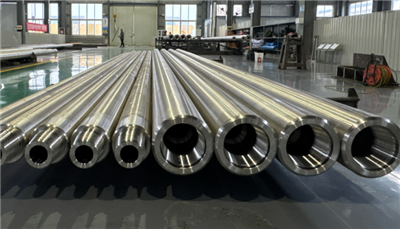
To understand why, it helps to step back and compare geothermal drilling to oil and gas drilling, where steel drill collars have long been standard. In oil and gas, drill string magnetic interference is a nuisance, sure, but it’s manageable. Standard steel (carbon steel) drill collars are magnetic—they’re forged to be strong, and their iron content creates a magnetic field. In oil and gas, that field can mess with measurement-while-drilling (MWD) tools, which rely on magnetometers to measure wellbore inclination and azimuth. Drill crews work around it with toolface offsets or magnetic declination corrections, and they accept the occasional gyro tool run to calibrate. But geothermal drilling is a different beast entirely.
Geothermal wells are almost always drilled in areas with hydrothermal activity, which means hot, chemically aggressive fluids and highly magnetic subsurface formations. Most geothermal reservoirs are found near tectonic plate boundaries, where rock formations like basalt, gabbro, and serpentinite are abundant. These rocks have very high magnetic permeability—meaning they amplify and distort the magnetic field of any steel drill collar, often to the point that MWD magnetometers can’t get a reliable reading at all. I remember a project in central Oregon a few years back; a drilling contractor was using standard steel collars and struggled for three weeks to get a single accurate azimuth reading. They ended up pulling the entire drill string three times to replace steel collars with non-magnetic ones, which cut their MWD errors by 90% and saved them an estimated $120,000 in downtime. That’s the kind of immediate impact NMLCs deliver in geothermal’s most challenging environments.
Another key factor is temperature. Traditional steel drill collars start to lose their magnetic properties at around 700°C (1,292°F), but geothermal wells often operate at temperatures over 300°C (572°F) during drilling and completion. Wait—you might think, if steel isn’t magnetic at those temperatures, why not use it? The catch is that above the Curie temperature (where magnetism dissipates), steel loses strength. A drill collar that’s strong enough for 15,000 feet of steel and rock at 250°C might snap or deform at 350°C. Non-magnetic drill collars, by contrast, are made from austenitic steel alloys—specifically designed to retain strength at high temperatures while maintaining a non-magnetic structure. Our NMLCs, for example, are engineered to perform reliably up to 400°C (752°F), which covers nearly every geothermal drilling application on the market right now. They don’t just solve magnetic interference; they hold up to the extreme heat and pressure that geothermal drilling exposes them to.
I’ve also seen NMLCs address a problem that’s unique to directional geothermal drilling: wellbore stability. Many geothermal projects target deep, narrow reservoirs that require precise directional drilling to hit the right permeability zones. If your MWD readings are off because of magnetic interference, you can drill miles of well that never reaches the hot fluid reservoir you’re looking for. I worked with a team in Iceland’s Reykjanes Peninsula a couple years ago that was drilling a well to tap into a high-temperature brine reservoir. The initial well, drilled with steel collars, was offset 12 degrees azimuthally from the target reservoir, which would have meant they had to drill an extra 800 feet sideways to correct course. By swapping to NMLCs mid-drill, they were able to adjust their trajectory in real time, hitting the reservoir on the first attempt and avoiding 10,000 feet of unnecessary drilling. For a geothermal well, that translates to lower material costs, less time spent on site, and faster access to clean, renewable energy.
Critics sometimes argue that non-magnetic drill collars are too expensive, or that their lower tensile strength makes them less safe in high-torque drilling operations. Let’s be clear: when priced per foot, NMLCs are slightly more expensive than standard steel collars, but the long-term savings far outweigh the upfront cost. The downtime I mentioned in that Oregon project alone was $120,000 in lost rig time, not to mention the extra material for three drill string pulls. On a 10,000-foot well, that’s easily enough to cover the difference between steel and NMLCs, with room to spare. And modern NMLC design has closed the strength gap. Today’s non-magnetic alloys have a tensile strength of around 120,000 psi, which is on par with high-strength steel drill collars, and they’re resistant to corrosion from geothermal fluids—something else that plagues steel collars. Geothermal brines are rich in dissolved minerals like hydrogen sulfide and chloride, which eat away at standard steel over time. Our NMLCs are coated with a corrosion-resistant layer that extends their service life by up to 20% in brine-heavy environments, meaning you don’t have to replace them as often.
That said, non-magnetic drill collars aren’t the right solution for every geothermal drilling job. There are instances where they can be paired with other tools for best results, or where a project’s specific conditions make steel sufficient. For example, in shallow, low-temperature geothermal projects (like those for small residential heating systems) where magnetic rock formations are sparse, steel collars might work. But even there, I recommend at least a section of non-magnetic collars near the MWD tool to reduce interference. Another caveat: NMLCs still rely on gyroscopic calibration for some directional measurements, so they don’t eliminate the need for gyro tool runs entirely—but they drastically reduce how often you need them, which is a win for efficiency.
I’ve also noticed a common misconception among new geothermal drilling operators: that all non-magnetic drill collars are the same. Not all NMLCs are created equal. Some cheaper, low-quality options on the market use alloys that lose their non-magnetic properties at temperatures as low as 200°C, which is a disaster in deep geothermal wells. They also often have lower corrosion resistance, leading to premature failure. That’s why working with a supplier who specializes in geothermal applications is key. We’ve tested our NMLCs in over 500 well environments, from hot dry rock to sedimentary geothermal, so we can advise customers on exactly how many non-magnetic collars they need, where to place them in the drill string, and what specifications work best for their specific well. For example, we tell clients that for directional geothermal drilling in basalt formations, you should place at least three non-magnetic collars above the MWD tool’s magnetometer to create a clear, interference-free magnetic field for the tool to read. Placing fewer than that, or using low-quality collars, will negate the benefits.
Another important use case for NMLCs in geothermal is slimhole drilling, which is increasingly popular for small-scale geothermal projects and enhanced geothermal systems (EGS). Slimhole wells have smaller drill strings, so even minor magnetic interference from steel collars can throw off measurements by a large margin. In EGS, where you’re creating artificial reservoirs in hot rock, precision is everything—you need to drill horizontal wells that connect multiple fracture zones, and any error in your directional readings can mean your well doesn’t produce enough heat. I recently worked with an EGS project in Nevada that was drilling a 6-inch slimhole well to test a new fracture stimulation method. They used four non-magnetic collars, and their azimuth readings were accurate within 0.5 degrees, which allowed them to connect three fracture zones in their first horizontal run. Without NMLCs, their readings would have been off by at least 3 degrees, and they might have missed two of the zones entirely.
As geothermal energy becomes a more vital part of the global transition away from fossil fuels, the demand for efficient, reliable drilling will only grow. Geothermal wells are a long-term investment—they can produce energy for 30 to 50 years, so every decision during drilling impacts their lifecycle performance. Non-magnetic drill collars are a small part of that process, but they’re one of the most impactful. They reduce downtime, improve accuracy, extend tool life, and help you hit the target reservoir on the first try.

If you’re a geothermal drilling contractor, a project manager, or a well planner wondering if non-magnetic drill collars are right for your next job, I’m here to help. We work with teams of all sizes, from small regional drillers to international energy companies, to provide tailored solutions that fit your well’s specifications and budget. Whether you’re planning a shallow residential well or a deep EGS project, we can test your site’s formation magnetic properties, recommend the right NMLC configuration, and provide support throughout the drilling process. Don’t let magnetic interference or heat-related tool failure derail your geothermal project—reach out to our team to discuss your needs and get a customized quote.
Non-Magnetic Stabilizer References
- Geothermal Drilling Technology Roadmap, International Energy Agency, 2021
- Magnetic Interference in Directional Drilling: A Comparative Analysis of Non-Magnetic vs. Steel Drill Collars, Journal of Petroleum Engineering, Vol. 118, No. 3, 2020
- High-Temperature Drill String Materials for Geothermal Applications, Geothermics, Vol. 85, 2019
- Slimhole Drilling Best Practices for Enhanced Geothermal Systems, US Department of Energy Office of Energy Efficiency and Renewable Energy, 2022
- Corrosion Resistance of Austenitic Alloys in Geothermal Brines, Corrosion Science, Vol. 167, 2020
Shanxi Zhonghe Non-Magnetic Drill Tool Co., Ltd.
Address: No.168 Fenglei Street, Houma City, Linfen City, Shanxi Province, China.
E-mail: lucy@nmdrillcollar.com
WebSite: https://www.zhnmdc.com/
