Alright, let’s jump into what secondary processing in CNC milling services actually means—because if you’re deep in manufacturing parts for aerospace, medical devices, custom robotics, or even consumer electronics, you’ve probably heard this term thrown around, and you might be wondering: do I need it? As someone who runs a CNC milling service, I talk to clients every day who come in with raw milled parts that look “good enough” on paper, only to realize later they’re missing the tiny, make-or-break steps that turn a rough component into a usable, compliant part. Let’s break this down like we would over a coffee (or a quick Zoom, if that’s your vibe). CNC Milling Services
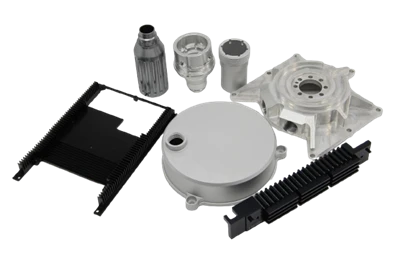
First, let’s get one thing straight: CNC milling itself is primary processing. That’s the stage where we take a solid block of metal, plastic, or even hard ceramic, and use computer-controlled cutting tools to carve out the basic shape, pockets, holes, and features you designed in SolidWorks or Fusion 360. By the end of primary milling, you’ve got a part that’s roughly the right size, but it’s far from finished. Secondary processing is all the steps we do after that initial cut to refine, strengthen, test, or polish the part to meet your exact specs. Think of it like baking a cake: mixing the batter and baking it is primary processing, but frosting, decorating, adding fillings, and making sure the cake is level and no raw spots are left? That’s secondary.
Wait, why does that matter so much? Let’s use a common example: a medical implant part, like a hip stem. Primary milling might shape it to the right length and outer curve, but if the surface is rough from the mill’s cutting tool, that can cause irritation when it’s inside a patient’s body. Or if the tolerance on a pinhole is off by even 0.005mm (that’s thinner than a human hair), the implant won’t fit correctly into the bone. Secondary processing fixes those gaps. It’s not just “extra work”—it’s the difference between a part that works and a part that fails, whether that’s a $5 consumer gadget or a $50k aerospace component.
Now, let’s go through the most common secondary processing steps we do at our shop, because you’ll probably run into these if you’re working with a CNC milling service. Let’s start with surface finishing, since that’s the big one most clients ask about. Surface finish refers to how smooth the part’s surface is, measured in Ra (roughness average) numbers. Primary milling might give you a Ra of 125 or 63, which is fine for a bracket no one sees, but for something that needs to glide against another part—like a gear or a hydraulic valve—you need Ra values way lower, like 16 or 8. How do we get there? Common methods: grinding (a precision abrasive wheel that sands the part smooth), polishing (for a glossy, decorative or low-friction finish), bead blasting (shooting tiny glass beads at the surface to create a matte, uniform look, great for parts that won’t scratch easily), and anodizing (for aluminum parts, this creates a hard, corrosion-resistant oxide layer that can also be colored). Oh, and deburring—super important! When you cut metal, those sharp edges left from the mill (called burrs) aren’t just annoying; they can cut someone handling the part, or catch on another component and cause it to fail. Deburring is usually done with a vibratory tumbler, a wire brush, or even a tiny machine that grinds the edges smooth after primary milling.
Next up: precision machining touch-ups. Wait, didn’t we already machine it? Sometimes, primary milling has tiny inaccuracies—maybe the spindle wandered a little, or the material warped slightly from the heat of cutting. So we might do secondary milling operations to refine specific features, like reaming a hole to get a super tight tolerance (reaming makes a hole more precise than drilling alone), or tapping threads into a hole that primary milling didn’t get right. Threading is another big one—if you need a part with screws or bolts, we can tap internal threads (cutting threads inside a hole) or thread external features, like a pipe fitting. This is secondary because it’s a step we add after the initial milling to get those exact threads aligned and sized correctly.
Then there’s heat treatment. A lot of CNC milled parts are made from materials like steel, titanium, or alloyed aluminum, which are soft right off the block. If you need a part that’s strong enough to hold up to pressure, impact, or repeated use, heat treatment is non-negotiable. This is where we heat the part to a specific temperature, hold it there, and cool it down slowly or quickly to change its mechanical properties. For example, quenching (rapid cooling) makes steel harder, while tempering after quenching makes it less brittle—perfect for tools or automotive parts that don’t want to snap. Annealing, another heat treatment, is for softening parts that are too hard to machine, but wait—no, annealing is sometimes done before primary milling too, but a lot of times, we do it after primary milling to relieve internal stress from cutting, so the part doesn’t warp later on. That’s a classic secondary step.
Testing and inspection also count as secondary processing. Think about it: when we finish milling a part, we have to make sure it meets your specs. That means using coordinate measuring machines (CMMs) to check every dimension with 0.001mm accuracy, or using visual inspection for cosmetic defects like scratches or uneven finishes. For medical parts, we might do biocompatibility testing; for aerospace, we check material strength or corrosion resistance. This isn’t just double-checking—it’s a required step to prove the part works, especially for regulated industries.
Wait, are there any secondary steps that might surprise you? Yeah—assembly. If you’re getting a whole part that’s made of multiple components, we might do secondary assembly at our shop. So if you have a CNC milled bracket that needs to hold a plastic insert, screws, or even a small electronic component, we can press or screw those parts together after primary milling, so you get a ready-to-install component instead of having to do it yourself. That’s a big time-saver for clients—we’re not just milling parts, we’re turning raw material into a functional part.
Now, why do some CNC milling services skip secondary processing, or charge extra for it? Well, primary milling is faster, cheaper, and less labor-intensive. But if you’re a client, paying a little extra for secondary processing usually saves you a lot of headache later. For example, a client once came to us with a batch of aluminum brackets they milled themselves—they skipped deburring, so the sharp edges cut their assembly workers, and the rough surface made the brackets scratch the inside of their plastic casings, leading to returns. They ended up paying more in rework than if they’d just had us do deburring and polishing at the start. Another client was making gear parts for a robot; primary milling left them with a Ra of 63, which was too rough, so the gears wore out in a week instead of a year. A quick secondary grinding fix extended their part lifespan massively.
That’s the thing about secondary processing: it’s not a “nice to have”—it’s a “need to have” for most parts, depending on what you’re using them for. And as a CNC milling service, we know that every client’s needs are different. A hobbyist making a custom shelf bracket might only need deburring, no fancy finishes. A medical device maker needs strict surface finishes and biocompatibility testing. An aerospace company needs heat treatment and precision inspection. We don’t do one-size-fits-all secondary processing—we tailor it to your specs.
Wait, let’s clear up a common misconception: secondary processing doesn’t just happen after milling. Sometimes, it’s done alongside primary milling, but it’s still considered secondary. For example, if we mill a part, then right away deburr it before moving to the next step, that’s still secondary—because the initial shaping was the primary step. The order doesn’t matter, the timing relative to the first cut does.
Another thing: material matters for secondary processing. You can’t polish a raw steel part the same way you polish aluminum. Titanium parts need special surface treatments because they’re reactive, so we use different secondary methods for them than for plastics. Our shop has specific equipment for different materials, which is why it’s good to work with a CNC milling service that has experience with your material—not just a general shop that cuts anything. For example, we can’t bead blast a soft plastic part, because the beads would leave pits, so we use a different method for plastics.
So, how do you know if you need secondary processing? Let’s ask yourself a few questions: Does your part need to fit tightly against another component? If yes, you might need reaming or thread tapping. Does it need to be corrosion-resistant? Anodizing or powder coating is secondary. Does it have sharp edges that someone might handle? Deburring. Does it need to be strong enough for heavy use? Heat treatment. If you’re working in a regulated industry (medical, aerospace, automotive), secondary processing and inspection are almost always required by industry standards.
As someone who’s been in the CNC milling game for years, I’ll be honest: secondary processing is where we earn our trust with clients. Anyone can carve a rough shape out of a block, but it takes skill to take that rough shape and turn it into a part that works, fits, and lasts. I’ve had clients come to us with parts they had made elsewhere that failed because the shop skipped secondary steps, and it’s frustrating because those steps aren’t that hard—you just have to prioritize them.
If you’re gearing up to get CNC milled parts made, don’t overlook secondary processing. It’s not extra work—it’s the work that turns your design into a functional product. Whether you’re a small business making custom robotics, a medical device company, or a hobbyist with a big project, our team can walk you through exactly what secondary steps you need, no jargon, no hidden fees. Just tell us your part specs, your material, and what you’re using the part for, and we’ll put together a plan that gets you the finished part you want.
If you’re ready to talk through your CNC milling project and figure out the right secondary processing steps for your needs, reach out to us for a no-obligation quote. We’re here to answer questions, clarify what you need, and make the process smooth from start to finish.
CNC Machining Service References
- Kalpakjian, S., & Schmid, S. R. (2016). Manufacturing Processes for Engineering Materials. Pearson Education.
- ASM International. (2008). Metals Handbook: Volume 14: Metalworking: Sheet Forming. ASM International.
- Groover, M. P. (2020). Fundamentals of Modern Manufacturing: Materials, Processes, and Systems. John Wiley & Sons.
- ISO 9001:2015. (2015). Quality management systems — Requirements. International Organization for Standardization.
Aqua Precision Machining Limited
As one of the most professional CNC milling services suppliers and precision parts manufacturers in China, we’re featured by quality products and low price. With a professional production team, we are able to meet the needs of the majority of our customers. If you have any enquiry about quotation, please feel free to email us.
Address: Sanjiang Industrial Zone, Beihuan Road, Hengli Town, Dongguan, China
E-mail: marketing@aq-machining.com
WebSite: https://www.aq-machining.com/
