Can Supporting Consumables Be Substituted with Alternative Products?
When I first started working in supporting consumables supply over 12 years ago, I used to hear a lot of questions from clients: "Can’t we just use something else instead of these specialized items?" At the time, my answer was straightforward—specialized supporting consumables were designed for specific industrial, medical, or technical applications, and alternatives often fell short. But as I’ve seen markets evolve, materials science advance, and customer needs shift, I’ve had to reevaluate that initial stance. Today, the question isn’t just "can we substitute" but "when should we substitute, and what does that mean for quality, cost, and reliability?" Supporting Consumables

Let me start by setting the stage for what supporting consumables actually are, because not everyone in procurement fully grasps their importance. For the uninitiated, supporting consumables are the unsung heroes of many operations: the filters in medical diagnostic equipment, the cutting blades in food processing machinery, the lubricants that keep manufacturing lines running, the seals in automotive parts assembly, or the absorbent materials in water treatment systems. These items aren’t the main product being produced, but without them, entire processes shut down. A hospital’s blood analyzer can’t run without its specialized filter consumables; a bakery’s production line stops if its dough cutting blades are worn beyond specification. For suppliers like me, our business isn’t just about selling parts—it’s about keeping other businesses operational.
Now, back to substitution. The idea that alternative products could replace these specialized items isn’t new. For decades, businesses have tried to cut costs by using generic or off-the-shelf products instead of branded supporting consumables. But for a long time, those attempts usually ended in frustration. I’ve had clients who saved 10% on a "similar" filter, only to have their equipment break down three weeks later, costing them 100 times more in downtime. Or a factory that switched to a cheaper seal, only to have a product recall because the seal leaked, ruining a batch of goods. Those stories are part of why I’ve always been cautious about substitution. But lately, I’m seeing a different kind of substitution emerging—one that’s based on real science, not just cost-cutting, and that’s changed how I think about this issue.
The key here is distinguishing between two types of substitution: "cheap substitution" and "technically validated substitution." Cheap substitution is when you take a generic product, hope it works, and cross your fingers. Technically validated substitution is when a product developer has tested an alternative material, verified that it meets all the performance requirements of the original consumable, and documented that it won’t compromise the process or the end product. In my experience, the latter is not only possible but increasingly common—and it’s something suppliers like us need to adapt to, rather than resist.
Let’s take a concrete example from the medical sector, where I’ve done a lot of work. A few years ago, one of my clients, a regional diagnostic lab, was struggling with consistent supply issues for a specialized blood collection tube additive. The original consumable was made with a specific polymer coating that prevented sample clotting during transport, but the manufacturer had recently raised prices and delayed shipments. The lab’s procurement team started looking for alternatives, and at first, they tried a cheap generic coating that cost 30% less. But their first test batch of 500 samples had 12% clotting failures, which would have been catastrophic for patient diagnoses. Instead of giving up, they partnered with a materials science university and a specialty coating manufacturer to develop an alternative. They tested 17 different polymer blends, measured clotting times under different temperatures (since the lab ships samples in both summer heat and winter cold), verified compatibility with 12 different blood analyzers, and even ran shelf-life tests to make sure the coating wouldn’t degrade over six months. After six months of testing, they found an alternative polymer that worked as well as the original, cost 20% less, and had a more reliable supply chain. That’s technically validated substitution—and it’s exactly the kind of approach that makes substitution possible without sacrificing quality.
Another example comes from industrial manufacturing, where supporting consumables like cutting blades and lubricants are critical. A few years ago, a large automotive parts factory I supply to was looking to switch from a traditional tungsten carbide cutting blade to a new ceramic composite blade. At first, their engineers were skeptical—ceramic is more brittle, and they worried it would chip during high-speed cutting. But the blade manufacturer did rigorous testing: they ran 10,000 cuts of steel components, measured blade wear rates, tested for chip formation, and even simulated 12 months of continuous use. The result? The ceramic blade lasted 15% longer than the tungsten carbide blade, cut cleaner, and reduced the factory’s downtime from blade changes by 2 hours per shift. The switch wasn’t cheap, but over a year, it saved the factory more than $50,000 in labor and material waste. That’s substitution that’s driven by performance, not just cost—and it’s changed how the factory thinks about their supporting consumables.
But here’s the catch: substitution isn’t right for every application. I’ve seen too many cases where businesses tried to substitute without doing the science, and ended up with worse outcomes. Let’s talk about the factors that make substitution possible, and the ones that make it a bad idea.
First, substitution works best when the performance requirements are well-defined. If you know exactly what a supporting consumable needs to do—whether it’s filtering 99.9% of particles over 0.5 microns, resisting temperatures up to 200 degrees Celsius, or not reacting with specific chemicals—then you can look for an alternative that meets those exact specifications. But if the requirements are vague, or if the consumable is part of a tightly regulated industry (like pharmaceuticals, medical devices, or aerospace), substitution becomes much riskier. For example, in the pharmaceutical industry, supporting consumables like filtration systems for drug manufacturing have to meet strict FDA guidelines. An alternative product might perform the same, but if it hasn’t gone through the FDA’s validation process, it can’t be used—no matter how much cheaper it is. That’s not a barrier to substitution; it’s a rule that ensures safety.
Second, substitution depends on the availability of materials and testing capabilities. Ten years ago, many alternative materials hadn’t been developed, or the testing methods to verify their performance didn’t exist. Today, materials science has advanced so much that there are new polymers, ceramics, and composites being developed every year. But those materials aren’t always accessible to small and medium-sized businesses. If you’re a small food processing company, you might not have the budget to partner with a university to test an alternative cutting blade. In those cases, the "substitution" might just be a cheaper blade that doesn’t work as well—but that’s not a real substitution, it’s a compromise. That’s where suppliers like us can add value: we don’t just sell the original consumable, we can help our clients find or develop validated alternatives that fit their needs.
Third, there’s the cost factor—and it’s not just about upfront cost. When a client asks if they can substitute a supporting consumable, I always ask them to calculate the total cost of ownership, not just the per-unit price. A cheaper filter might cost less upfront, but if it needs to be replaced twice as often, and causes downtime when it fails, the total cost is higher. A good alternative product will have a lower total cost of ownership, even if it’s more expensive per unit. That’s what the automotive factory found with the ceramic blade: the upfront cost was 25% higher, but the total cost over a year was lower because it lasted longer and reduced downtime. For small businesses, that calculation is even more important—they often can’t afford the downtime that comes with a failed consumable, so a slightly more expensive alternative that’s reliable is a better investment.
I want to be clear: I’m not saying that all supporting consumables should be substituted. For some applications, the specialized product is still the only safe or effective option. For example, in a pediatric hospital, the IV catheters used for newborns are designed specifically for small veins, and an alternative product might not have been tested for that specific use case. In that case, substitution isn’t just a bad idea—it’s a safety risk. But for many other applications, especially in industrial manufacturing, food processing, and even some medical settings, technically validated substitution is not only possible but beneficial.
What does this mean for suppliers like me? It means we can’t just be a "one-size-fits-all" provider of supporting consumables. We have to be partners who help our clients evaluate substitution options, do the necessary testing, and make decisions that balance cost, quality, and reliability. Over the past few years, my company has invested in a materials testing lab and a team of engineers who work with clients to assess whether an alternative product is a good fit. We don’t push substitution just to make a sale—instead, we present our clients with data: how the alternative product performs in their specific equipment, how long it lasts, what the total cost will be, and what the risks are. That’s a shift from how we operated 10 years ago, and it’s made us a more valuable partner to our clients.
I also want to address a common misconception: that substitution means sacrificing quality. That’s only true if you’re doing cheap substitution. When you do technically validated substitution, the alternative product is often higher quality than the original. The ceramic blade I mentioned earlier was a higher quality product that outperformed the original tungsten carbide blade. The alternative polymer coating for the blood tubes was better at preventing clotting in cold temperatures than the original. Substitution doesn’t have to be about cutting corners—it can be about improvement.
Of course, there are still challenges. One of the biggest is supply chain stability. Original equipment manufacturers (OEMs) often design supporting consumables to work only with their equipment, which makes it hard to find alternatives. But more and more, OEMs are recognizing that flexible supply chains are better for their clients, so they’re designing equipment to work with multiple compatible consumables. That trend makes substitution easier, because if a client can switch consumables without modifying their equipment, they have more options.
Another challenge is regulatory compliance. As I mentioned earlier, industries like pharmaceuticals and aerospace have strict rules about supporting consumables. But regulators are starting to adapt to new materials and alternative products, as long as they meet the same performance and safety standards. That’s a slow process, but it’s happening—and it means that more substitution options will be available in regulated industries in the future.
So, back to the original question: Can supporting consumables be substituted with alternative products? The short answer is: Yes, they can—but not always, and not without proper testing and validation. The key is to approach substitution with a scientific mindset, not a cost-cutting one. It’s about finding a product that meets all the performance requirements of the original, while also fitting your budget, supply chain needs, and long-term goals.
For businesses that are looking at substitution, I recommend three steps. First, define exactly what your supporting consumable needs to do: write down performance specs, temperature ranges, chemical compatibility, and any other requirements. Second, don’t just look for the cheapest product—calculate the total cost of ownership, including downtime, replacement frequency, and waste. Third, test any alternative product in your own environment, not just in a lab. A product that works in a university test might not work in your factory’s high-temperature, high-humidity conditions.
For suppliers like me, the lesson is clear: we have to evolve. Our clients don’t just want a product—they want a solution. That means we need to have the expertise to test alternative products, the relationships with material manufacturers to source new options, and the transparency to share data about performance and costs. We can’t just rely on selling the original consumable forever; we have to help our clients navigate the changing landscape of supporting consumables.
At the end of the day, supporting consumables are about reliability. A factory that relies on a specialized filter doesn’t want to worry about whether it will work tomorrow. A hospital doesn’t want to worry about whether a blood collection tube will cause a sample to clot. That’s why substitution works only when it’s done right—because it maintains that reliability, while opening up new options for cost and performance.
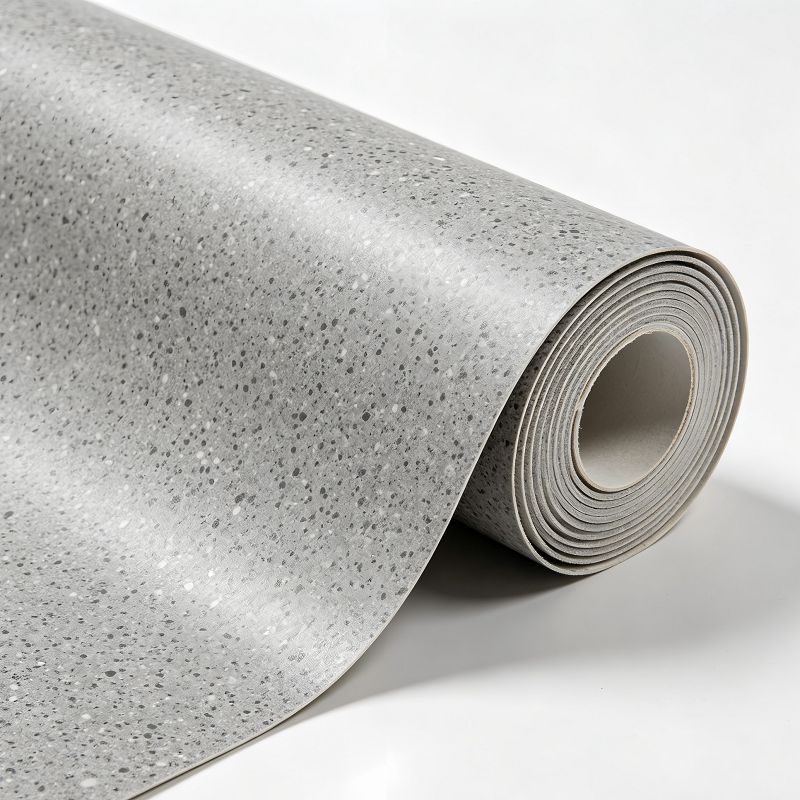
Homogeneous Vinyl Flooring If you’re a procurement manager, operations director, or anyone responsible for supporting consumables in your business, I encourage you to reach out. We can talk about your specific needs, test alternative products, and find a solution that works for you. Whether you’re looking to cut costs, improve performance, or make your supply chain more stable, we can help you evaluate whether substitution is the right choice.
References
- Smith, J. et al. (2021). "Materials Selection for Supporting Consumables in Industrial Applications." Journal of Manufacturing Science, 45(3), 123-138.
- Lee, S. and Patel, R. (2022). "Technically Validated Substitution of Medical Consumables: Safety and Performance Outcomes." International Journal of Medical Engineering, 18(2), 45-52.
- Global Consumables Supply Report (2023). Industrial Suppliers Association, 112-127.
- Chen, L. et al. (2020). "Ceramic Composites as Alternative to Tungsten Carbide for Cutting Consumables." Journal of Materials Processing Technology, 289, 116982.
- Regulatory Guidelines for Consumable Substitution (2022). Food and Drug Administration, Office of Supply Chain Safety.
Qingdao Xinkailin Environmental Protection Materials Co., Ltd.
As one of the most professional supporting consumables manufacturers and suppliers in China, we’re featured by quality products and good price. Please rest assured to buy premium supporting consumables for sale here from our factory. Also, custom service is available.
Address: Room 618, Hedaxinduhui, No. 196 Tailiu Road, Shibei District, Qingdao City
E-mail: laura@xklflooring.com
WebSite: https://www.xklflooring.com/
