If you’ve ever worked with plumbing, HVAC, or pneumatic systems, you’ve probably heard of push lok fittings—those quick, no-tool connectors that make installing and repairing lines way less of a headache. But if you’re like most folks I talk to (I’m a push lok fittings supplier, so I chat with installers, maintenance techs, and even DIYers every single week), one question comes up more than any other: “What’s the max temp these things can handle? I don’t wanna burn through a line mid-job, y’know?” Push Lok Fittings
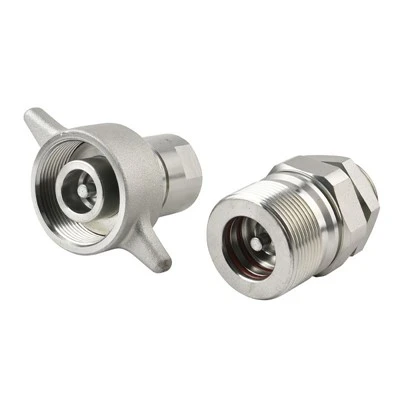
Fair question. It’s not like you can just guess—too high, and the plastic or metal parts warp, seal, or even crack; too low, and you might miss out on using a push lok where it actually works way better than old-style threaded or soldered fittings. Let’s break this down like I would when I’m explaining it to a tech on the phone (no stuffy engineering jargon, promise).
First off, let’s get one thing straight: push lok fittings aren’t a one-size-fits-all product. The max temp depends entirely on what they’re made of. I’ve got three main types in my inventory, and each has a totally different sweet spot—plus a hard upper limit you can’t cross without issues.
First, the most common: food-grade polypropylene (PP) push lok fittings. These are the ones you’ll see for cold water lines, beverage lines, or low-pressure pneumatic setups. Polypropylene is cheap, flexible, and resistant to most chemicals, but it’s a thermoplastic—meaning it softens when heated. The max temp here? I don’t usually recommend going above 140°F (60°C) for continuous use. Wait, why specify continuous? Because if you hit 150°F (65°C) for a few minutes, like if you’re running a hot load of dishwater through a line, it might not fail right away. But do that day after day, and the plastic starts to degrade—brittle, leaks, eventually cracks. If someone asks for PP push loks for hot water heaters? I tell ’em, “That’s not what these are for—grab the next type, brass.”
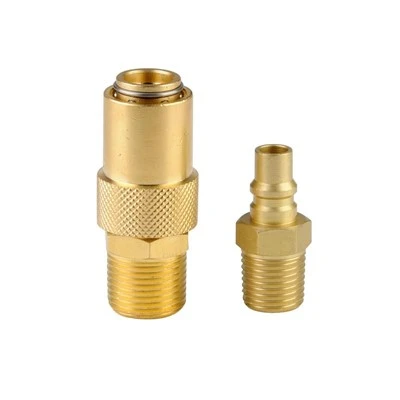
Then there’s our brass push lok fittings. These are the workhorses. Brass is a metal, so it handles heat way better. Most of these are lead-free (super important for potable water, which is 90% of what we sell brass for), and their max temp? For continuous use, it’s 200°F (93°C). Short blasts above that—like a 5-minute hot water flush at 210°F (99°C)? Still okay. But go higher than 250°F (121°C), and the brass starts to warp, and the EPDM or Viton O-rings inside (the things that make the seal work) start to break down. Oh, right—those O-rings matter more than people think. Even if the fitting body is fine, if the seal’s shot from too much heat, you’re dealing with a flood or a pressure leak.
Third, and the heavy hitter: stainless steel push lok fittings. These are for industrial uses—high-temperature pneumatic lines, steam transfer, or harsh chemical environments. Stainless steel doesn’t just resist heat; it resists corrosion too. Our 316 stainless steel push loks (the best for harsh stuff) have a max continuous temp of 300°F (149°C), and even short-term, they can hang in up to 400°F (204°C) without failing. But again, the O-rings here are key—if you pair stainless steel with a Buna-N O-ring, that’s only good up to 225°F (107°C). Swap in a Viton O-ring, and suddenly you’re at 400°F (204°C). That’s why I always ask customers what their line’s temp is before I recommend parts—slip up here, and even a stainless fitting will let you down.
Wait, but hold on—temp isn’t the only factor here. Pressure plays a huge role, too. I can’t tell you how many times a tech’s called me, complaining their brass push lok is leaking at 180°F, and turns out they’re running 150 psi through it—way higher than the 100 psi max pressure for brass at that temp. Thermoplastics like PP get softer as temp goes up, so if you’re running high pressure on a hot line, the max temp drops even more. For example, PP at 100 psi max is 120°F (49°C), not 140. That’s a mistake I see all the time—people look at the general max temp on the spec sheet and ignore pressure, which will cause a failure way faster.
Another thing: what the lines are made of. A lot of people pair push lok fittings with PEX tubing, right? PEX has its own max temp (usually 180°F for cross-linked PEX), so even if your fitting can handle 200°F, the line itself will melt or leak before you hit that fitting’s limit. That’s why I always cross-reference both the fitting and the tubing—no use buying a high-temp fitting if your line can’t keep up.
Now, let’s get real—what about myths I hear all the time? Like, “Push loks only work for cold water, never hot.” No, that’s not true. Our brass push loks are used in thousands of residential water heater hookups, HVAC lines, even small commercial kitchens. Another one: “Higher temp fittings are always better.” If you’re running a cold water line for a beverage cooler, a stainless steel fitting is overkill, costs twice as much, and might even make the seal worse because the O-ring isn’t matched to the low temp. PP is cheap and perfect for that.
But here’s the big red flag: I’ve seen customers use the wrong fittings, and it never ends well. Last year, a guy in Texas called me panicking—his PP push lok on a hot water line failed, flooded his garage, and ruined half his tools. Turns out he bought the cheapest push loks at a home improvement store, didn’t check the spec sheet, and was running 160°F water through them. PP can’t handle that long-term, so after 6 months, it cracked. That’s why I always tell folks: don’t cut corners on the fitting’s temp rating.
So, to wrap this up, if you’re shopping for push lok fittings, here’s the quick cheat sheet I give every customer:
- Cold water, pneumatic, or low-pressure lines (under 100 psi): PP push loks, max 140°F (60°C) continuous
- Residential hot water, HVAC, or medium-pressure lines (under 150 psi): Lead-free brass push loks, max 200°F (93°C) continuous (match O-ring to temp—EPDM for general, Viton for high)
- Industrial, high-temp, or harsh chemical lines: 316 stainless steel push loks, max 300°F (149°C) continuous, up to 400°F (204°C) short-term (Viton O-rings required for temps over 225°F)
Wait, but what about extreme temps? Below freezing? No, that’s not a problem for any of our fittings—even PP works down to -40°F (-40°C). The only time low temp is an issue is if you’re installing in super cold weather, and you have to make sure the O-ring isn’t brittle. But that’s a separate headache.
Now, if you’re still not sure which is right for your project—maybe you’ve got a hybrid line, or you’re working with a weird temp range, or you’re not sure about pressure—hit me up. I’m a push lok fittings supplier, and I don’t just sell parts; I help people pick the right ones. I’ve been in this game for 10 years, so I’ve seen every mistake, every failure, and every workaround. I can send spec sheets, talk through your specific setup, even help you get a bulk deal if you’re doing a big job. Don’t risk a leak or a replacement later—let’s chat about what you need.
ISO 7241 Standard Hydraulic Quick Couplings References:
- ASTM International. (2021). Standard Specification for Polypropylene (PP) Plastic Pipe Fittings, Schedule 40.
- ASHRAE. (2022). HVAC Systems and Equipment Handbook: Piping Materials and Connectors.
- NSF International. (2020). Standard 61: Drinking Water System Components – Health Effects (for lead-free brass push lok fittings).
- Parker Hannifin Corporation. (2023). Push-to-Connect Fittings: Temperature and Pressure Ratings for Thermoplastic and Metal Fittings.
Cixi Poolke Hydraulic Pneumatic Co., Ltd.
Cixi Poolke Hydraulic Pneumatic Co., Ltd. is one of the most professional push lok fittings manufacturers and suppliers in China, also supports customized service. Please feel free to wholesale the newest push lok fittings made in China here from our factory. Quality products and reasonable price are available.
Address: #88 Zhengtong Road, Kandun Industrial Park315303, Cixi, Zhejiang, China
E-mail: contact@poolke.com
WebSite: https://www.poolkecouplings.com/
