As a supplier deeply entrenched in the world of Sodium Sulfate, I’ve witnessed firsthand the remarkable impact that its hydration state has on its diverse range of properties. This chemical compound, seemingly ordinary at first glance, holds a wealth of scientific intrigue that can significantly influence its performance across various industries. In this blog post, I aim to delve into the fascinating relationship between the hydration state of Sodium Sulfate and its properties, shedding light on how these variations can have far – reaching implications for our customers. Sodium Sulfate
Understanding Sodium Sulfate and its Hydrates
Sodium Sulfate (Na₂SO₄) exists in different hydration states, with the most common ones being the anhydrous form (Na₂SO₄), the heptahydrate (Na₂SO₄·7H₂O), and the decahydrate (Na₂SO₄·10H₂O). Each of these states is characterized by a distinct number of water molecules that are chemically bound to the Sodium Sulfate crystal structure.
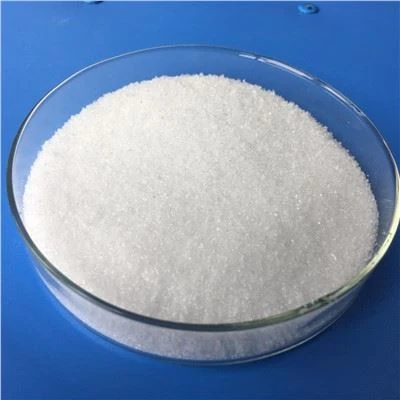
The anhydrous form is a white, crystalline solid. It is obtained by heating the hydrated forms to drive off the water. This process is known as dehydration. Anhydrous Sodium Sulfate is extremely hygroscopic, meaning it readily absorbs water from the surrounding environment. This property makes it highly useful as a desiccant in various industrial applications, such as in the drying of organic solvents.
Heptahydrate Sodium Sulfate contains seven molecules of water per formula unit. It is less commonly used compared to the anhydrous and decahydrate forms. Its structure and properties are somewhat intermediate between the other two. The presence of these water molecules gives the compound a different set of physical and chemical characteristics compared to the anhydrous form, such as a lower melting point and different solubility behavior.
The decahydrate, also known as Glauber’s salt, is perhaps the most well – known form. It has a beautiful monoclinic crystal structure and contains ten water molecules per formula unit. Glauber’s salt has a long history of use, dating back to the 17th century when it was first discovered. It is often encountered in nature and is a key source of Sodium Sulfate in industrial production.
Influence on Physical Properties
Solubility
One of the most significant ways in which the hydration state affects Sodium Sulfate is its solubility in water. The solubility of a substance is a measure of how much of it can dissolve in a given amount of solvent at a particular temperature.
Anhydrous Sodium Sulfate has a relatively high solubility in water, especially at higher temperatures. When the anhydrous powder is added to water, there is an immediate dissolution process, and the heat generated from the hydration of the anhydrous salt can contribute to the overall dissolution rate.
On the other hand, Glauber’s salt (the decahydrate) has a lower solubility at lower temperatures compared to the anhydrous form. This is due to the fact that the water molecules within the crystal structure already interact with the Sodium Sulfate ions. As the temperature increases, the solubility of Glauber’s salt rises significantly. In fact, there is a unique solubility curve for Glauber’s salt. At a temperature around 32.4°C, there is a sharp transition. Below this temperature, Glauber’s salt exists as a stable hydrated form, and above it, the decahydrate loses its water of crystallization and converts to the anhydrous form, which then has a different solubility pattern.
This solubility behavior is crucial in industries such as the textile industry, where Sodium Sulfate is used as an electrolyte in dyeing processes. The correct hydration state must be chosen depending on the temperature and the specific requirements of the dyeing bath to ensure optimal solubility and effective dyeing.
Density and Volume
The density and volume of Sodium Sulfate also vary with its hydration state. Anhydrous Sodium Sulfate has a relatively high density compared to its hydrated forms. This is because the absence of water molecules allows the Sodium Sulfate ions to be more closely packed in the crystal lattice.
The decahydrate, with its ten water molecules per formula unit, has a lower density. The water molecules occupy space within the crystal structure, increasing the overall volume of the compound for a given mass. This difference in density and volume can have implications in packaging, storage, and transportation. For example, when shipping Sodium Sulfate, the volume occupied by a given mass of the decahydrate will be larger than that of the anhydrous form, which may affect shipping costs and storage requirements.
Melting and Boiling Points
The melting and boiling points of Sodium Sulfate are also strongly influenced by its hydration state. Anhydrous Sodium Sulfate has a high melting point of around 884°C. This is because the strong ionic bonds between the sodium and sulfate ions require a large amount of energy to break.
The decahydrate, Glauber’s salt, has a much lower melting point. It melts at around 32.4°C, and this melting is accompanied by the loss of water of crystallization. The water molecules in the decahydrate act as a kind of "lubricant" within the crystal structure, reducing the energy required to break the intermolecular forces and allowing the compound to melt at a relatively low temperature.
This difference in melting points is important in applications such as heat storage systems. Glauber’s salt can be used as a phase – change material in these systems. When it melts, it absorbs a large amount of heat (latent heat of fusion), and when it solidifies again, it releases this heat. This property makes it a potential candidate for energy – efficient heating and cooling applications.
Impact on Chemical Properties
Reactivity
The hydration state of Sodium Sulfate can also affect its reactivity with other chemicals. Anhydrous Sodium Sulfate is a relatively stable compound, but due to its hygroscopic nature, it can react with water vapor in the air. When it reacts with water, it forms hydrates, and this hydration process can be accompanied by a change in the physical state (from a dry powder to a more moist or even liquid – like form depending on the amount of water absorbed).
In chemical reactions, the anhydrous form may show different reactivity compared to the hydrated forms. For example, in some reactions where Sulfate ions are required as a reactant, the anhydrous form may provide the Sulfate ions more readily because it does not have to first lose its water of crystallization.
Glauber’s salt, on the other hand, may require some pre – treatment (such as gentle heating to remove the water of crystallization) to be used in certain high – temperature chemical reactions where the presence of water could interfere with the reaction mechanism.
Redox Reactions
Sodium Sulfate is generally considered to be inactive in most common redox reactions. However, the hydration state can still have an impact on the environment in which redox reactions occur. For example, in an electrolyte solution, the presence of water from the hydrated form can influence the conductivity of the solution and the mobility of the ions involved in redox processes. The water molecules can solvate the ions, making them more mobile and thus affecting the overall rate and efficiency of the redox reaction.
Industrial Applications and the Importance of the Right Hydration State
Detergent Industry
In the detergent industry, Sodium Sulfate is a common filler. The choice of the hydration state depends on several factors. Anhydrous Sodium Sulfate is often preferred in some cases because it can absorb moisture from the surrounding environment, preventing the detergent from clumping. It also has a relatively high density, which can help in creating a more compact detergent formulation.
On the other hand, Glauber’s salt can be used in certain liquid detergent formulations. When it dissolves in the detergent solution, the heat released from the dissolution process can contribute to the overall stability of the formulation and may also aid in the dispersion of other ingredients.
Glass Manufacturing
In glass manufacturing, Sodium Sulfate is used as a fining agent. It helps to remove air bubbles from the molten glass by reacting with the carbonates and sulfides present in the raw materials. Anhydrous Sodium Sulfate is commonly used in this application because it can withstand the high temperatures in the glass – melting furnace without losing its chemical integrity. The high melting point of the anhydrous form ensures that it remains in the molten glass matrix and effectively performs its fining function.
Conclusion: Why Choosing the Right Hydration State Matters
As a Sodium Sulfate supplier, I understand that choosing the right hydration state of Sodium Sulfate can have a profound impact on the performance and quality of our customers’ products. Whether it’s optimizing solubility in a dyeing process or ensuring the proper functioning of a heat – storage system, the hydration state is a critical factor that cannot be overlooked.

If you are in an industry that requires Sodium Sulfate, it is essential to consider how the hydration state will affect your specific application. Our team of experts is always ready to assist you in making the right choice. We can provide detailed information on the properties of different hydration states and help you select the most suitable product for your needs.
Magnesium Carbonate If you are interested in learning more about our Sodium Sulfate products or are ready to discuss a potential purchase, I encourage you to reach out for a detailed discussion. We are committed to providing high – quality Sodium Sulfate products and excellent customer service. Let’s work together to ensure that your processes run smoothly and efficiently with the right form of Sodium Sulfate.
References
- Atkins, P., & de Paula, J. (2010). Physical Chemistry. Oxford University Press.
- Haynes, W. M. (Ed.). (2016). CRC Handbook of Chemistry and Physics. CRC Press.
- Xu, H., & Wu, J. (2018). "Solubility Behavior of Sodium Sulfate in Aqueous Solutions". Journal of Chemical Thermodynamics, 122, 23 – 30.
Jiangsu Kolod Food Ingredients Co., Ltd.
As one of the most professional sodium sulfate manufacturers and suppliers in China, we’re featured by quality products and good price. Please rest assured to wholesale bulk sodium sulfate made in China here and get free sample from our factory. Customized orders are welcome.
Address: South Side of Weier Road, Guanyun Development Zone, Lianyungang City, Jiangsu Province, China
E-mail: sales1399@jskolod.com
WebSite: https://www.kolod-group.com/
