If you’ve ever stood on a construction site, a remote worksite, or even a backup power setup at a data center, you’ve likely forgotten one small but critical part of a generator: the shaft. Most operators only notice it when there’s a problem, and that’s when questions pop up—especially about the standard length that keeps the whole system running smoothly. As a generator shaft supplier who’s worked with small contractors and large industrial teams for over a decade, I get these questions every week, and there’s a lot more to it than just a number on a spec sheet. Let’s break it down so you know exactly what standard lengths matter, what changes they, and why getting this right matters for your power setup. Generator Shaft

First, let’s start with the basics: what a generator shaft actually does. It’s the link between two core parts of any generator: the engine (or turbine, if we’re talking about larger industrial units) that creates motion, and the alternator (the part that turns that motion into electricity). The shaft transfers torque from the power source to the alternator, spins the rotor inside the alternator to generate magnetic fields, and keeps both components aligned so power flows consistently. If the shaft is too short or too long, you’ll face vibration, premature wear, or even a full shutdown—so standard lengths aren’t just random, they’re engineered to solve real operational problems.
Now, the standard lengths. For most small to medium residential and commercial generators—think units from 5 kW up to 2 MW, the ones used for home backup, small construction crews, or retail store power outages—the industry standard generator shaft length falls between 12 inches (305 mm) and 24 inches (610 mm). That’s not a one-size-fits-all range, though. Residential units, which typically pair a small gasoline engine with a compact alternator, usually stick to the lower end: 12 to 18 inches. They’re built for tight, easy-to-install setups, and their shafts are designed to handle low torque from smaller engines without extra length that would add unnecessary weight or cost.
Commercial generators, which run on diesel or natural gas and power larger facilities like hospitals or office buildings, land in the middle: 18 to 21 inches. These generators have more powerful engines and larger alternators that need a bit more shaft length to maintain proper alignment. Too short, and the engine and alternator might sit too close, causing heat buildup; too long, and you risk shaft deflection, that wobble that leads to vibration and wear on bearings. Industrial generators, which are 2 MW and up for factories, mines, or data centers, use the upper end of the standard range: 21 to 24 inches, or sometimes slightly longer custom lengths for very high-torque applications.
Wait, but here’s where a lot of people get confused: “standard” doesn’t mean there’s only one number. That range is a baseline, and there are exceptions depending on the type of generator, coupling design, and even the mounting setup. For example, if you’re using a flexible coupling— the part that connects the shaft to the engine and alternator to account for small misalignments—your shaft length might be a little shorter than if you use a rigid coupling, which needs more precise alignment and might require extra shaft to adjust for installation tolerances. That’s why I always tell customers to check their coupling type first when they’re looking for a standard or replacement shaft; it’s a tiny detail that changes the whole length equation.
Let’s talk about why standard lengths matter more than you might think. When a generator manufacturer designs a unit, they test hundreds of iterations to find the shortest and most cost-effective shaft that also minimizes vibration. A shaft that’s too long requires heavier materials to avoid bending, which increases cost. A shaft that’s too short leads to consistent wear on coupling and bearing parts, so operators have to replace them every 6 months instead of every 2 or 3 years. For my customers, most of whom maintain a fleet of generators or source replacement parts for existing units, sticking to standard lengths cuts down on downtime and inventory costs. Instead of stocking 10 different custom shaft lengths, they can keep a few standard sizes that fit most of the units their teams work on.
Now, I’ve seen a lot of mistakes when people try to replace a generator shaft without checking the standard length. Last year, a small construction manager reached out to me after ordering a shaft he thought was “standard” for his 10 kW portable generator. It was 2 inches too long, and when he installed it, the shaft wobbled so badly it shook the entire generator off its mounting bracket. That’s the thing about generator shafts: they don’t just need to fit between two parts, they need to account for the “overhang” of the rotor inside the alternator, and the gap between the engine’s flywheel and the alternator’s mounting flange. If you ignore those details, even a shaft that’s within a general “standard” range won’t work.
So, how do you make sure you’re getting the right standard length for your generator? First, check your generator’s manual. Most manufacturer specs list the recommended shaft length for their units, and that’s a great place to start. If you don’t have the manual—common with older generators you’ve bought used—here’s a quick, practical way to measure it: turn off and disconnect the generator from power, remove the protective covers around the engine and alternator, and measure the distance from the engine’s flywheel mounting surface to the alternator’s rotor mounting surface. That’s the baseline, and when you add the thickness of the couplings you’re using (usually 1 to 2 inches for most standard couplings), you get the shaft length you need. For most units, that measurement will fall right in that 12 to 24 inch standard range.
I’ve also worked with clients who need custom shafts that deviate from the standard range, and that’s totally fine—standard is a baseline, not a rule. For example, if you’re installing a generator in a tight space where the engine and alternator have to sit closer than the manufacturer’s design, you can get a shorter shaft (down to 8 inches, though that’s rare for most applications). Or if you’re adding a soundproof enclosure that moves the alternator further from the engine, you’ll need a longer shaft—up to 30 inches in some cases. But those are special cases, and the standard lengths are designed for the most common setups, so they’re the easiest, most cost-effective choice for 90% of customers.
As a supplier, I’ve seen firsthand how the right shaft length can extend a generator’s lifespan by years. A customer who runs a fleet of 20 standby generators for grocery stores used to replace shafts every 18 months because they were using non-standard lengths that caused constant vibration. After switching to standard length shafts that matched their coupling and engine size, they cut shaft replacement costs by 40% and reduced unplanned outages by almost 60%. That’s the impact of getting a simple detail like shaft length right.
Another thing to consider: material. The standard lengths we talk about are usually for carbon steel shafts, which are the most common for generators because they’re strong and affordable. If you’re working with a high-performance generator that runs at 3,600 RPM or higher, you might need a chrome steel or alloy steel shaft, but even then, the standard length range stays the same—only the material changes. That’s why standard lengths are so universal across different generator brands; they’re based on the functional needs of the system, not the material it’s made of.
I get a lot of questions from new generator owners who are confused between shaft length and drive shaft length. A lot of people mix up the generator’s shaft with drive shafts used in other equipment, but this is a totally different part. A generator shaft is specifically for connecting the engine and alternator, while a drive shaft is for powering wheels or other machinery. That’s why you can’t just grab a standard drive shaft and use it for a generator—they’re engineered for different torque levels and alignment, and that’s why the standard length for generator shafts is unique.
Let’s wrap this up with what you need to remember: the standard generator shaft length for most residential, commercial, and industrial generators is between 12 and 24 inches. For small home generators, stick to 12–18 inches; for mid-sized commercial units, 18–21 inches; for large industrial setups, 21–24 inches. Always check your generator’s manual, measure the gap between your engine and alternator, and account for your coupling thickness to make sure you’re ordering the right length. If you’re not sure, a reputable supplier can help you confirm—no guessing, no wasted parts, no downtime.
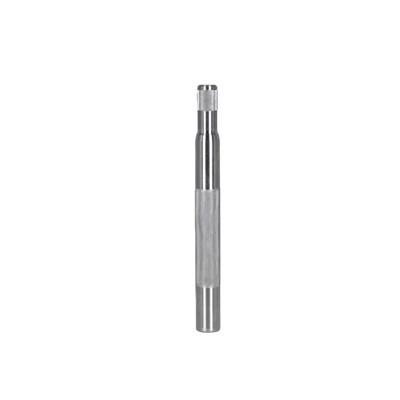
At the end of the day, the generator shaft might be one of the smallest parts of the whole setup, but it’s the one that keeps power flowing. Too long, too short, or the wrong standard, and you’ll be dealing with headaches instead of reliable power. If you’re sourcing replacement shafts or need to confirm the right length for a new generator setup, don’t hesitate to reach out to our team for guidance. We work with contractors, facility managers, and equipment owners every day to match them with the right generator shaft, whether it’s a standard length or a custom build, and we’re here to make sure your setup runs smoothly for years to come.
Valve Shaft References
- Generator Shaft Engineering Standards, National Electrical Manufacturers Association (NEMA), 2022
- Industrial Generator Component Specifications, International Society of Automation (ISA), 2021
- Torque and Alignment Requirements for Rotating Machinery, American Society of Mechanical Engineers (ASME), 2020
- Residential and Commercial Generator Installation Guidelines, Electrical Construction Maintenance (EC&M) Magazine, 2023
Ningbo Uni-drive Technology Co., Ltd.
Ningbo Uni-drive Technology Co., Ltd. is one of the most professional generator shaft manufacturers and suppliers in China. Please feel free to buy cheap generator shaft made in China here and get pricelist from our factory. All customized products are with high quality and competitive price.
Address: Industrial Site No. 6, Jingtou Village, Sanqi Town, Yuyao City, Zhejiang Province
E-mail: admin@uni-drive.com.cn
WebSite: https://www.motordriveshaft.com/
