Alright, let’s cut through the jargon and get real about what the head of a fire pump actually is. If you’ve ever looked at a fire pump spec sheet and thought, “What the hell does ‘head’ even mean here?”—you’re not alone. As someone who’s been selling fire pumps for over 7 years, I’ve had so many contractors, facility managers, even small business owners stare blankly at that number (usually in feet or meters) like it’s some secret code. Today, I’m breaking this down so plain and simple, you’ll be explaining it to your team by the end of this read. Fire Pump

First, let’s start with a super basic, relatable example. Imagine you have a garden hose. When you lift that hose up to water the second floor of your house, the water has to fight against gravity to get there, right? If you just turn on the tap normally, the water might only reach the first floor. But if you hook up a little pump to the hose, suddenly it shoots all the way up. That “push” the pump gives the water to get it over that height, plus push it through the hose all the way to the nozzle? That’s basically fire pump head.
Wait, let’s get a tiny bit technical (but don’t freak out—we’re keeping it light). Head is a measure of the total energy per unit weight of the fluid (that’s water, for fire pumps) that the pump adds to the system. We usually measure it in feet (in the US) or meters (everywhere else). But here’s the key: it’s not just how high you can lift water. It’s also the energy needed to push that water through pipes, around elbows, past valves, and out a fire hose nozzle. So total head is a combination of two things: static head and friction head. Let’s define those quick, but in real terms.
Static head is the height difference between the water source (like a fire hydrant, a water tank, or a pond) and the highest point the water needs to reach (say, the 3rd floor of a office building, or the top of a standpipe). If the source is at ground level and the highest point is 50 feet up, that’s 50 feet of static head. If the source is actually above the pump (like a rooftop gravity tank), that’s negative static head—makes sense, because gravity is helping the pump out.
Then friction head is the energy lost as water flows through pipes, fittings, valves, and any other components in the system. Think of it like rubbing your hands together—you create friction, which uses up energy. For fire pumps, this is a big one. A 6-inch pipe might have way less friction loss than a 2-inch pipe, and a bunch of 90-degree elbows add more friction than straight runs. If you ignore friction, you’ll end up with a pump that can’t push enough water all the way to the fire, even if it’s got a high static head number.
Now, here’s where I see a lot of mistakes from people who just guess at head. They’ll look at a pump’s “rated head” (the number on the spec sheet) and think, “Cool, that’s all I need.” But no—you have to calculate your actual total system head first. Let’s say you have a system where static head is 40 feet, friction head is 60 feet. That adds up to 100 feet of total head. If you buy a pump rated for 80 feet of head, it’s not gonna cut it. It’ll struggle to push enough water, and you might end up with weak fire hoses when you need them most. That’s a safety hazard, full stop.
As a fire pump supplier, I can tell you this: I’ve had so many contractors call me panicking because their system wasn’t working, and 9 times out of 10, it’s because they miscalculated head. Last year, a guy from a warehouse company called—he’d installed a pump he bought online, did his own head math, and when they tested it, the water only made it to the 2nd floor of their 3-story building. Turned out he forgot to account for the long pipe runs from the underground hydrant to the pump room, plus the extra friction from the fire sprinkler system’s piping. He’d used a pump rated for 80 feet, but his actual total head was 110 feet. We had to swap it out for a higher-head model, and he was lucky we had it in stock for a quick delivery.
Another thing people mix up: head vs. pressure. Oh man, this is the #1 confusion. Pressure is what you measure with a gauge (usually PSI, pounds per square inch). Head and pressure are related, but they’re not the same. The formula is simple: Pressure (PSI) = Head (ft) x 0.433. Wait, why 0.433? Because water weighs about 8.33 pounds per gallon, so a 1-foot column of water exerts 0.433 PSI. So if you have 100 feet of head, that’s 43.3 PSI of pressure. Got it? But here’s the catch: if you change the size of the pipe, pressure changes, but head stays the same. That’s why head is the better measure for pumps—it’s consistent, no matter the pipe size.
Let me give you a real example of why that matters. Suppose you have two identical pumps, one hooked up to a 2-inch pipe and one to a 6-inch pipe. The pressure gauge on the 2-inch pipe will read way higher, but the head—how much energy the pump is adding—is exactly the same. So if you go by pressure, you might think the 2-inch pipe is better, but actually, the 6-inch pipe can flow way more water, which is what you need for a fire. Fire codes aren’t just about pressure—they’re about flow rate too, and head is the link between the pump’s ability and the system’s needs.
Now, what about different types of fire pumps and their head capabilities? Let’s keep it practical. Electric fire pumps (the most common for buildings) usually come in a range of heads—from low (around 50 feet) for small single-story buildings, up to high (over 200 feet) for tall skyscrapers or industrial facilities. Diesel fire pumps (used for places that might lose power, like remote warehouses) have similar head ranges, but sometimes a bit more for heavy-duty use. Our company stocks a bunch of models, but we always tell customers: don’t just pick the highest head. Oversizing head is as bad as undersizing. If you have a small system with 80 feet of total head, a pump rated for 200 feet will waste energy, and might even cause pressure surges that damage pipes or sprinklers. That’s a waste of money on both the pump and your utility bills.
Wait, let’s talk about system curve vs. pump curve—super important stuff for anyone choosing a fire pump. The system curve is the graph that shows how much head your system needs at different flow rates. The pump curve is the graph that shows how much head your pump can provide at different flow rates. The point where these two lines cross is your operating point—where the pump will actually work in your system. If you don’t match these, you’ll get either too much or too little flow. I’ve seen guys just pick a pump by its max head number, not looking at where it operates at the flow rate their system needs. That’s a recipe for disaster.
Let’s circle back to that warehouse story from earlier. The contractor didn’t just miscalculate static and friction head—he didn’t pull the system curve. His warehouse needed 1,000 gallons per minute (GPM) at 110 feet of head. The pump he bought online was rated for 1,200 GPM at 80 feet of head, and only 800 GPM at 110 feet. So when he needed 1,000 GPM, he was only getting 800—way too low for fire protection. That’s why we always do a site assessment for customers before we recommend a pump. We measure the distance to the water source, the height of the tallest fixture, the length and size of all pipes, even the number of valves and elbows. No guesswork, just accurate numbers.
Another common question: what if I have a variable system, like a building that might need different flow rates at different times? (Say, a small office that sometimes uses sprinklers and sometimes standpipes.) That’s where a variable speed fire pump controller comes in, paired with a pump that can adjust its head as needed. Our team can set those up so the pump automatically adjusts to the required flow and head, which saves energy and keeps pressure consistent. We installed one of these for a 10-story office building downtown last year, and their maintenance guy said it’s been running way smoother than their old fixed-speed pump, which would either blast too hard or not hard enough depending on what was being used.
Let’s address a myth I hear all the time: “Higher head is always better.” No, not at all. If you install a pump with too much head, the pressure can get so high that it bursts pipes, damages sprinkler heads, or even makes fire hoses hard to control for firefighters. Fire codes have maximum pressure limits for a reason—they keep people safe and equipment intact. So when we’re working with a customer, we don’t just aim for enough head—we aim for exactly the amount they need, within code limits. That’s the job of a good fire pump supplier, not just selling the biggest pump on the shelf.
Now, let’s make sure you know how to get this right for your own setup. First, gather all the info you need: water source elevation, highest fire protection fixture elevation, total length of all pipes, pipe sizes, number of fittings (elbows, tees, valves), and the required flow rate (GPM) from your local fire code or AHJ (Authority Having Jurisdiction—super important, AHJ signs off on your system, so don’t skip that). Then calculate static head, calculate friction head, add them together for total system head. Find a pump whose curve intersects with your system’s curve at your required GPM, and stays within pressure limits. If this sounds like a headache (it is, trust me), that’s why we’re here to help.
As someone who’s been in this game for years, I’ve seen way too many people cut corners on head calculations, and the consequences aren’t just expensive—they’re deadly. A fire pump that doesn’t have enough head can’t deliver the water firefighters need to put out a blaze. That’s not something to mess around with.
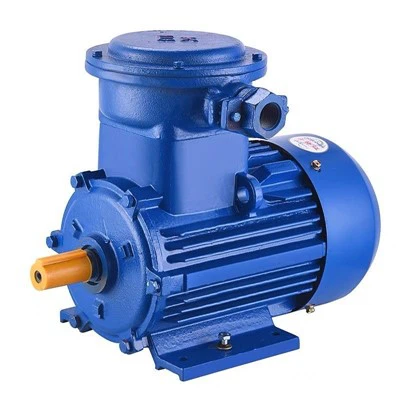
If you’re planning a new fire system, or you’re having issues with your existing pump, don’t guess. Don’t rely on online specs you don’t understand. Reach out, and we’ll help you figure out exactly what head you need, recommend the right pump, and even handle installation support if you need it. We’ve worked with everything from small retail stores to huge industrial plants, so we know how to get it right every time. No jargon, no hidden fees, just real advice for real fire protection needs.
YE3 Three-Phase Motor References:
- NFPA 20, Standard for the Installation of Stationary Pumps for Fire Protection
- Hydraulic Institute, Pump Handbook
- ASCE 24, Flood Resistant Design and Construction (relevant for water source considerations)
- Underwriters Laboratories (UL), Fire Pump Standard
Taizhou Goodpump Trading Co., Ltd.
We’re well-known as one of the most professional fire pump enterprises in China, featured by quality products and good service. Please rest assured to buy discount fire pump in stock here from our factory. For quotation, contact us now.
Address: No. 38, District 6, Zhengye Village, Lunan Street, Luqiao District, Taizhou City, Zhejiang Province, China
E-mail: 19548175755@163.com
WebSite: https://www.goodpump-cn.com/
