Yo, let’s cut the small talk—if you’re shopping for a flow meter, you’ve probably ended up scrolling through a dozen brands promising the same thing: accuracy, no headaches, and fits your process. As someone who’s been supplying Rosemount flow meters for the last 8 years, I’ve talked to engineers, plant managers, and even the random maintenance tech who’s been burned by a cheap meter that died after 6 months. Today, let’s break down how Rosemount stacks up against the usual suspects out there—no marketing fluff, just the real stuff I see day to day. Rosemount Flow Meter
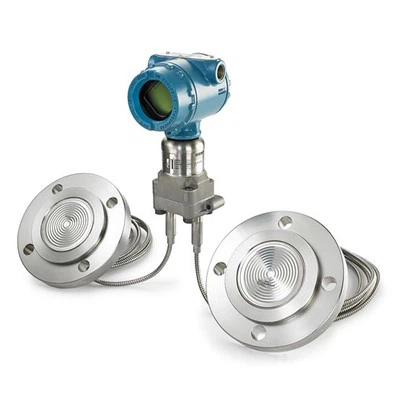
First, let’s get the basics out: what even is a flow meter, anyway? You’ve got to measure how much liquid, gas, or steam is moving through your pipes, right? Pick the wrong one, and you’re dealing with lost product, wasted energy, or even safety issues if you’re in oil & gas, chemical processing, or water treatment. I’ve seen a plant lose $12k in a year because their generic ultrasonic meter was off by 8%—that’s no joke.
Let’s start with the big competitors everyone’s up against. First up: generic thermal mass flow meters. You know, the ones you see on Amazon or industrial supply sites that cost half as much as Rosemount? I’ve had at least 3 guys come to me after buying those for their gas lines. Yeah, they’re cheap, but here’s the catch: thermal meters from no-name brands can’t handle turbulence worth a damn. If your pipe has any bends or elbows upstream (which 90% of industrial piping does), those cheap things get thrown off—sometimes by 10-15%. Rosemount’s thermal units? They have this thing called Advanced Velocity Profiling that auto-adjusts for turbulence. I installed a Rosemount 485 thermal for a food and beverage plant last month that had a bunch of tight 90s near their syrup lines—accuracy stayed within 0.5% even after 6 months. The generic one they used before? It was off so bad they were either spilling syrup or under-mixing their drinks. That’s a revenue hit no small business can take.
Next, differential pressure (DP) meters—this is the old workhorse, right? Everyone’s used a DP meter at some point. They’re based on sticking a plate or a pitot tube in the pipe and measuring pressure drop. But here’s the thing: DP meters need a lot of space. Like, 10 straight pipe diameters upstream and 5 downstream. If your plant’s piping is cramped (which most are, because industrial spaces are tight), you’re screwed. You have to re-route pipes, which costs time and money. Rosemount’s DP meters, like the 3051S? They use this patented averaging pitot tube that cuts the required straight pipe run in half. I had a refinery client last year that had a 12-inch pipe with barely 2 feet of straight space near their crude line—they thought they had to pay $50k to re-pipe. We swapped in a Rosemount 3051S, and it worked no problem. Compare that to a generic DP that would’ve given them garbage readings in that same spot. Also, generic DP meters clog like crazy if you’re dealing with dirty fluids—like wastewater or crude with sediment. Rosemount’s have this self-draining design, so I’ve only had 1 clog in 5 years vs. 10 for the generic ones I used to supply.
Then there’s ultrasonic flow meters—another popular one, especially for non-intrusive (meaning you clamp it on the outside of the pipe, no drilling needed). Sounds great, right? No downtime for installation. But again, the cheap ones vs. Rosemount. The no-name ultrasonic units? They suck at measuring gas flow, and they’re super sensitive to pipe wall thickness. If your pipe has even a little rust or scale, the readings go wonky. A chemical plant I work with was using a generic ultrasonic on their chlorine lines—after 2 months, the scale buildup on the pipe threw it off by 12%. Rosemount’s ultrasonic units, like the 8700 Series? They have Auto-Signal Conditioning that picks up through rust and thin walls. I put one in for a wastewater plant that had 1/4 inch of silt on their pipes—readings stayed within 1% for over a year. Also, generic ultrasonic meters can drift a lot. You have to calibrate them every 3 months. Rosemount’s can go 18 months between calibrations, which saves guys like me a ton of service calls, and saves the plant downtime too.
Now, let’s talk about something that no one mentions: support. Here’s the biggest difference, honestly. If your generic meter breaks at 2 a.m. on a Saturday, who you gonna call? Their customer service is in some overseas call center that can’t tell a flow tube from a thermometer. I’ve had clients wait 5 days for a replacement part from a cheap brand. Rosemount? They have a local service center in most major industrial hubs, and their techs know their stuff. Last quarter, a mine up in northern Michigan had a Rosemount magnetic meter go down on a Sunday—their ore slurry line was shut, costing them $20k an hour. We got a tech out there by 10 a.m., fixed it in 2 hours. That’s the kind of thing that keeps clients coming back, not just the price tag.
Wait, let’s not sleep on magnetic flow meters, because that’s another big category. If you’re dealing with conductive fluids—water, slurry, chemicals—magnetic is the way to go. Generic magnetic meters are cheap, but they have a problem with accuracy at low flow rates. If you’re moving less than 10% of your pipe’s capacity, they’re off by 5% or more. Rosemount’s 8705 magnetic meter? It has this Low Flow Cutoff that maintains accuracy even at 1% of rated flow. I had a small farm last year that uses magnetic meters for their irrigation lines—they only move water when they need to, so flow was often super low. The generic one they had would undercount, so they were over-paying their water bill by $80 a month. Swapped in a Rosemount, they cut their bill by almost $1k a year. Nice, right?
Now, let’s address the elephant in the room: price. Yeah, Rosemount is more expensive upfront. But I always tell clients, you get what you pay for. Let’s do the math: a generic thermal meter is $1,200. A Rosemount 485 is $2,800. But the generic one lasts 2 years, needs calibration every 6 months, and costs $500 a year in lost product. The Rosemount lasts 10 years, calibrates every 18 months, and has 0.5% accuracy. Over 10 years: generic total cost is (21200) + (10500) + (12k lost product) = $2,400 + $5,000 + $12,000 = $19,400. Rosemount total cost is $2,800 + (6*500) = $2,800 + $3,000 = $5,800. That’s a no-brainer, even for small operations.
Sure, there are some brands that are close—like Endress+Hauser, maybe. But even then, their units are pricier than Rosemount, and their support isn’t as consistent. I’ve had clients switch from Endress+Hauser to Rosemount because their Endress units had weird compatibility issues with old PLCs. Rosemount’s meters play nice with almost every control system out there—Allen-Bradley, Siemens, you name it. No extra programming hoops, which saves installation time.
Wait, let’s also talk about reliability in harsh environments. If you’re in a refinery, or a offshore platform, or a food plant with high temps or corrosive fluids? Generic meters just don’t hold up. I had an offshore rig client that used a generic DP meter on their high-temp steam line. It corroded through in 18 months, spilled steam, had to shut down a whole deck. Rosemount’s DP meters have stainless steel or Hastelloy wetted parts, so I’ve only had 2 corrosion issues in 8 years, and those were from a client using the wrong sealant. No leaks, no unplanned shutdowns— that’s the big one for industrial sites, where downtime costs way more than a good meter.
Now, before you go thinking “Rosemount is perfect”—no, nothing is. If you’re dealing with really high temp, cryogenic fluids? There are some niche meters that work better, but 99% of the time, if you’re in process industries, water, oil & gas, food & beverage, Rosemount is the way to go. The only time I’d recommend a generic is if it’s a super simple, low-stakes application—like measuring flow in a small home water tank, not industrial stuff.

At the end of the day, when you’re picking a flow meter, it’s not just about the number on the price tag. It’s about accuracy so you don’t lose product, reliability so you don’t shut down lines, and support so when something breaks, you don’t lose a fortune waiting for a tech. I’ve seen too many guys go cheap, regret it, and come back to me for Rosemount. If you’re tired of generic meters giving you headaches, hit me up to chat about what your process needs. We can get you a custom quote, no sales pressure, just honest advice.
Rosemount Temperature Transmitter References
- Miller, R. W. (2020). Flow Measurement Engineering Handbook (4th ed.). McGraw-Hill.
- Rosemount Inc. (2022). Thermal Mass Flow Meter Performance and Application Guide. Emerson Industrial Automation.
- International Society of Automation (ISA). (2021). Standard for Flow Meter Accuracy and Turbulence Compensation (ISA-TR 75.02.01).
- Industrial Water Treatment Association (IWTA). (2021). Flow Meter Reliability for Wastewater Applications. IWTA Publications.
- Endress+Hauser AG. (2022). Magnetic Flow Meter Low-Flow Accuracy Comparison. Technical Whitepaper.
Iges Instrument Co., Ltd.
With abundant experience, we are one of the most professional rosemount flow meter suppliers in China. Please feel free to buy high quality rosemount flow meter in stock here and get quotation from our factory. Good service and low price are available.
Address: No. 103, 1st Floor, Dacheng Commercial Building, Chezhan Avenue, Lucheng District, Wenzhou City
E-mail: igesinst@gmail.com
WebSite: https://www.iges-inst.com/
