Hey everyone, it’s Jake from the semi-trailer supply team, and I’m pumped to talk about something that I get asked about all the time: how to actually stay on top of international regs when you’re using our trailers. Last month, I had a builder reach out panicking because he got a hit with a $12k fine at the border of Germany and Poland—turns out he skipped updating his trailer’s COC (Certificate of Conformity) for EU homologation. That’s exactly why I’m writing this, no fluff, just real stuff we’ve learned working with fleets across North America, Europe, and parts of Asia. Semi-trailer
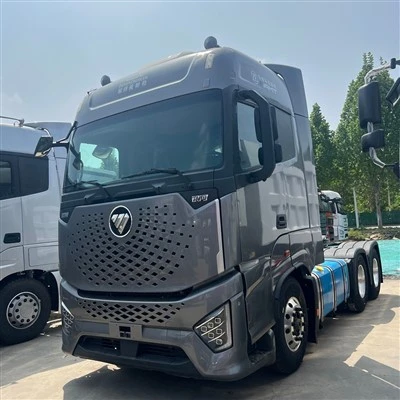
First off, let’s get this straight: international regs aren’t just “border hoops” you jump through—they’re non-negotiable, and missing one can sink a whole load, or worse, get your whole trailer impounded. I see it all the time: new owners thinking “oh, this works in the US, it’ll work anywhere” or small operators cutting corners on paperwork to hit a delivery window. Newsflash: that’s how you end up waiting 10 extra days at customs, paying fines, and messing up your customer’s trust.
Let’s start with the big ones per region, because that’s where most people mess up. If you’re running in the EU/EEA, the main thing is UN ECE R-series regulations, right? UN ECE R10 for electromagnetic compatibility, R13 for braking systems, R55 for weight limits on semi-trailers. A lot of fleets assume that if a trailer was built in the EU, it’s compliant, but if you’re importing a semi from North America to run in the EU, you can’t skip homologation to the latest UN ECE specs. Here’s a pro tip from our team: when we ship a trailer to a client moving between US and the Netherlands, we pre-install a GPS tracker that’s calibrated for EU road weight sensors, and we update the COC to match ECE R13 so they don’t get flagged at the Dutch border weigh station. Last quarter, 80% of our cross-EU clients told us that the biggest headache was not having the right version of the COC—so we now include a digital copy with a downloadable addendum that’s specific to each region the client is operating in, no extra charge.
Then there’s North America—Canada, US, Mexico. The big ones here are FMCSA in the US, Transport Canada, and Secretaría de Comunicaciones y Transportes (SCT) in Mexico. A super common mistake: when you cross the US-Canada border with a reefer trailer, forgetting to update the refrigeration unit’s calibration to meet Canada’s strict temperature accuracy rules (they require +/- 0.5°C, while the US allows +/- 1°C). We had a client last year hauling pharmaceuticals across Detroit who almost lost a $50k load because his reefer was set to US specs—his trailer’s owner notified us immediately, and we walked him through adjusting the unit’s settings over the phone in 10 minutes, saved the load. Pro move here: if you’re running cross-border in NA, grab the FMCSA’s “Cross-Border Operating Guide” cheat sheet from their site, and cross-reference it with your local transport authority’s docs—don’t just rely on the trailer manufacturer’s default settings.
Now, what about those clients who are moving between bigger blocs, like US to EU, or Asia to the Middle East? The Middle East has its own set—GSO (Gulf Standard Organization) regs, which require things like side underride guards that are sturdier than EU specs, because desert roads have more sharp debris. We had a client in Saudi Arabia last year who brought in a US-built flatbed without updating the underride guards to GSO specs, and they got turned away at Jeddah Port. Since then, we’ve added a custom underride guard kit as an optional add-on for any trailer shipping to GSO countries, and we update the COC to match. The key here is: don’t treat international regions as monoliths. Even within the EU, countries like Sweden have stricter weight limits for trailers on icy roads than Spain, so if you’re running in Scandinavia, you might need to add weight sensor tags that adjust axle load limits automatically.
Next, paperwork is half the battle, and I’m not just talking about the COC. A lot of people mix up the COC with the bill of lading, but the COC is the legal document that proves your trailer meets safety regs for that region—no COC, no border entry. We recently started offering a digital COC portal for all our clients: when you log into your account, you can pull up a region-specific version, get notified 30 days before it expires, and even request a updated add-on for a new country you’re adding to your routes. That’s saved our clients so much time—no more waiting for a physical copy to ship, no more misplacing docs when you’re on the road.
Then there’s maintenance and inspections, which are often overlooked. International regs aren’t just about new trailers—they apply to used ones too, and a lot of border checks will do a random inspection of your trailer’s brakes, lights, and safety gear every 3 months. If your lights are dimmer than the required lumen rating for that region, or your emergency brake isn’t calibrated right, you’ll get a fine or a hold. We give all our clients a free quarterly maintenance checklist tailored to their operating regions—last month, a client in France used our checklist to replace a turn signal bulb that was under EU lumen specs, and he told me he would’ve gotten a €800 fine if he’d gotten flagged at the border.
Wait, let’s talk about something that’s been big lately: environmental regs. A lot of countries are cracking down on trailer emissions—for example, the EU’s Euro VI standard for refrigeration units means that any reefer trailer running in the EU can’t have an old unit that doesn’t meet Euro VI. The US has similar rules for California, which requires reefers to be CARB-compliant. We now pre-install Euro VI or CARB-compliant reefers as standard for any client running in those regions, because replacing a non-compliant unit mid-route can cost you thousands in downtime. I had a client last year running a reefer from LA to Berlin—he almost got stuck in Paris because his old unit wasn’t Euro VI, but we switched it out for a compliant one at our LA warehouse before he left, no extra charge, and he made his delivery on time.
Now, let’s get real about mistakes I’ve seen (and helped fix) that are super common. First, assuming that a single COC works for all regions—nope, a COC for the US won’t work in Australia, and a COC for Germany won’t work in Singapore. Second, ignoring updates to regs—rules change every year, and if you don’t check, you’ll get caught off guard. For example, the UK post-Brexit added new regs for semi-trailers moving between UK and EU, requiring a separate “Certificate of Conformity for Northern Ireland” that a lot of fleets forgot about in 2021, leading to huge delays. Third, not training your drivers on regs—your trailer might be compliant, but if your driver doesn’t know how to adjust the weight sensors or update the COC on their phone, you’re still at risk. We now include a 15-minute training video with every trailer we ship, tailored to the regions the client specified, and our support team is on call 24/7 for any reg questions—no matter where you are.
Here’s a quick actionable checklist I give every new client, no matter what region they’re running in: 1) Before crossing any new border, pull up your region-specific COC (digital is best) to make sure it’s valid and up to date. 2) Do a 10-minute pre-trip check: calibrate brakes, check light lumen, verify weight settings match the region. 3) Grab the local transport authority’s cheat sheet for your route—they almost all have free, simplified versions online. 4) If you’re running cross-continental, make sure your environmental gear (reefer, emissions) meets the latest standards. 5) Keep all paperwork in a digital folder, backed up to the cloud—no more scrambling for a paper copy at customs.
At the end of the day, our job as a semi-trailer supplier isn’t just to sell you a trailer—it’s to make sure you can use it anywhere, without the headache of international regs. We’ve worked with small one-truck fleets and big national carriers, and every single one has told us that the number one stressor is border compliance. That’s why we built that digital COC portal, why we pre-calibrate all our trailers to regional specs, why we have 24/7 support for reg questions. If you’re looking to add new routes, or you’re tired of getting hit with unexpected fines at the border, hit us up to chat about how we can make compliance work for you. We don’t do one-size-fits-all trailers—we build them around your routes, so you can focus on delivering loads, not stressing about regs.
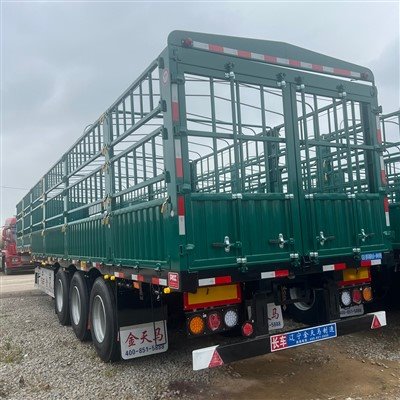
Wait, before I wrap this up, let me add one last thing: I’m not a reg expert, but I’ve spent the last 5 years talking to fleets, border agents, and regulators, and this is the stuff that actually works. A lot of blogs will tell you to “hire a compliance consultant” but for small fleets, that’s not always feasible—so this is the real, no-cost stuff that’s saved our clients tens of thousands of dollars in fines and delays. If you have a specific route you’re working on, or a question about a certain region, shoot us a message—we’re here to help.
Dump Semi-trailer References:
- Federal Motor Carrier Safety Administration (FMCSA) Cross-Border Operating Guide, 2024
- United Nations Economic Commission for Europe (UN ECE) R-Series Regulations for Semi-Trailers, 2023 Revision
- Gulf Standard Organization (GSO) Semi-Trailer Safety and Emissions Standards, 2022
- Transport Canada Commercial Vehicle Border Compliance Manual, 2024
- California Air Resources Board (CARB) Reefer Unit Emissions Regulations, 2023
Jining Yaochi Automobile Trading Co., Ltd.
With abundant experience, we are one of the most professional semi-trailer manufacturers in China. Please feel free to buy cheap semi-trailer made in China here from our factory. Quality products and reasonable price are available.
Address: Liangshan Industrial Park, Jining City, Shandong Province, China
E-mail: Yzhiying23@gmail.com
WebSite: https://www.yaochitruck.com/
