If you’ve ever stood in a commercial building and noticed a door that slams shut slowly, smoothly, or with just the right amount of pressure to keep it closed, chances are a door closer did the work. As someone who’s supplied door closers for years, I get asked all the time: what’s the real difference between surface-mounted and concealed models? It’s not just about how they look—there’s function, installation, and even cost that makes each better for specific jobs. Let’s break this down like we would for a contractor or a building manager stopping by our showroom, no stuffy jargon required. Door Closer
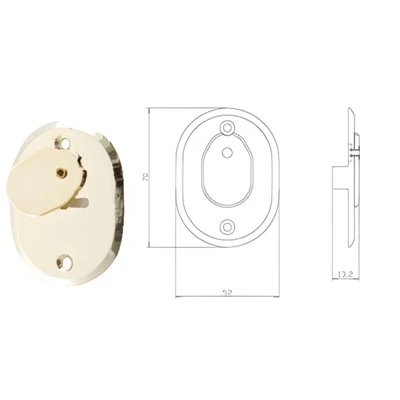
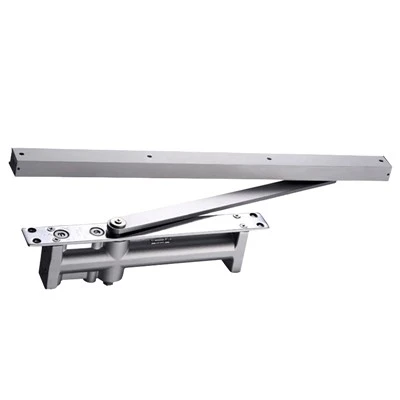
First, let’s start with the basics: both do the exact same job. A door closer’s whole gig is to pull a door closed after you open it, adjust the speed so it doesn’t swing too hard, and hold it shut until someone opens it again. The difference is how and where they’re mounted. Surface-mounted is the one you’ve definitely seen a hundred times—it’s that metal box or cylinder, usually silver or black, attached to the face of the door and the frame. Concealed is hidden, either inside the door itself or tucked away in the door frame, so you can’t see it at all when the door’s closed.
Let’s talk installation first, because that’s where a lot of people trip up. Surface-mounted closers are way easier to put in, especially if you’re retrofitting an old building that never had a closer before. I’ve had clients with 1970s office spaces come to us because they need to upgrade their exit doors, and we can have a surface-mounted one up in an hour, top. You just drill a couple holes in the edge of the door and the top of the frame, mount the closer body on the frame, and connect the arm to the door. No modifying the entire door to fit something inside—great if you’re on a tight timeline or don’t want to mess with a door’s structure.
Concealed closers? They’re the opposite. Installing one means you have to cut a cavity into the door and often the frame too. That takes more work, more tools, and a little know-how. For example, a floor-concealed closer (one of the most common types) gets mounted in a hole you dig into the floor, right under the hinge side of the door, and you have to make sure it’s perfectly level—one tiny tilt and the door won’t close right. A head-concealed one goes in the top of the door and frame, so you have to route out wood (or metal, if it’s a metal door) to fit the whole unit. I always tell first-timers to leave concealed installations to a pro—you’ll save yourself a headache later. Maintenance? Also, surface-mounted is way simpler. If something breaks, you can just take off the cover, spot the issue, swap out a part, or even replace the whole unit in 10 minutes. For concealed, if a seal leaks or the hydraulic fluid gets low, you might have to pull the door off the hinges just to get to the closer. That’s extra downtime, which is a big deal for busy commercial buildings.
Next up, performance, which is what matters most when a door isn’t working right. I’ve tested dozens of both types over the years. Surface-mounted closers tend to have more adjustability, especially for bigger doors. Like, if you have a 10-foot-wide storefront door that takes a lot of force to open, a surface-mounted closer can crank up the power easily. You can tweak the closing speed, the latching speed (that final 6 inches where the door clicks shut), and even hold-open functions without needing special tools. Some premium surface models let you set those adjustments right on the body, no disassembly needed.
Concealed closers are a little more limited there. They’re built for standard-sized doors—usually 3-foot-wide interior doors or smaller exterior doors. If you try to put a concealed closer on a heavy commercial door, it might not have enough power to pull it closed, or it could wear out super fast because it’s not built for that kind of stress. That said, concealed closers look way cleaner in certain spaces. If you have a modern office with sleek, flat doors, or a hotel where the design has to stay consistent, a surface-mounted closer would stick out like a sore thumb. No hotel manager wants a bulky metal box ruining the minimalist vibe of their lobby.
Speaking of looks, let’s get into aesthetics. That’s the biggest difference for most residential and light commercial clients. Surface-mounted closers are visible, so they’re not ideal if you care about a seamless look. But they do come in different finishes—brass, matte black, white—to match doors or hardware, so you can hide them a little if you want. Concealed closers, as the name says, are hidden. When the door’s closed, you can’t see them at all. Perfect for high-end offices, luxury apartments, or historic buildings where you can’t modify the exterior look of doors. Wait, but there’s a catch with concealed: some cheaper models can make a tiny gap show at the top or side of the door if they’re installed wrong. I’ve had a client who opted for a cheap concealed unit for their restaurant, and it left a small gap that let cold air in during winter. We had to swap it for a better brand, and the gap went away. So quality matters more with concealed than surface-mounted, usually.
Cost is another big factor. Surface-mounted closers are way cheaper upfront. A basic surface model for a standard door runs $50 to $150, and installation is around $100 to $200. A concealed closer can be $150 to $500 just for the unit, and installation is twice as much because of the extra work. For small projects, that adds up quick. But wait, don’t write off concealed if you think you can’t afford it—sometimes the long-term savings (like lower energy bills from no gaps, or less damage from doors swinging wrong) make it worth it. I had a college client a few years back who put surface-mounted closers on all their dorm doors, but after a year, they had to replace 12 of them because students were slamming doors too hard and bending the arms. They switched to concealed for the new wing, and so far, zero issues in two years.
Durability? From what I’ve seen, surface-mounted closers tend to hold up better to heavy use. They’re out in the open, so if something hits them (a cart, a backpack, a door being shoved too hard), it’s obvious, and you can fix it. Concealed ones are inside the door, so damage can go unnoticed until the door stops working entirely. That’s why we always recommend surface-mounted for high-traffic areas—like grocery store exits, office lobby doors, or apartment building common areas where doors are used hundreds of times a day. We’ve had surface closers last 10+ years in those spots, no problem. Concealed? They usually last 5 to 7 years, max, because the internal parts wear out without you noticing.
Wait, let’s clear up a common myth: some people think concealed closers are only for interior doors, but no—there are exterior concealed models too. They’re weather-sealed, so they can handle rain, snow, and temperature changes. But even those aren’t as tough as surface-mounted exterior closers. If you’re in a place with harsh winters, a surface-mounted closer is better because it’s easier to de-ice if it gets stuck. I’ve had clients in Minnesota tell me their concealed closers would freeze up in winter, and they had to call someone to thaw them out. Switching to surface-mounted fixed that.
So how do you pick which one is right for you? Let’s sum it up. If you’re retrofitting a door on a tight budget, need easy maintenance, or have a heavy, high-traffic door—go surface-mounted. If you want a clean, seamless look, have a standard-sized interior door, and don’t mind paying a little more for installation and upkeep—concealed is your pick.
As a door closer supplier, I’ve helped thousands of clients pick the right one, and I’m here to help you too. Whether you’re a small business owner with one door or a contractor working on a 10-building project, we can walk you through what works for your space, give you pricing, and even connect you with trusted installers if you need them. No pressure, just straight talk about what will work best for your needs. Feel free to reach out to us to chat through your project details and get a customized recommendation for door closers.
Handle References
- Door and Hardware Institute. (2022). Commercial Door Closer Selection and Installation Guide.
- National Fire Protection Association. (2021). Life Safety Code: Requirements for Door Hardware.
- Architectural Woodwork Manufacturers Association. (2020). Concealed vs. Surface-Mounted Door Closers: A Performance Comparison.
- American National Standards Institute. (2019). ANSI/BHMA A156.4: Standard for Door Closers.
Jiangsu Wenzhong Lock Industry Co., Ltd.
As one of the most experienced door closer manufacturers and suppliers in China, we also support customized service. We warmly welcome you to wholesale bulk cheap door closer in stock here from our factory. If you have any enquiry about pricelist, please feel free to email us.
Address: Xiaoliang Industrial Park, Danyang City, Jiangsu Province
E-mail: Rongoo7@163.com
WebSite: https://www.wenzhonglocks.com/
