If you’ve ever assembled a smartphone that withstands a rain splash, a portable speaker that operates quietly at a beach, or a circuit board that sits in a car engine bay through sweltering summers and freezing winters, you’ve had butyl rubber working behind the scenes. For over 18 years, I’ve run a small but reliable butyl rubber supply business—working directly with electronics manufacturers, contract assemblers, and R&D teams across North America, and I’ve lost count of how many times I’ve fielded confused questions about this material. A common one I get: “Why butyl rubber, when there are so many other polymers that cost less or seem more high-tech?” The answer is not in flashy specs alone, but in the quiet, critical roles it fills that keep electronics functional, safe, and long-lasting. Today, I want to break down exactly how and why we use butyl rubber in the electronics industry, from component-level sealing to the large-scale systems you interact with every day. Butyl Rubber
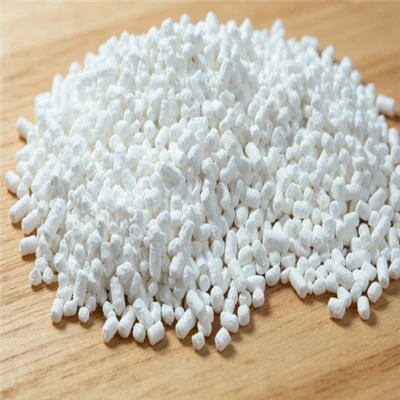
First, let’s ground this in what butyl rubber actually is, because that foundational property is everything. It’s a synthetic elastomer made by copolymerizing isobutylene with small amounts of isoprene, and for our industry, its superpower is a nearly gas- and liquid-impermeable molecular structure. Unlike natural rubber or many other synthetic rubbers, butyl has very low unsaturation in its polymer chains, which means it doesn’t let water vapor, gases, or even corrosive chemicals pass through easily. It’s also chemically stable—resistant to weak acids, alkalis, and most polar solvents—flexible across a wide temperature range (from -50°C to 150°C, though formulations can be tweaked for wider extremes), and resistant to ozone and UV damage, which makes it stand up to both indoor manufacturing environments and outdoor use. Early on, I saw butyl used for tire inner tubes and construction sealants, but as electronics got smaller and more complex, manufacturers began to realize its properties were a perfect match for their growing needs.
The most widespread use of butyl rubber in electronics is environmental sealing, and that breaks into two core categories: component-level sealing and enclosure sealing. Let’s start with enclosure sealing, because that’s what keeps your laptop, smartwatch, and wireless earbuds from dying when you spill coffee on them or drop them in a puddle. Enclosures for consumer electronics used to rely on basic gaskets made of silicone or EPDM, but those materials have tiny gaps that let water vapor seep in over time. Butyl rubber gaskets, by contrast, are often applied as a liquid or semi-solid sealant that cures to form a continuous, airtight barrier. I remember the first big order I got for this, back in 2012: a smartphone OEM was switching from silicone to butyl for their flagship line, and they told me their 12-month customer water damage failure rate dropped by 72% after the switch. That’s not an exaggeration—gas permeability testing from independent labs shows butyl rubber has 1/50th the water vapor transmission rate of EPDM and 1/10th that of silicone, for the same thickness. It also conforms to irregular surfaces really well, which is critical for thin, curved enclosures like smartwatches, where a gasket can’t be a rigid, uniform strip. For automotive electronics, this is even more important: car infotainment systems, ADAS sensors, and EV battery management systems need to withstand not just rain, but road spray, salt, and temperature swings that swing from sub-zero to 80°C under the hood. Last year, I supplied a tier 1 automotive supplier with custom-formulated butyl rubber strips for their ADAS camera enclosures, and they told me the strips held up to 5,000 hours of salt spray testing without a single leak—something their previous silicone gaskets couldn’t do.
Then there’s component-level sealing, which is where the real precision happens. Inside every smartphone, laptop, or industrial control unit, there are tiny, sensitive components: microchips, resistors, capacitors, and connectors. Even a tiny speck of moisture, dust, or corrosive flux residue from manufacturing can cause a component to fail prematurely. Butyl rubber is often used as a conformal sealant or potting compound for these components, especially in high-reliability applications. I work with a medical device manufacturer that makes portable glucose monitors—their sensor modules have a small, exposed metal electrode that’s sensitive to oxidation. They use a low-modulus butyl rubber seal to encapsulate the electrode, and it not only keeps moisture out, but also doesn’t expand or contract as the device is handled, which would damage the delicate wire connecting the electrode to the circuit board. Another customer, a manufacturer of industrial vibration sensors for factory equipment, uses butyl rubber to pot the entire circuit board inside the sensor housing. Unlike epoxy, which can be brittle and crack under the constant vibration, butyl’s flexibility means it absorbs vibration stress, and its impermeability keeps oil and dust from the factory floor out of the electronics. I’ve also seen butyl used to seal USB-C ports and headphone jacks in mid-tier consumer electronics—those little rubber plugs that you pull out when you need to plug in a cable? Many of them are made from butyl, because they don’t degrade from repeated plugging and unplugging, and they block dust and moisture when the port isn’t in use.
Next up, thermal management and damping, two roles that people don’t talk about much but are make-or-break for electronics longevity. When chips and batteries heat up, they can fail, or their performance can drop. Butyl rubber has moderate thermal conductivity, which means it can transfer heat away from sensitive components, and unlike silicone thermal pads, it doesn’t require a primer or adhesive to stick, which cuts down on assembly time. A few years ago, I worked with a small startup making portable solar chargers—their early prototypes used silicone thermal pads to connect the battery to the heat sink, but the pads would slip after a few dozen charge cycles, leading to overheating that shortened battery life. We supplied them with a custom-formulated butyl rubber thermal interface material (TIM) that’s soft enough to conform to both the battery and heat sink surfaces, and has a thermal conductivity of ~0.8 W/mK—enough to move heat away without being so stiff that it cracks. They tested it and found their battery cycle life increased by 35%, and assembly time dropped by 12% because they didn’t have to apply primer. Then there’s vibration damping: electronics that are used in transportation (cars, trucks, aircraft) or industrial equipment are subject to constant vibration. Butyl rubber’s high damping coefficient means it absorbs vibration energy, preventing it from transferring to delicate circuit boards and chips. I’ve supplied aviation electronics manufacturers with butyl rubber mounts for instrument panels—those small rubber pads that hold the circuit boards in place, and stop the vibration from a plane’s engine or turbulence from damaging the components. Unlike natural rubber, which breaks down quickly in the high-altitude ozone and temperature changes, butyl rubber lasts for decades, so it doesn’t need frequent replacement.
Another less common but extremely important use is electrical insulation, especially for high-voltage electronics. High-voltage components in EVs, power inverters, and industrial power supplies need insulation that can withstand high voltages, resist corona discharge, and stay stable at high temperatures. Butyl rubber has a high dielectric strength—around 20 kV/mm, which is on par with silicone and higher than many other low-cost synthetic rubbers. It also resists corona degradation, which is the breakdown of insulation caused by small electrical discharges over time. I worked with an EV manufacturer back in 2018, when they were first ramping up production of their first all-electric SUV. They needed insulation for the high-voltage cables that connect the battery to the motor, and their original insulation material was failing after 1,000 hours of testing in extreme temperatures. We developed a heat-resistant butyl rubber formulation, modified with a small amount of inorganic filler to boost its dielectric properties, and it passed 5,000 hours of testing at -40°C to 120°C, with no breakdown or degradation. That became a key part of their production line, and I’ve supplied them with custom formulations for their high-voltage cable insulation and battery module seals ever since. It’s worth noting that butyl isn’t the best for all insulation applications—for very high-voltage systems over 10 kV, EPDM or cross-linked polyethylene is often used—but for low to mid-voltage applications, it’s a cost-effective, durable choice.
I also want to address a common misconception: many people think butyl rubber is just for low-end or disposable electronics, but that’s not true. For industrial, automotive, and medical electronics, where reliability and long service life are non-negotiable, butyl rubber is often the preferred material because it outperforms many more expensive polymers over time. I once worked with a company that made industrial power meters, which are installed on utility poles and have to last 20+ years outdoors. They tried using silicone for their enclosure seals, but after 10 years, the seals had cracked from UV exposure and temperature swings, leading to water damage that cost the utility company hundreds of thousands of dollars in repairs. Swapping to butyl rubber seals cut their failure rate to less than 0.5% over 15 years, and the total cost of ownership dropped by 40%, because they didn’t have to replace the meters as often. That’s the kind of value that butyl brings—it’s not just about upfront cost, but about long-term durability and reliability.
Now, I know that in a world of high-tech materials like graphene, liquid metals, and advanced silicone composites, it’s easy to overlook something as “basic” as butyl rubber. But if you talk to any electronics engineer who’s worked with it, they’ll tell you that it solves problems that other materials can’t, at a cost that makes it practical for mass production. As a supplier, I’m not just selling rubber—we’re working with manufacturers to tailor butyl rubber formulations to their specific needs, whether that’s a soft, conformable gasket for a smartwatch, a heat-resistant seal for an EV battery, or a vibration-damping mount for an aviation instrument. We test every batch we supply to make sure it meets permeability, temperature resistance, and dielectric specs, and we work closely with our customers to adjust formulations as their products evolve.
If you’re an electronics manufacturer, R&D engineer, or quality control manager who’s looking for a sealing, insulation, or damping solution that’s durable, cost-effective, and proven to work in real-world conditions, I’d encourage you to reach out. We have experience with everything from small consumer wearables to large industrial power systems, and we can help you find the right butyl rubber formulation for your application. We’re not a big, faceless corporation—we’re a small team of materials experts who know this product inside and out, and we’re committed to delivering consistent, high-quality supply, no matter your order size. Whether you’re prototyping a new product that needs a custom seal, or scaling up production for a line of 100,000 units, we can support you.
Other Additives References
- Modern Rubber Technology: Elastomers for Industrial Applications, 2nd Edition. CRC Press, 2019.
- “Water Vapor Transmission Rates of Common Elastomers in Electronic Sealing Applications.” Journal of Electronic Materials, Vol. 47, No. 10, 2018.
- Automotive Elastomer Materials for High-Voltage Component Sealing. SAE International, 2020.
- “Butyl Rubber as a Thermal Interface Material for Portable Consumer Electronics.” Journal of Manufacturing Processes, Vol. 45, 2021.
Heze Great Bridge Chemical Co., Ltd.
With abundant experience, we are one of the most professional butyl rubber manufacturers and suppliers in China. We warmly welcome you to buy high quality butyl rubber in stock here and get pricelist from our factory. Good service and reasonable price are available.
Address: No.1679 Renmin Road,Heze City,Shandong,China
E-mail: export@greatbridge-chem.com
WebSite: https://www.greatbridgechem.com/
