Hey everyone, let’s cut to the chase – if you’re deep in the solar game, you’ve probably stared at your project schematic and thought, “Wait, do I actually need high voltage switchgear here?” I get it, when I’m talking to solar farm developers and EPCs (engineering, procurement, construction – just so we’re on the same page), that’s the first question out of their mouths. I’m the owner of a high voltage switchgear supply business, and I’ve fielded this question at least a dozen times a week for the past five years. So let’s ditch the jargon and break this down like we’re chugging a cold coffee on a sweltering project site. High Voltage Switchgear

First, let’s set the scene. Solar power plants aren’t just rows of panels sitting in a field anymore. Utility-scale projects (think 10MW+, not that tiny backyard setup your cousin has) are massive, sprawling complexes that generate megawatts of power, route it through combiner boxes, inverters, and then get it to the grid. The “high voltage” here isn’t just a buzzword – low voltage is fine for small, on-site use, but when you’re moving power that far, you need to bump up the voltage to cut down on energy loss. That’s where my stuff comes in, and I’m gonna explain exactly why it’s non-negotiable for most solar plants, not a nice-to-have.
Let’s start with the energy loss math, because no one likes wasting cash. Say your solar plant generates 10MW of power at 480V (that’s low voltage). To send that through a transmission line to the grid, you’d need some seriously thick wires – like, so thick they’d cost a fortune and be impossible to install. But if you step that voltage up to 33kV or 66kV (that’s the low end of high voltage, up to even 132kV for bigger projects), the current drops dramatically. Energy loss from transmission is (I squared R, for the nerds in the room) – so if current is cut by a factor of, say, 60, loss is cut by a factor of 3600. That’s millions of dollars a year saved in wasted power. High voltage switchgear is the gear that makes that voltage step-up and step-down safe and controllable. No switchgear, no way to safely adjust that voltage. End of story.
Now, safety – let’s talk about the stuff that keeps your team alive and your project from going up in smoke. Solar plants have a lot of high voltage running through them, and when you’re dealing with thousands of amps, a short circuit is a real, terrifying risk. Switchgear has these built-in circuit breakers that trip in milliseconds if there’s a fault – way faster than any human could react. I had a client a couple years back who skipped on good switchgear to save a few grand, and when a inverter fault caused a short, the fire burned through three combiner boxes before their manual breaker kicked in. That’s not just downtime – that’s a safety hazard, and OSHA would’ve been all over them. Good high voltage switchgear doesn’t just protect the equipment, it protects the people working on site.
Wait, but hold on – what about smaller solar projects? Like, 1MW or less, the ones that feed power directly into a local commercial building instead of the main grid. Do they need high voltage switchgear? The short answer is, probably not, but that’s a tiny niche. For utility-scale solar (which is where the real growth is right now – the DOE says US solar capacity will hit 400GW by 2030), you can’t get past high voltage. It’s not like it’s optional here. Think about it: if you’re a utility company taking power from a solar farm, they don’t want 480V juice coming into their grid – their entire transmission system is built for high voltage. So the switchgear is the bridge between your solar farm’s low-voltage side and the grid’s high-voltage side. Without it, you can’t sync to the grid at all. That’s a hard stop.
Let me get into the day-to-day stuff that makes switchgear work for solar plants specifically, not just any power plant. Solar has a unique quirk: it’s variable power. Clouds roll in, the sun goes down, so your output changes constantly. Good high voltage switchgear for solar is built to handle that variability, not just steady power from a coal or gas plant. My team works with solar developers specifically to build switchgear that can handle frequent load changes, because you’re ramping up and down all day. Some of the newer switchgear even has remote monitoring built in – we’ve got units that let you check breakers, track faults, and even toggle switches from your laptop, which is a game-changer for solar plants spread out over hundreds of acres. You don’t wanna drive 20 miles to trip a breaker at 2 a.m. during a storm. That’s wasted time and risk for your crew.
Another big one: compliance and reliability. Grid operators have super strict rules about how power is fed into the grid – they can’t have random surges or faults messing up their system. High voltage switchgear ensures that the power you send is stable, within voltage limits, and meets all the grid codes. If your solar farm doesn’t have compliant switchgear, the utility will flat-out refuse to connect you. I’ve seen projects that were 90% done get stuck because they tried to use off-the-shelf switchgear from a gear manufacturer that doesn’t understand solar grid requirements. Solar’s not like a factory with steady loads – so the switchgear needs to be rated for cyclic use, not just continuous running.
Now, let’s bust a common myth: “Switchgear is too expensive for solar.” Yeah, it’s an upfront cost, but let’s do the math again. A 50MW solar plant is gonna spend millions on inverters, panels, and installation. Skimping on switchgear for $50k-$100k might seem like a win, but if you lose 5% of your power to transmission inefficiencies, that’s $200k a year lost. Plus, if there’s a fault and you’re down for a week, that’s millions in lost revenue. My average client sees a payback on their switchgear investment in less than two years, because of the energy savings and reliability.
Wait, and what about maintenance? I know solar projects are low-maintenance overall, and switchgear is too – if you get the right kind. Modern high voltage switchgear is sealed, so it doesn’t need a ton of upkeep, just annual checks. We design ours with solar site conditions in mind – dust, heat, humidity, all that stuff that’s common in desert solar sites (one of the biggest solar regions in the US is Arizona, where it’s 110F in the summer). Our switchgear is rated to handle extreme temps, dust, and even occasional heavy rain, so you don’t have to worry about it breaking down when you need it most. I had a client in Nevada a couple years back whose old switchgear from a generic manufacturer seized up during a heatwave, and they were down for three days. The switchgear I installed for their next project handled that same heat no problem, no issues.
Let’s get into a real example to make this concrete. Last year, we worked on a 200MW solar project in Texas. The developer originally tried to buy cheap low-voltage gear to cut costs, but the utility told them they needed 115kV switchgear to connect to their transmission line. They came to me panicking, because they were behind on their timeline. We had custom switchgear fabricated in 8 weeks (way faster than our competitors, because we specialize in solar), installed it, and got them connected on time. They told us that the first year, they saved over $300k in energy losses compared to a project nearby that used undersized gear. That’s the kind of win we’re talking about.
Now, I know some of you small-scale folks are thinking, “I got a 5MW farm feeding a local substation, do I need this?” For 5MW, you might be able to get by with medium voltage gear, but even there, high voltage switchgear is worth it if you want to scale. The point is, high voltage switchgear isn’t just for big coal or gas plants – it’s a core component for any solar plant that’s gonna connect to the main grid, which is 99% of utility-scale projects. If you’re building a solar farm to sell power, not just for your own use, you need this stuff.
Let’s talk about what to look for when you’re picking a supplier, because not all switchgear is made equal for solar. First, make sure the manufacturer knows solar – not just general power distribution. We’ve spent years testing our switchgear under the same conditions as solar sites, so we know it can handle the variable load and harsh environments. Second, look for remote monitoring capabilities – that’s non-negotiable now, because you don’t want to be on-site in the middle of a storm. Third, make sure it’s grid-compliant – the last thing you want is your switchgear failing inspection and holding up your project.
So wrapping this up: yes, high voltage switchgear is not only usable in solar power plants, it’s essential for utility-scale solar projects. It cuts energy loss, keeps your crew safe, lets you connect to the grid, ensures compliance, and saves you money long-term. For small-scale off-grid solar, it’s overkill, but if you’re in the business of generating and selling power, it’s a no-brainer.
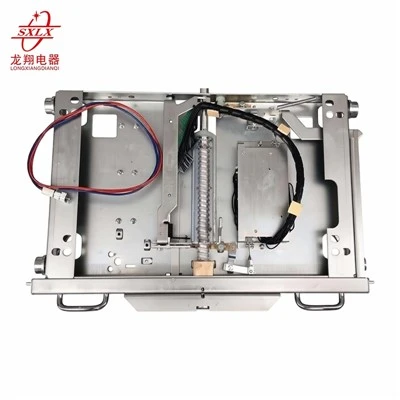
If you’re working on a solar project right now, and you’re not sure what switchgear you need – whether you’re a developer, EPC, or installer – hit us up. We’ve helped hundreds of solar projects pick the right switchgear, tailor it to their site, and get it installed on time and on budget. No pushy sales talk, just real advice for real solar folks. We can walk through your specific project size, location, and grid requirements to figure out exactly what you need, no jargon, no hidden fees.
Oil Immersed Transformer References:
- U.S. Department of Energy. (2023). Solar Futures Study: Pathways to Decarbonize the U.S. Power Sector.
- International Electrotechnical Commission. (2022). IEC 62271-200: High-voltage switchgear and controlgear – Part 200: AC metal-enclosed switchgear and controlgear for rated voltages above 1 kV and up to and including 52 kV.
- Solar Energy Industries Association. (2024). Utility-Scale Solar Grid Connection Requirements.
- National Fire Protection Association. (2023). NFPA 70E: Standard for Electrical Safety in the Workplace.
- American National Standards Institute. (2022). ANSI C37.06: AC high-voltage circuit breakers rated on a symmetrical current basis.
Shaanxi Longxiang Electrical Co., Ltd.
Shaanxi Longxiang Electrical Co., Ltd. is one of the most professional high voltage switchgear manufacturers and suppliers in China, also accepts customized orders. We warmly welcome you to buy advanced high voltage switchgear made in China here from our factory. Quality products and reasonable price are available.
Address: No. 619, Gaoxin Avenue, Comprehensive Bonded Zone, High-tech Development Zone, Baoji City, Shaanxi Province, China
E-mail: lee@longxiangelectric.com
WebSite: https://www.longxiang-electric.com/
