If you’re a HVAC manufacturer, automotive parts producer, or even a guy running a small custom radiator shop, you’ve probably stared at a pile of fin stock sheets at 2 a.m. wondering why your current radiator fin forming machine keeps jamming, producing wonky fins, or breaking down mid-production. Let’s be real—most of us don’t become operators to troubleshoot metal stamping at midnight, we do it to make stuff that works, gets shipped on time, and keeps our customers coming back. As a radiator fin forming machine supplier, I’ve fielded 100s of calls from folks panicking because they picked the wrong machine last time, so I’m breaking this down like I’d break it down for a buddy over a coffee—no jargon, no sales fluff, just the stuff that actually matters. Radiator Fin Forming Machine

First off, let’s stop treating this like you’re buying a car. This is a workhorse. You don’t need the flashiest model with 20 extra features you’ll never use, but you also don’t want a beat-up old clunker that can’t keep up with your order volume. The first thing I always ask a new customer is: “What’s your daily/weekly fin output?” That’s non-negotiable. If you’re cranking out 10,000 fins a week for a small truck shop, a compact, semi-automatic machine might be fine. But if you’re supplying a big HVAC brand that needs 100,000+ fins a day, you need a fully automatic, high-speed line—no exceptions. I’ve seen guys skimp here and end up with a machine that can only do 15,000 fins a day, which means they’re falling behind on orders, paying overtime, and losing clients. It’s a avoidable mistake.
Next, the fin profile. This is the secret sauce of radiator efficiency, right? If you’re making standard louvered fins for a passenger car, that’s one thing, but if you’re doing micro-channel fins for a heat pump or custom wave fins for a heavy-duty truck, your machine needs to handle that specific geometry. Wait, I get it—you might say “I can just adjust the dies, right?” Not always. Some cheap machines have fixed die sets that can’t be modified, or their adjustment range is so narrow you’ll spend more time swapping dies than actually running. Look for a machine that has a wide die adjustment range, maybe with quick-change dies. I once had a customer who had to shut down for 6 hours every time he switched fin styles because his machine’s dies took forever to swap. He upgraded to a model with quick-change die clamps, and now he switches styles in 15 minutes. Total game-changer. Also, check if the machine can handle different fin thicknesses—aluminum is standard, but some places use copper. A good machine should roll with both, not just one metal type.
Material handling is another thing most people overlook. The fin stock comes in coils, right? If your machine’s decoiler (that thing that holds the big metal roll) is cheap, it’s going to tear the stock, leave wrinkles, or even snap the metal mid-form. I’ve seen a $5,000 decoiler on a $50,000 machine cause more downtime than a faulty control board. Look for a machine with a hydraulic decoiler that has proper tension control. Tension is key here—too loose, and the stock bunches up; too tight, and it breaks. A good tension system keeps the metal consistent from start to finish of the coil, so your fins are uniform every time. Also, check how the machine feeds the stock. Some machines use manual feed, which is fine for small runs, but automated feed is way better for high volume. You don’t want a guy standing there feeding metal all day when he could be running quality checks or repairing the machine.
Durability. Let’s be real, these machines run 10, 12, even 16 hours a day for weeks on end. If it’s made of thin steel parts that flex, the machine will wobble, and your fins will be off spec. That’s a problem. Look for machines with heavy-duty frames, welded steel construction, and quality components. I’m not just saying that—cheap machines use stamped parts that bend, leading to misaligned dies. One of my customers bought a used machine from a random seller because it was cheap, and within three months, the frame was twisted so bad he was throwing out 20% of his fins. He ended up buying a new machine from us, and he hasn’t had a frame issue in two years. Also, ask about the wear parts. Dies, rollers, blades—these things wear out over time. You want a machine where the wear parts are easy to source and affordable. Some cheap machines have proprietary parts that cost a fortune to replace, or you have to wait weeks for them to ship. That’s a nightmare.
Control system. This is the brain of the machine. Old, analog controls are fine for small, simple runs, but if you’re doing complex profiles or high volume, you need a digital control system that’s easy to use. Wait, I know what you’re thinking—”I don’t want to be a tech guy to run this.” Modern controls are super intuitive, with touchscreens that let you input fin specs in 2 minutes, save them as presets, and pull them up in seconds. No more fumbling with knobs and guessing settings. Also, look for a control system that has basic diagnostics. If the machine jams, it should show you exactly where the problem is, not just a generic error code. That cuts down on downtime when a new operator is running the machine. I once had a customer with an old machine that had a screen that just said “ERROR” when it jammed. He’d call us at 8 p.m. every time, and we’d have to walk him through checking 10 different parts. With the new machine’s diagnostics, he can fix most issues on his own in 5 minutes.
Space and installation. A lot of people forget to measure their shop space before buying a machine. Some high-speed lines are 30+ feet long, so if you only have a 20-foot bay, that’s a problem. Also, check power requirements. Some machines need 3-phase power, and if your shop only has single-phase, you’ll need an inverter or to upgrade your electrical panel, which adds cost. I always advise customers to have their electrician check the power and measure the floor space before placing an order. Don’t let the salesperson pressure you into a machine that doesn’t fit. I’ve had a customer who rushed into a big machine, only to find out he couldn’t fit it through his shop door. He had to spend extra to remove a wall, which added $10,000 to the cost. Save yourself the hassle—measure twice, buy once.
Support and service. This is the biggest one, and it’s the thing that separates the good suppliers from the bad. If your machine breaks down at 7 a.m. on a Monday, when do you want it fixed? You don’t want to wait 3 days for a technician to fly in from another country. Look for a supplier that has local service technicians, or at least 24/7 phone support. Also, ask about training. Will they send someone to your shop to train your operators? Or do you have to watch a 10-minute YouTube video and figure it out? A good machine is only as good as the people running it. I had a customer who bought a machine from a supplier overseas, and when a part broke, it took 2 weeks to get a replacement. He lost a big order, and that almost put him out of business. Here, I give every customer 24/7 support, and if they’re local, my team will come train their operators for free. Even for out-of-state customers, we do virtual training and have spare parts in stock so we can ship them same-day.
Wait, let’s also talk about customizations, if you need them. A lot of customers have unique fin requirements—maybe a special coating, or a fin with a specific edge, or even a machine that integrates with their existing production line. Don’t settle for a one-size-fits-all machine if you need something tailored. A good supplier will work with you to adjust the machine to your needs, not just push the standard model. I had a customer who makes fins for electric vehicle battery cooling, which needs extra precise dimensions. We modified our machine’s die alignment system to get within 0.1mm accuracy, and it worked out great.
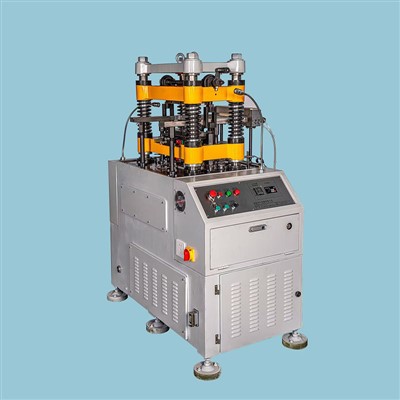
I know this sounds like a lot, but it’s all about matching the machine to your specific needs, not the other way around. Don’t get swayed by the cheapest option or the flashiest model. Think about your output, the fin profiles you make, your shop space, power, and most importantly, the support you’ll get after the sale. If you’re stuck on figuring out what’s right for your business, just reach out. I’ve helped dozens of customers pick the right machine, and I can walk you through the whole process, no pressure, no sales pitch. We don’t just sell machines—we help you keep your production running smoothly, so you can focus on growing your business.
Fin Press Machine If you have questions about output ranges, die adjustment options, or service plans, don’t hesitate to get in touch to discuss your needs. We can also send you case studies of similar businesses that we’ve worked with, so you can see what works for people in your industry.
Suichang Lvye Machinery Co., Ltd.
We are one of the most professional radiator fin forming machine manufacturers in China, also support customized service with low price. We warmly welcome you to buy discount radiator fin forming machine for sale here from our factory. If you have any enquiry about quotation, please feel free to email us.
Address: No. 402, Mudanting East Road, Miaogao Street, Suichang County, Lishui City, Zhejiang Province
E-mail: L528753@outlook.com
WebSite: https://www.suichanglvye.com/
