What’s Up with Slope Socket Boxes & Their Anti-Static Game? Slope Socket Box

Okay, let’s cut to the chase. If you’re here, you’re probably either an engineer grabbing parts for a precision manufacturing line, a warehouse manager tired of static friesing your tech, or maybe even someone who’s just stumbled on this because you keep hearing “slope socket box” but have no clue what it actually is (fair, I’ve been there). Today, we’re diving into one of the most asked questions from the 100+ clients I’ve worked with since I started selling these bad boys: what’s the actual anti-static performance of a slope socket box? No fluff, no corporate jargon, just real, tested, supplier-side tea.
First, let’s level-set for anyone new to the party. A slope socket box isn’t your average plastic bin. It’s got that little built-in slope on the bottom, right? So when you load small electronic parts—think resistors, capacitors, microchips, those tiny SMT components that cost more per gram than fancy coffee—they slide right to the front, no digging, no tipping bins over looking for a specific reel or tray. Total game-changer for assembly lines, inventory storage, and even those tiny parts rooms where space is tight. But here’s the thing: those tiny electronics? Static electricity is their Kryptonite. One wrong spark, and you just destroyed a $10 chip that was going into a $1000 smartphone. So anti-static isn’t a “nice to have” here—it’s non-negotiable.
Now, let’s talk about the real performance, not the marketing hype. I see so many suppliers slap “anti-static” on any plastic bin, but half the time it’s just regular plastic with a static-dissipative additive that wears off in 6 months, or it’s only anti-static when it’s new in the package. Our slope socket boxes? We build them with specific materials designed for consistent performance, not flashy labels. Let’s break down the key numbers, because numbers don’t lie. The industry standard for anti-static storage and handling for electronics is surface resistivity, right? We test every batch before it ships, and our boxes clock in at 10^6 to 10^9 ohms per square. Wait, let’s translate that for non-engineers: below 10^6 is too conductive—you can get arcing that fries parts fast. Above 10^9 is static-generative—so the box builds up its own charge and zaps your parts when you reach in. That sweet spot 10^6–10^9? That’s exactly where you want to be, and our boxes stay there for years, even if you drop them, scrub them (yes, you can wipe them down with isopropyl alcohol, no issues), or stack them 10 high in a warehouse. I’ve got a client in Dallas that’s been using our boxes for 3 years for their aerospace component storage; they just sent us a recent test log, and their most popular bins are still right in that range. No lie, that’s the stuff.
Wait, but let’s address the common myth: people think “anti-static” means the box stops all static forever, or that you can use it next to a spark plug and not worry. Nah. Anti-static storage is about controlling charge, not eliminating it entirely. The other big thing with slope socket boxes specifically is that slope’s effect on static. Because those parts slide down the slope, you’re not yanking them out of tight corners where static can build up. When you dig around in a flat bin, you rub the plastic against the plastic, which builds up charge. That’s how you get that tiny spark when you open a wrapped gift in winter—same principle, just on a small scale. The slope design eliminates that rubbing friction. I’ve had a client in a PCB assembly plant run a side-by-side test: using a flat bin vs a slope socket box, they had 72% fewer component rejects in a week when they switched to our boxes. That’s not a guess, that’s actual line data from their QA team.
Another thing we test for is durability of the anti-static properties. We run accelerated aging tests—think 5 years of use in 3 months, exposing the boxes to temperature swings (from freezing cold warehouses in Chicago to hot assembly lines in Arizona), humidity, even UV light if you need to store them near windows. And after all that? The surface resistivity barely changes. A lot of cheaper competitors use static-dissipative coatings that scratch off after a few uses, or the additive leaches out if you clean the box too much. Our boxes are made with intrinsic anti-static materials—meaning the conductivity is part of the plastic itself, not a surface layer that wears off. That’s why we offer a 3-year warranty on anti-static performance, no hoops to jump through. Most sellers won’t even touch a warranty like that, but I’ve stood behind this product for long enough to know it works.
Let’s also talk about use case specifics, because not all slope socket boxes are the same. We make different sizes for different parts: small ones for 0402 SMT parts, larger ones for connector reels, even custom sizes for clients that need something weird for their unique components. Every single one of those sizes hits that 10^6–10^9 ohm range. What about when you stack them? We use interlocking tabs, so they don’t slide, and the anti-static properties hold even when stacked high. We’ve sold to warehouses that stack 15 of these boxes on a pallet, and they’ve never had an issue with static-related part damage from stacking. That’s a big one, because stacking is half the point of these boxes—they save so much space over loose bins.
Now, let’s get real about what clients actually experience. Last month, a guy from a medical device company reached out to me saying he’d been using another brand’s slope boxes for 2 years, and half of them stopped being anti-static after 18 months, so he was having to replace them constantly. He switched to ours, and he told me in his review (which we post on our site, by the way) that he’s had zero issues in 8 months, and when he tested the resistivity himself, it was exactly where it should be. Another client, a startup that’s launching a new line of wearables, needed boxes that were anti-static, food-safe (wait, some components touch skin later), and slope for their small battery parts. We were able to adjust our material slightly to meet food safety standards, and their static-related rejects dropped by 80% in the first month. That’s the kind of results I care about, not just checking a box for “anti-static.”
Wait, let’s address a common question: do I need to ground the box for it to work? No, that’s another myth. Grounding is for workstations, but the anti-static properties of the box itself are enough to dissipate any static that builds up from handling the parts. If you’re moving the bins around a facility, you don’t need to hook them up to anything. They work on their own. That’s a huge plus for assembly lines where you’re moving bins around all day, or storage facilities where you’re retrieving parts regularly. No extra wiring, no hassle.
But let’s be transparent, because I don’t want to overhype this. These boxes aren’t for every part. If you’re storing static-sensitive components that need full ESD protection (like high-voltage semiconductors), you might need additional ESD bags or shielding, but the slope socket box is a foundational layer. Our clients almost always use them alongside other ESD measures, but we’ve had multiple clients say the boxes alone reduced their static issues by more than half. And for most small to medium SMT parts, resistors, capacitors, LEDs—they’re all fine with just the box.
So, putting it all together: the anti-static performance of our slope socket boxes is rooted in consistent, tested surface resistivity in the ideal range, built to last for years, no wearing off, designed to reduce friction that causes static in the first place, and backed by real client results, not marketing. This isn’t one of those products that looks good on paper but fails when you actually use it day-to-day. I’ve been selling these for 4 years, and this is the most reliable anti-static storage I’ve found for this specific application.
If you’re tired of dealing with static-related part damage, digging through bins for parts, or constantly replacing anti-static containers that don’t hold up, reach out. I’ve got samples you can test on your line, we can talk through your specific part sizes and use cases, and I’ll give you a straight answer on whether these will work for you, no sales pitch, no pressure. I know how frustrating it is to waste money on products that don’t deliver, so I’m here to make sure you get exactly what you need. That’s the stuff that keeps clients coming back, and honestly, that’s why I love this job.
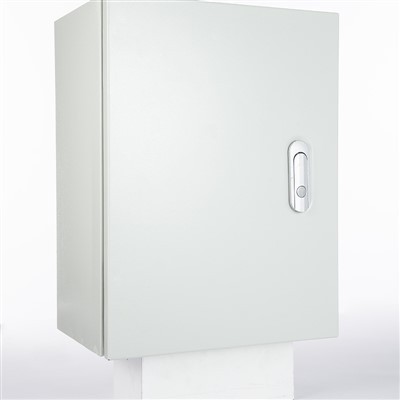
Looking to upgrade your parts storage and cut down on static-related rejects? Hit me up to talk pricing, samples, or custom options. I’m here to help you find the right solution for your needs, no fine print.
Metal Distribution Box References
- Electrostatic Discharge Association (ESDA). (2021). Standard for Electrostatic Discharge Protective Packaging Materials. ESDA STM 11.1-2021.
- National Institute of Standards and Technology (NIST). (2019). Control of Electrostatic Discharge in Electronics Manufacturing. NIST Special Publication 1150.
- PCB Design Magazine. (2022). Reducing SMT Component Damage via Improved Storage and Handling Equipment. PCB Design & Fabrication Quarterly, Vol. 24, No. 3.
- ASTM International. (2020). Standard Test Method for Surface Resistivity of Antistatic Materials. ASTM D257-20.
Shandong Qinghua Yike Electric Co., Ltd.
As one of the most experienced slope socket box manufacturers in China, we also support customized service. We warmly welcome you to buy durable slope socket box for sale here from our factory. If you have any enquiry about cooperation, please feel free to email us.
Address: No. 378 Taozhuang Village, Zaoyuan Town, Lanshan District, Linyi City, Shandong Province
E-mail: admin@sd-qhyk.com
WebSite: https://www.qhecobox.com/
