Hey everyone, and welcome back to the blog. If you’re here, chances are you’re either working on a project that needs a solid, lightweight metal, or you’ve been asking the same question over and over—what’s the electrical conductivity of aluminum sheets and plates? As someone who’s been in the aluminum sheet/plate supply game for 12 years now, I get that this stuff isn’t just a random fact. For electricians, HVAC techs, solar installers, and anyone building or repairing gear that runs on power, this number matters a lot. Let’s break it down like we’re chatting over a coffee, no fancy textbook jargon that’ll make your eyes cross. Aluminum Sheet/Plate
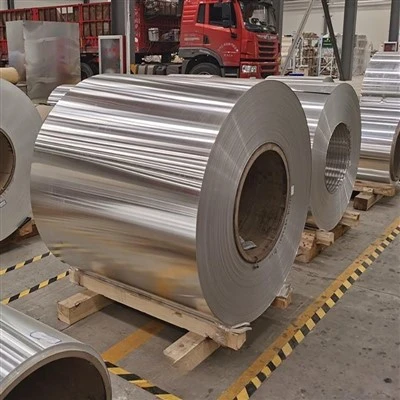
First off, let’s get one thing straight: aluminum’s conductivity isn’t a one-size-fits-all number. Way too many people think all aluminum conducts electricity the same, but that’s like saying every car gets the same gas mileage—depends on the model, the engine, even how you drive it. The base metal itself, right? Pure aluminum (that’s the stuff with a 99%+ aluminum content) has an electrical conductivity that’s roughly 37 to 38 million siemens per meter (S/m) at room temp. Wait, for anyone who works with copper—everyone loves copper for wiring, but aluminum is actually about 61% as conductive as copper. I know, that sounds low, but hold on. Copper is heavier, more expensive, and aluminum is way lighter for the same amount of conductivity, which is why we’re big on it for power lines and automotive parts these days.
Now, why does that number jump around? Let’s talk about alloying elements. When we make aluminum sheets or plates, we add tiny bits of other metals—magnesium, silicon, copper, zinc, even manganese—to give them strength, corrosion resistance, or weldability. But here’s the catch: those little bits mess with conductivity. For example, the 1000 series aluminum (that’s the pure stuff, like 1050 or 1100) has the highest conductivity of any aluminum alloy I sell—usually around 37 S/m, just a tiny drop from the pure metal. Perfect for things like electrical bus bars or heat sinks where you need conductivity above all else.
But switch to 6061 aluminum, which is the workhorse of the industry—everyone uses this for everything from bike frames to truck parts to solar mounts. What’s its conductivity? It’s around 25 to 27 S/m. Why lower? Because it has magnesium and silicon added to boost strength. That trade-off is real—you get way more durability, but you give up some conductivity. Then there’s 5052, which has magnesium for corrosion resistance, common in marine parts or enclosures. Its conductivity is about 28 to 30 S/m, so a touch higher than 6061, but still a ways below the 1000 series. And if you ever work with something like 2024 aluminum, which has a ton of copper for super high strength in aerospace? That’s only around 16 to 18 S/m—best not use that for electrical work unless you really don’t need conductivity.
Temperature also plays a big role, and this is something I see a lot of folks miss. If aluminum sheets or plates get hot, their conductivity drops. Like, if it’s 20°C (that’s room temp for most of us), we’re at that 37 S/m number. Crank it up to 100°C (212°F), it drops to around 31 S/m. Hit 200°C (392°F), and it’s down to about 25 S/m. So if you’re using aluminum in a spot that gets super hot—like under a hood of a car, or near a power inverter—you’ve got to account for that drop. We always remind our customers of this because it’s not just a lab fact; it affects how their project works long-term.
Wait, what about the thickness of the sheet or plate? Does that matter? A lot of people ask that, and the short answer is: not for conductivity, but it matters for how you use it. A thin 0.5mm aluminum sheet vs. a 50mm thick plate—same alloy will have the same conductivity per meter, but the thicker one can carry more current without overheating. Think of it like a pipe: a tiny pipe can only move so much water, a big pipe moves way more. Same with aluminum conductors—thicker cross-section means less resistance, so more current flow, even if the metal type is the same. That’s why for high-current applications, we recommend thicker plates or multiple thinner sheets layered together, instead of going with a thinner, higher-conductivity alloy.
Let me throw in some real examples of what our customers use for, so this makes sense. Last year, we supplied a big solar installation company with 1100 series aluminum sheets to make bus bars for their grid-tie systems. They needed the highest conductivity possible to handle the DC current from the panels, and 1100 gave them exactly that. No surprise there, since that’s pure aluminum. Another customer, a HVAC contractor, needed aluminum plates to make heat sinks for commercial air conditioning units. They went with 6061 because they needed the plate to hold up to the constant vibration from the AC compressor, and even though conductivity was a little lower, it was more than enough for the low-voltage control circuits they were running. And a marine parts maker uses 5052 sheets for electrical enclosures on yachts—corrosion resistance is non-negotiable, so they accept the slightly lower conductivity to keep the saltwater out and the components safe.
Now, let’s address a common myth I hear all the time: “Aluminum is a fire hazard for wiring because it doesn’t conduct as well as copper.” That’s only half true. Yes, you have to size aluminum wires/plates a bit larger than copper to get the same current capacity, but if you do it right, it’s just as safe. The old issue with old wiring was bad connections—aluminum expands and contracts more with temperature than copper, so if connections aren’t torqued properly, they can get loose and cause overheating. But modern aluminum alloys and proper installation practices fix that. We help customers figure out exactly what size alloy they need for their project so they don’t have to worry about that.
So, how do you get accurate conductivity for your specific aluminum sheet or plate? It’s not just a number off a chart. Every batch of aluminum we sell gets tested. We send samples out to a third-party lab to measure conductivity with a device called an eddy current tester—super quick, no damage to the sheet or plate. That’s why we can tell a customer exactly what the conductivity is for their order, not just the average for the alloy. For example, a batch of 1050 might test at 37.2 S/m, another batch could be 37.5 S/m, and that’s normal—tiny variations in the alloying process change it a little.
Also, don’t forget about surface condition. If you have a sheet that’s mill finish (raw, just off the rolling mill), that has a thin oxide layer on it. Does that affect conductivity? A tiny bit, but not enough to worry about for most applications. If you have a polished surface, same thing. The oxide layer is actually beneficial for corrosion resistance, so we don’t recommend sanding it off unless you’re doing a really precise connection, and even then, you just need to clean the contact area, not the whole plate.
Let’s wrap this up with what you actually need to take away. First, pure aluminum (1000 series) is the most conductive, around 37 S/m. Second, alloying elements lower conductivity, so stronger alloys like 6061 or 5052 are lower, and high-strength aerospace alloys are even lower. Third, temperature drops conductivity, so factor in the operating temp of your project. Fourth, thickness affects current capacity, not inherent conductivity, but a thicker cross-section is better for high current.
If you’re working on a project right now and you’re not sure which aluminum sheet/plate is right for your conductivity needs, don’t guess. I’ve been doing this long enough to know that picking the wrong alloy or thickness can turn a project from easy to a headache fast. Reach out to us, tell me what you’re building, how much current you need to handle, what the environment is like (hot, cold, marine, etc.), and I can hook you up with the exact aluminum grade and size that’ll work perfectly. No pushy sales stuff, just real advice from someone who’s dealt with this a thousand times.
PPGI/GI References:
- ASM International. (2019). Aluminum Alloys: Properties and Physical Metallurgy. Materials Park, OH: ASM International.
- National Electrical Manufacturers Association (NEMA). (2021). Electrical Conductivity of Common Metals and Alloys. Rosslyn, VA: NEMA.
- Davis, J.R. (Ed.). (2001). Aluminum and Aluminum Alloys. ASM Specialty Handbook. Materials Park, OH: ASM International.
Wuxi Jin Ming Jian De Industry & Trade Co., Ltd.
Wuxi Jin Ming Jian De Industry & Trade Co., Ltd. is one of the most professional aluminum sheet/plate manufacturers and suppliers in China, also supports customized service. With abundant experience, we warmly welcome you to wholesale CE approved aluminum sheet/plate in stock here from our factory. If you have any enquiry about quotation, please feel free to email us.
Address: 2102-2105, Yuexing Building, Guangnan Road, Liangxi District, Wuxi City, Jiangsu Province, China.
E-mail: info@wxjmjdss.com
WebSite: https://www.jmjdsteelexp.com/
