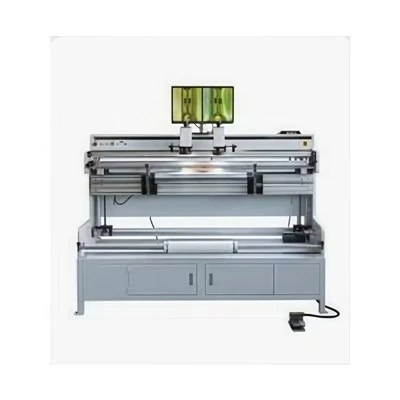
If you’ve ever walked through an automotive manufacturing plant and watched front-end assemblies click into place with that sharp, consistent sound of a rivet being set, you’re looking at the front assembly riveting production line at work. As a supplier that’s specialized in designing, building, and optimizing these lines for 18 years, I often get asked by plant managers, production engineers, and maintenance teams one core question: “What makes the feeding system work so reliably, even in 24/7 high-volume shifts?” The answer isn’t just a single part or a fancy piece of technology—it’s a tightly integrated ecosystem built around precision, speed, and adaptability, all tailored to the unique demands of front assembly riveting. Let me break down how it works, why it matters, and how it’s evolved over the years to solve the common headaches that production teams face. Front Assembly Riveting Production Line
First, let’s ground this in what a front assembly’s riveting needs actually are. Front assemblies—think the subframe that connects a car’s engine to its wheels, or the dashboard support structure that holds gauges and airbags—are made of mixed materials: steel brackets, aluminum reinforcements, and sometimes even thin composite panels. Rivets here can range from 3mm solid rivets for light-duty brackets to 12mm structural rivets that hold the subframe together, and they’re delivered in bulk, not as individual fasteners. That’s where the feeding system comes in: it’s the middleman between the rivet bin and the rivet gun, tasked with delivering the right rivet, to the right spot, at the exact right time, every single cycle.
Most people outside of manufacturing picture feeding systems as simple vibratory bowls that shake parts into alignment, and while that’s a part of it, today’s front assembly riveting line feeding systems are far more complex. Let’s start with the primary feeding module, the vibratory bowl feeder, but not the generic ones you might find for consumer products. For front assembly applications, we engineer custom bowls tuned to the specific rivet geometry. A subframe structural rivet, for example, has a large flange head that needs to face away from the workpiece during insertion—so the bowl’s internal geometry includes tiny channels and air jets that reject any rivet that’s flipped wrong, chipped, or deformed. We once had a customer running a line that kept misfeeding rivets, and their maintenance team thought the bowl was faulty; it turned out they’d switched to a slightly different batch of rivets with a 0.1mm smaller flange, which the old bowl’s reject channels didn’t account for. We redesigned the bowl’s internal guides in less than a week, and their misfeed rate dropped from 2.3% to 0.1% almost overnight. That’s the kind of hyper-specific engineering that defines our feeding systems, not off-the-shelf components.
Next comes the step that’s easy to overlook but make-or-break: part orientation and transfer. Once the rivet is separated and aligned in the vibratory bowl, it moves along a track that feeds into a pick-and-place module—usually a pneumatic or electric actuator with a custom end effector, or gripper, designed for the exact rivet’s head and shank. For delicate composite front assemblies, we use soft, compliant grippers made of food-grade silicone that don’t scratch or mark the workpiece, even as they grip a rivet with less than a gram of force. For heavy structural rivets, we use precision electric grippers that can adjust grip force in real time, so if a rivet is slightly mis-sized, the gripper doesn’t clamp hard enough to damage it, but hard enough to hold it steady during insertion. A lot of suppliers skip the custom gripper step, leading to dropped rivets or misaligned parts mid-cycle, which causes downtime. Our feeding systems integrate the gripper directly with the line’s PLC (programmable logic controller), so the gripper’s position and force are synced to the rivet gun’s stroke—no lag, no misalignment.
Then there’s the in-line inspection and verification system, which is non-negotiable for production lines that run 1,000 units a day or more. Back in the early 2000s, feeding systems just dumped rivets into the gun; if a bad one got through, it became a costly rework job. Today, our front assembly riveting line feeding systems have a machine vision camera mounted right at the end of the transfer track, before the rivet is loaded into the gun. The camera checks three things: first, that the rivet is the correct type and size (no mix-ups between 6mm and 8mm rivets, which would cause a structural failure); second, that it’s free of burrs, cracks, or deformation; and third, that it’s oriented correctly, with the flange head facing the right way. If any check fails, the PLC instantly rejects the rivet, sends it to a separate reject bin, and alerts the line’s operator with a specific error code—no guessing required. We’ve had customers tell us this inspection step cut their rework rate for front assemblies by 92% in the first year they installed our lines, which is a huge cost saver: reworking a subframe can cost $30 to $50 per unit, multiplied by thousands of units a month.
Now, let’s talk about integration with the rest of the front assembly riveting line, because a feeding system doesn’t work in a vacuum. The front assembly line’s main controller tracks the position of every bracket and panel as they move along the conveyor: when a front subframe reaches the riveting station, the controller sends a signal to the feeding system, which kicks off the rivet transfer process, times the gripper to pick the rivet, and then sends it to the gun. This synchronization is critical for cycle time—most front assembly lines need a cycle time of 45 to 60 seconds per unit, so any delay in feeding means the line falls behind. We’ve designed our feeding systems with modular “quick-change” features, too. If a customer switches from making a compact car’s front subframe to a full-size truck’s, they don’t need to replace the entire feeding system; they just swap out the vibratory bowl, the gripper, and the vision camera’s tool path settings, a process that takes less than 15 minutes. That adaptability is why so many of our repeat customers—we’ve worked with 27 major automotive manufacturers over the last decade—choose our feeding systems: they can adjust to product changes without a full line shutdown.
I also want to address the challenges we’ve solved that most suppliers don’t talk about. For example, environmental factors in a plant: some facilities have high humidity, others have dust from metal stamping, and both can wreak havoc on small rivet parts. We seal our feeding modules with IP65-rated enclosures, so dust and moisture don’t get into the bowl or the transfer tracks, and we use linear slides instead of roller bearings for the gripper mechanism, which are less prone to getting gunked up with metal shavings. Another common issue is rivet waste: in older systems, misfeeds and bad rivets would create a lot of scrap, but our feeding systems track every rivet that goes through, so we can provide customers with data on exactly how much scrap they’re generating, which rivet types are most prone to defects, and even predict when a vibratory bowl’s liners will wear out and need replacement. That data is stored in a cloud-based dashboard our customers have access to, which helps with maintenance planning and reducing unplanned downtime.
Wait, let’s make this concrete with a recent example. Last year, we delivered a front assembly riveting line to a mid-sized automotive plant that was struggling with two issues: their old feeding system had a 1.8% misfeed rate, and their cycle time was 68 seconds per unit, which meant they were missing their production targets by 12% every month. We installed our custom feeding system: a 12-inch vibratory bowl tuned for 8mm structural rivets, soft silicone grippers, an in-line vision inspection system, and full PLC synchronization with their line. Within two weeks, their misfeed rate dropped to 0.03%, and their cycle time fell to 52 seconds—enough to hit their monthly production targets and save them over $120,000 a year in rework and overtime costs. That’s the real impact a well-designed feeding system has, not just the technical specs, but the bottom line.
Now, I want to be clear: this isn’t a one-size-fits-all solution. A front assembly for a motorcycle is smaller and uses different rivets than a heavy-duty truck’s front subframe, so we work with each customer to tailor the feeding system to their specific needs. We don’t just sell equipment; we spend the first 2 to 3 days on-site at their plant, observing their current production line, measuring their cycle time goals, and testing rivet samples to make sure our feeding system integrates seamlessly. That hands-on approach is what sets us apart from generic suppliers who send off-the-shelf systems that don’t work for a plant’s unique workflow.
If you’re a production manager, maintenance lead, or engineer at a manufacturing plant working on front assembly riveting lines, you know how small issues with feeding can snowball into big problems: downtime, rework, missed targets, higher costs. Our feeding systems are built to eliminate those issues, with 18 years of experience solving the exact challenges you face. We’re currently working on a line for an electric vehicle manufacturer, where the front assembly uses lightweight aluminum rivets that are 30% lighter than standard steel rivets—so our feeding system had to adjust the gripper force and bowl vibration to handle the softer material without deforming it. That’s the kind of innovation we bring to every project.
At the end of the day, the feeding system of a front assembly riveting production line isn’t just about moving rivets from point A to point B. It’s about reliability, precision, and adaptability—all while keeping your line running smoothly, reducing waste, and cutting costs. If you’re looking to upgrade your current line, or design a new front assembly riveting line from scratch, we’re here to help. Our team can walk you through every step, from initial consultation to post-installation support, to make sure the feeding system fits your exact needs. We don’t just build equipment; we build solutions that work for your production goals. Reach out to our team today to schedule a consultation and discuss your front assembly riveting line feeding system needs.
Enclosed Integrated Lead Screw Linear Module References:
- Automotive Manufacturing Solutions. (2022). Fastening Technologies for Front-End Assemblies.
- Society of Manufacturing Engineers. (2021). Automated Feeding Systems for High-Volume Riveting Applications.
- National Institute of Standards and Technology. (2020). Precision Alignment Systems for Industrial Fastening Lines.
- International Journal of Advanced Manufacturing Technology. (2023). Optimization of Vibratory Feeders for Small Fastener Components.
- Automotive Engineering International. (2022). Lightweight Material Joining for Next-Gen Front Assemblies.
Yangning (Xiamen) Intelligent Technology Co., Ltd.
With abundant experience, we are one of the most professional front assembly riveting production line manufacturers in China. As we have world-leading production equipment and strong manufacturing capabilities, we warmly welcome you to buy bulk advanced front assembly riveting production line from our factory. Customized orders are welcome.
Address: Room 307-2, No. 15 Duiying Road, Software Park Phase III, Torch Hi-Tech Zone, Xiamen, Fujian, China
E-mail: mia@ynautos.com
WebSite: https://www.ynautos.com/
