As a seasoned provider of Gantry – Type Slitting Machines, I’ve witnessed firsthand the importance of speed adjustment in these remarkable pieces of equipment. In this blog, I’ll delve into the various speed adjustment methods of Gantry – Type Slitting Machines, sharing insights based on years of experience and industry knowledge. Gantry-Type Slitting Machine

The Significance of Speed Adjustment in Gantry – Type Slitting Machines
Before we explore the adjustment methods, it’s crucial to understand why speed adjustment is so vital. Gantry – Type Slitting Machines are used in a wide range of industries, from packaging to metal processing. Different materials and production requirements demand different cutting speeds. For instance, when slitting thin and delicate materials like plastic films, a slower speed is often necessary to ensure a clean and precise cut. On the other hand, thicker and more robust materials can withstand higher cutting speeds, which can significantly increase production efficiency.
Variable Frequency Drive (VFD)
One of the most common and effective speed adjustment methods for Gantry – Type Slitting Machines is the use of a Variable Frequency Drive (VFD). A VFD is an electronic device that controls the speed of an electric motor by varying the frequency and voltage supplied to it.
The principle behind a VFD is relatively straightforward. The input power, usually a fixed – frequency AC supply, is first converted into DC power. Then, the DC power is converted back into AC power with a variable frequency and voltage. By adjusting the frequency, the speed of the motor can be precisely controlled.
There are several advantages to using a VFD for speed adjustment. Firstly, it offers a high degree of control. Operators can easily adjust the speed of the slitting machine to match the specific requirements of the material being processed. This precision can lead to better quality cuts and reduced waste. Secondly, VFDs are energy – efficient. They can adjust the motor speed according to the load, which means that the machine consumes less energy when operating at lower speeds. This not only reduces operating costs but also has a positive impact on the environment.
However, there are also some challenges associated with VFDs. They can be relatively expensive to purchase and install. Additionally, VFDs require proper maintenance and calibration to ensure optimal performance.
Mechanical Speed Adjustment
Another traditional method of speed adjustment in Gantry – Type Slitting Machines is mechanical speed adjustment. This method typically involves the use of gears, pulleys, and belts.
Gears are a common component in mechanical speed adjustment systems. By changing the gear ratio, the speed of the machine can be adjusted. For example, a smaller gear driving a larger gear will result in a slower speed, while a larger gear driving a smaller gear will increase the speed.
Pulleys and belts also play an important role in mechanical speed adjustment. By changing the size of the pulleys, the speed of the driven shaft can be altered. This method is relatively simple and cost – effective. It is suitable for applications where a basic level of speed adjustment is required.
However, mechanical speed adjustment has its limitations. It is not as precise as VFD – based speed adjustment. The range of speed adjustment is often limited, and it can be difficult to make fine – tuned adjustments. Additionally, mechanical components are subject to wear and tear, which can lead to reduced performance over time.
Servo Motor Control
Servo motor control is another advanced speed adjustment method used in Gantry – Type Slitting Machines. A servo motor is a type of motor that can precisely control its position, speed, and torque.
In a servo motor control system, a controller sends signals to the servo motor based on the desired speed and position. The servo motor then adjusts its operation accordingly. This allows for very precise speed control, even at high speeds.
Servo motor control offers several benefits. It provides high – speed and high – precision operation, which is ideal for applications that require accurate and consistent cuts. It also has a fast response time, which means that the machine can quickly adjust to changes in speed requirements.
However, servo motor control systems are more complex and expensive than other speed adjustment methods. They require specialized knowledge and skills to install and maintain.
Hydraulic Speed Adjustment
Hydraulic speed adjustment is a method that uses hydraulic systems to control the speed of the Gantry – Type Slitting Machine. Hydraulic systems work by using fluid pressure to transmit power.
In a hydraulic speed adjustment system, a hydraulic pump is used to generate fluid pressure. The fluid is then directed to a hydraulic motor, which converts the fluid pressure into mechanical energy. By adjusting the flow rate of the fluid, the speed of the hydraulic motor can be controlled.
Hydraulic speed adjustment has several advantages. It can provide high torque at low speeds, which is useful for heavy – duty applications. It also offers a smooth and continuous speed adjustment, which can result in better cutting quality.
However, hydraulic systems require regular maintenance to prevent leaks and ensure proper operation. They can also be relatively expensive to install and operate.
Choosing the Right Speed Adjustment Method
When choosing a speed adjustment method for a Gantry – Type Slitting Machine, several factors need to be considered.
Firstly, the type of material being processed is a crucial factor. Delicate materials may require a more precise speed adjustment method, such as VFD or servo motor control. Thicker and more robust materials may be able to tolerate a less precise method, such as mechanical speed adjustment.
Secondly, the production requirements also play an important role. If high – speed and high – volume production is required, a method that offers fast and accurate speed adjustment, such as servo motor control, may be more suitable. If the production volume is relatively low, a more cost – effective method, such as mechanical speed adjustment, may be sufficient.
Finally, the budget and available resources should also be taken into account. Some speed adjustment methods, such as VFDs and servo motor control systems, are more expensive than others. It’s important to choose a method that fits within the budget while still meeting the production requirements.
Conclusion
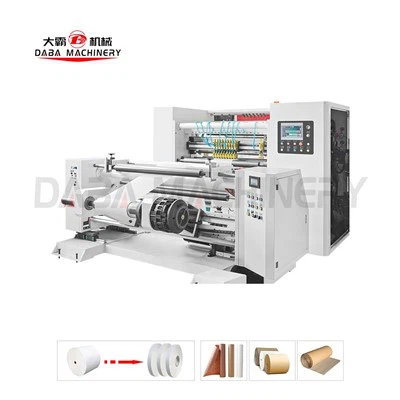
In conclusion, the speed adjustment of a Gantry – Type Slitting Machine is a critical aspect of its operation. There are several methods available, each with its own advantages and disadvantages. By understanding the different speed adjustment methods and considering the specific requirements of the application, operators can choose the most suitable method for their Gantry – Type Slitting Machine.
Three-Side Sealing Bag Making Machine If you’re in the market for a Gantry – Type Slitting Machine or need more information about speed adjustment methods, I encourage you to reach out for a detailed discussion. Our team of experts is ready to assist you in finding the best solution for your production needs.
References
- "Industrial Motor Drives: Analysis, Design, and Application" by Bimal K. Bose
- "Hydraulic and Pneumatic Systems" by Richard M. Budynas and Keith J. Nisbett
- "Servo Motors and Industrial Control Theory" by Peter C. Sen
Wenzhou Daba Machinery Co., Ltd.
With abundant experience, we are one of the most professional gantry-type slitting machine manufacturers and suppliers in China. We warmly welcome you to wholesale advanced gantry-type slitting machine at competitive price from our factory. If you have any enquiry about cooperation, please feel free to email us.
Address: Qianbu Industrial Zone, Xincheng Street, Ruian City, Wenzhou, China.
E-mail: info1@dabamachinery.com
WebSite: https://www.dabaflexpack.com/
