A bidirectional trigger diode, often referred to as a DIAC, is a specialized semiconductor device that has unique electrical characteristics, which make it highly useful in a variety of modulation applications. As a supplier of bidirectional trigger diodes, I have witnessed firsthand the diverse and innovative ways in which these components are utilized across different industries. Bidirectional Trigger Diode
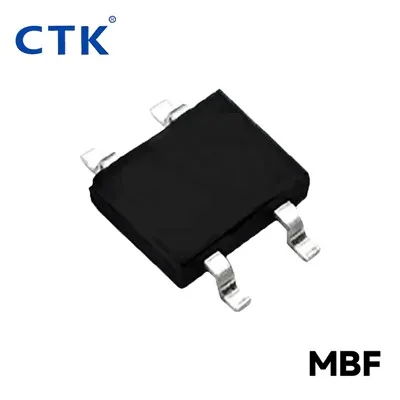
Understanding the Basics of a Bidirectional Trigger Diode
Before delving into the modulation applications, it’s essential to understand what a bidirectional trigger diode is. A DIAC is a two – terminal, three – layer semiconductor device that functions as a switch. It conducts current only when the voltage across its terminals exceeds a specific breakover voltage in either polarity. Once the breakover voltage is reached, the DIAC enters a low – resistance state, allowing current to flow freely. When the current drops below a certain holding current, the DIAC switches back to its high – resistance state.
Modulation in Electrical Systems
Modulation is a process of varying one or more properties of a periodic waveform, called the carrier signal, with an information – bearing signal. The information – bearing signal can be an analog or digital signal that represents data, voice, or other types of information. In electrical systems, modulation is used for various purposes, including signal transmission, power control, and waveform shaping.
Applications in Phase – Controlled Rectifiers
One of the most common modulation applications of a bidirectional trigger diode is in phase – controlled rectifiers. Phase – controlled rectifiers are used to convert alternating current (AC) into direct current (DC) with controllable output voltage. In these circuits, the DIAC is typically used in conjunction with a thyristor, such as a silicon – controlled rectifier (SCR) or a triac.
The DIAC controls the firing angle of the thyristor. When the voltage across the DIAC reaches its breakover voltage, it triggers the thyristor into conduction. By adjusting the point in the AC cycle at which the DIAC triggers the thyristor, the amount of power delivered to the load can be controlled. This modulation of the power delivery is crucial in applications such as motor speed control, heater control, and dimming of incandescent lights.
For example, in a motor speed control application, the phase – controlled rectifier can be used to vary the voltage supplied to the motor. By changing the firing angle of the thyristor using the DIAC, the average voltage across the motor can be adjusted, which in turn controls the motor speed. This type of modulation allows for precise and efficient control of the motor’s operation, reducing energy consumption and extending the motor’s lifespan.
Applications in Pulse – Width Modulation (PWM)
Pulse – width modulation is a technique used to control the power delivered to a load by varying the width of the pulses in a periodic signal. In PWM circuits, the bidirectional trigger diode can be used to generate the trigger pulses for the switching devices, such as transistors or MOSFETs.
The DIAC is connected in a circuit with a capacitor and a resistor. As the capacitor charges through the resistor, the voltage across the DIAC increases. When the voltage reaches the breakover voltage of the DIAC, it conducts, discharging the capacitor and generating a trigger pulse. The frequency and duty cycle of these trigger pulses can be adjusted by changing the values of the capacitor and resistor.
PWM using a DIAC is commonly used in power supply circuits, LED lighting systems, and audio amplifiers. In LED lighting, for example, PWM can be used to control the brightness of the LEDs. By varying the duty cycle of the PWM signal, the average current flowing through the LEDs can be adjusted, resulting in a change in brightness. This method of brightness control is energy – efficient and provides a smooth dimming effect.
Applications in Signal Modulation for Communication
In communication systems, signal modulation is used to transmit information over a carrier wave. The bidirectional trigger diode can be used in certain types of signal modulation circuits, particularly in simple and low – cost applications.
For instance, in a frequency – shift keying (FSK) modulation system, the DIAC can be used to switch between two different frequencies. In FSK, digital data is represented by two different frequencies. The DIAC can be used to control the switching of the oscillator circuit between these two frequencies based on the input digital signal.
Although DIAC – based signal modulation circuits may not be as sophisticated as those using more advanced integrated circuits, they offer a cost – effective solution for applications where high – speed and high – precision modulation are not required. For example, in some remote control systems and low – range wireless communication devices, DIAC – based modulation circuits can provide reliable performance at a minimal cost.
Applications in Voltage and Current Regulation
Bidirectional trigger diodes can also be used in voltage and current regulation circuits. In a voltage regulator circuit, the DIAC can be used to control the operation of a series or shunt regulator. When the output voltage exceeds a certain threshold, the DIAC conducts, triggering a control mechanism that adjusts the regulator to bring the voltage back to the desired level.
Similarly, in current regulation circuits, the DIAC can be used to monitor the current flowing through a load. If the current exceeds a predefined limit, the DIAC triggers a protection circuit that reduces the current to a safe level. This type of modulation of the voltage and current is essential for protecting electrical components from over – voltage and over – current conditions, ensuring the reliability and longevity of the circuit.
Advantages of Using Bidirectional Trigger Diodes in Modulation
There are several advantages to using bidirectional trigger diodes in modulation applications. Firstly, they are relatively simple and inexpensive devices. Their straightforward design and low cost make them an attractive option for cost – sensitive applications.
Secondly, DIACs have a high degree of symmetry in their conduction characteristics. They can conduct current in both directions, which is useful in applications involving AC signals. This symmetric conduction allows for easy implementation in circuits where the direction of the signal may change.
Another advantage is their reliability. Bidirectional trigger diodes have a long lifespan and are resistant to environmental factors such as temperature and humidity. This makes them suitable for use in a wide range of operating conditions.
As a Supplier: Ensuring Quality and Customization
As a supplier of bidirectional trigger diodes, I understand the importance of providing high – quality products to meet the diverse needs of our customers. We use advanced manufacturing processes and strict quality control measures to ensure that each DIAC meets the highest standards of performance and reliability.
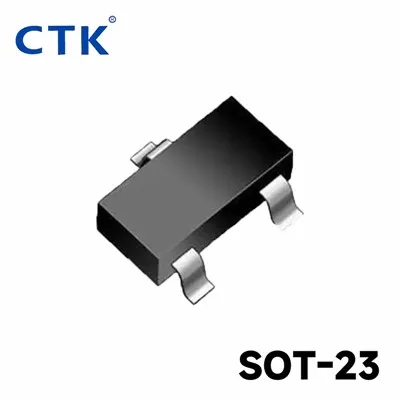
We also offer customization options to our customers. Depending on the specific requirements of the modulation application, we can customize the breakover voltage, holding current, and other electrical parameters of the bidirectional trigger diodes. This allows our customers to optimize their circuits for the best performance.
Encouraging Contact for Procurement
Low Voltage Mosfet If you are in need of bidirectional trigger diodes for your modulation applications, I encourage you to contact us for procurement discussions. Our team of experts is ready to assist you in selecting the right products for your specific needs. We can provide technical support, product samples, and competitive pricing. Whether you are working on a small – scale project or a large – scale industrial application, we have the solutions to meet your requirements.
References
- Millman, Jacob, and Christos C. Halkias. Integrated Electronics: Analog and Digital Circuits and Systems. McGraw – Hill, 1972.
- Boylestad, Robert L., and Louis Nashelsky. Electronic Devices and Circuit Theory. Pearson, 2017.
- Sedra, Adel S., and Kenneth C. Smith. Microelectronic Circuits. Oxford University Press, 2019.
Tongke Electronic Co., Ltd
Tongke Electronic Co., Ltd. is one of the most experienced bidirectional trigger diode manufacturers and suppliers in China, featured by quality products and low price. Please rest assured to wholesale advanced bidirectional trigger diode made in China here from our factory. Contact us for pricelist.
Address: No.3,Chayuan Rd, Street 3, AilingKan, Dalingshan, Dongguan, Guangdong, China.
E-mail: jack@ctk-elec.com
WebSite: https://www.ctkchip.com/
