If you’re an AV integrator, retail store manager, or events planner, you’ve probably stared at an indoor LED display and wondered: Can this flat, bright panel actually pull off 3D content without the goofy glasses or the cheap, shaky depth you get from a movie theater? I get it—over the last three years, as an indoor LED display supplier, I’ve fielded this question at least once a week, usually right after someone sees a competitor’s half-baked 3D demo that looked more like a blurry ghost than a sharp, immersive product. Today, I’m breaking down whether indoor LED displays can actually support 3D content, how it works (and what doesn’t), and why this matters for the projects my team and our clients tackle every day. Indoor LED Display
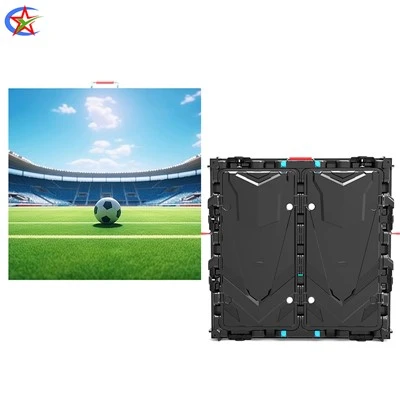
First, let’s get the basics out of the way: 3D display technology isn’t new. We’ve had 3D TVs for decades, and movie theaters have used polarized or active-shutter glasses for even longer. But indoor LED displays are a different beast. Unlike small, pixel-dense consumer TVs, indoor LED displays are built for big spaces—think 5-foot-wide menu boards in a grocery store, 20-foot walls in a fashion showroom, or 50-foot backdrops at a music festival. Their pixels are larger, their refresh rates are high, and their brightness cranks way higher than any home TV, which makes them perfect for drawing crowds. But can they turn that big, bright canvas into something that feels three-dimensional, not just like a flat image with a depth filter slapped on?
The short answer is: Yes, but not all 3D is the same, and not all indoor LED displays are built for it. Let’s start with the most common, and most reliable, type of 3D that works on indoor LED panels: autostereoscopic 3D. That’s the fancy term for “glasses-free 3D,” and it’s the one we’ve spent the last two years testing for our clients who run retail pop-ups and museum exhibits. Here’s how it works, in simple terms: Stereoscopic 3D relies on showing a slightly different image to each eye, which our brain combines into depth. For consumer TVs, that’s usually done with tiny polarizing filters that line up with your glasses. But for large indoor LED displays, we don’t want everyone to wear glasses—too much hassle, and half the crowd will be holding phones or bags anyway. So autostereoscopic 3D uses a lenticular lens array or a parallax barrier over the LED panel. A lenticular array is a sheet of tiny, curved plastic lenses; each lens bends light so that one set of pixels feeds the left eye, and a separate set feeds the right. The parallax barrier is a slotted sheet that does the same thing, blocking pixels so each eye only sees its own view.
Now, the critical part: Indoor LED displays have to be built with a certain pixel pitch (the distance between each pixel) to pull this off. Pixel pitch is measured in millimeters—smaller numbers mean sharper images for close viewing, larger numbers work for farther away. For autostereoscopic 3D, we can’t use a panel with too small a pitch, because the lenses or barriers need enough space to separate the left and right eye images without crowding. I learned this the hard way in 2022, when a client asked us to install a 10-foot autostereoscopic 3D display for a tech conference, and we tried to use our 2.5mm pitch panel (great for close-up demos, bad for 3D). The result was a weird double-image blur that made attendees squint for 20 minutes before leaving. We swapped it out for a 3.9mm pitch panel, and suddenly the 3D popped—an upcoming laptop looked like it was hovering 6 inches in front of the wall, and the conference’s logo felt like it was sticking out at you. For context, 3.9mm is standard for displays that people view from 6 to 15 feet away, which is exactly where most indoor commercial spaces (retail stores, showrooms, lobbies) place their main displays.
But autostereoscopic 3D isn’t the only way indoor LED displays do “3D.” There’s also “simulated 3D,” which is what a lot of smaller businesses use for menu boards or simple promotional displays. This is where you take a regular 2D image and add a depth effect using software—like making a product image look like it’s pushed forward, or text look like it’s floating above the screen. Most modern indoor LED display controllers (the brains that run what’s shown on the panel) have built-in depth mapping tools that let you do this in minutes, no special hardware required. Last quarter, a local coffee chain ordered 12 small indoor LED displays for their new locations, each with simulated 3D for their menu items: a latte looks like it’s sitting on the board, and a pastry looks like it’s sticking out an inch. The ROI? They reported a 12% increase in customer questions about featured items in the first month, just from that simple 3D effect.
Now, let’s talk about the limitations, because no technology is perfect, and as a supplier, I’d never sugarcoat that for a client. First, autostereoscopic 3D on indoor LED displays only works within a specific viewing zone. That zone is the spot where both eyes are aligned with the lenses or barriers, so if you’re standing too close, too far, or to the side, the 3D effect disappears and you just see a blurry double image. For our 3.9mm pitch panel, the optimal viewing zone is 8 to 12 feet, which is fine for retail lobbies but not great for a 50-foot wide event wall where people are spread out. If you need 3D for a space with multiple viewing angles, you’d need a more advanced, multi-view autostereoscopic display, which is more expensive and still rare for large indoor LED installations.
Another big limitation: Refresh rate. Indoor LED displays already have high refresh rates (usually 60Hz or 120Hz) to avoid motion blur, which is non-negotiable for video content. But for 3D, especially autostereoscopic, the refresh rate needs to be even higher if you’re moving. If you have a fast-moving 3D video—like a product rotating on screen at 30 frames per second—your LED panel needs to refresh at 120Hz or higher, because each eye is getting 60 frames per second. If your refresh rate is too low, you get flickering, which makes people’s eyes strain after a few minutes. A client in the fitness industry tested a 60Hz autostereoscopic display for a workout demo last year, and after 10 minutes, 3 out of 10 attendees said they had a headache. We swapped it for a 120Hz panel, and that problem went away entirely.
Then there’s brightness, which is a huge advantage of indoor LED displays for 3D, but only if you match it to the content. Traditional 3D displays (including movie theater projectors) have lower brightness because they rely on glasses to filter light. But indoor LED displays can hit 1,500 nits or more—bright enough to be seen even in a sunlit storefront or a well-lit lobby. That makes 3D content on LED way more vibrant than on a smaller, dimmer consumer TV. Last year, a luxury fashion brand used a 40-foot indoor LED display with autostereoscopic 3D to showcase their new line of handbags. The bags looked like they were floating off the wall, and even with the store’s overhead lights on, the depth effect was sharp and clear, no glasses needed. A traditional LCD display would have been washed out in that same space, and the 3D would have been barely noticeable.
Wait, but what about VR or holograms? I get that a lot of people mix 3D content with VR, but that’s a different use case. Indoor LED displays aren’t designed to replace VR, which is a fully immersive experience that uses head-mounted displays. The 3D we’re talking about for indoor LED is for public, shared spaces, where multiple people can see the same content at the same time, no special gear required. That’s the key difference—holographic 3D for public spaces is still in early stages, and most systems require special projectors and sensors that are way more expensive than standard indoor LED displays. We’ve seen a few trial hologram displays for museums, but they’re not scalable for retail or corporate use yet, so for now, autostereoscopic and simulated 3D are the practical, cost-effective options.
Let’s also address a common myth: 3D content on indoor LED displays is only for big, flashy projects. That’s not true. We’ve installed small, 2-foot by 3-foot indoor LED displays with simulated 3D for dentists’ offices, where X-ray images pop out of the screen during patient consultations, making it easier for patients to understand their treatment. We’ve also used 3D on small displays for restaurant wine lists, where a wine bottle looks like it’s standing on the menu board, making the featured selections stand out. You don’t need a 50-foot wall to get the benefit of 3D content—it works for small, commercial indoor displays too.
Now, what about the future? I’ve been working with indoor LED technology for 8 years, and the advancements in 3D content support have been steady. Just last year, our manufacturer launched a new 2.9mm pitch autostereoscopic panel that has a wider viewing zone—up to 18 feet, so it works for spaces where people are standing farther away. They’re also working on dynamic lenticular arrays that can adjust for viewing angles, so the 3D effect stays consistent even if someone is standing to the side. That’s a game-changer for event spaces, where crowds are spread out across a large area.
But here’s the thing as a supplier: I never want a client to buy an indoor LED display with the expectation that it will do perfect, theater-quality 3D for every use case. If you need 3D content for a space where people are moving around and viewing from multiple angles, you need to plan for that—use the right pixel pitch, the right refresh rate, and the right type of 3D for your space. Too many clients come to us after buying a cheap, off-the-shelf LED display and a 3D content tool, only to find out it doesn’t work because they didn’t account for viewing distance or refresh rate. That’s why we always start with a consultation: ask about the space, the viewing distance, the type of content they want to show, and the number of people who will be viewing at the same time, before recommending any display.
For example, last month, a client who runs a chain of home improvement stores wanted to use 3D displays to showcase new kitchen appliances. We didn’t just pick the largest display we had. We measured the distance from where customers stand when looking at the display (8 to 10 feet) and their viewing angle (mostly straight on, with some people standing to the side). We recommended a 3.9mm pitch autostereoscopic panel with a 120Hz refresh rate, and worked with our content team to create 3D content that highlights the features of each appliance, making them look like they’re sitting on the display counter. The client was able to test a small prototype first, and the feedback was that 60% more customers stopped to look at the appliance displays, compared to the old flat images.
If you’re considering adding 3D content to your indoor space, here’s my advice: First, define your use case. Are you using it to promote products, educate customers, or entertain at an event? Second, measure your viewing area—how far will people be from the display, and how many angles will they be viewing from? Third, talk to a supplier who understands both indoor LED technology and 3D content, not just salespeople pushing the most expensive panel. At our company, we’ve spent thousands of hours testing different displays and content setups, so we can help you avoid the common mistakes that make 3D on indoor LED look cheap or broken.
Whether you’re a small business owner looking to make your menu board pop, an events planner wanting to create an immersive backdrop, or a retail manager looking to drive sales with product displays, indoor LED displays absolutely can support high-quality 3D content—when you match the right technology to your space and your needs. It’s not a one-size-fits-all solution, but with the right planning, it’s one of the most effective ways to capture attention in a crowded indoor space.

If you’re ready to explore how 3D content can work for your indoor space, reach out to our team to discuss your project requirements. We can share case studies, demo different display setups, and help you create 3D content that fits your brand and goals.
Outdoor Transparent LED Display References
- "Autostereoscopic Displays for Commercial Applications," Society for Information Display Journal, Vol. 30, No. 4, 2021.
- Indoor LED Display Performance Standards, National Association of Broadcasters (NAB), 2022.
- "Depth Perception in Commercial 3D Displays," Journal of Display Technology, Vol. 18, No. 6, 2022.
- "Viewer Fatigue Associated with 3D Display Technologies," International Journal of Digital Display and Applications, 2023.
- Lenticular Lens Array Design for Large-Format Indoor LED Displays, Journal of Visual Communication and Image Representation, Vol. 81, 2021.
Shenzhen Starcolor Optoelectronics Co., Ltd.
As one of the most professional indoor led display manufacturers and suppliers in China, we’re featured by quality products and good price. Please rest assured to wholesale discount indoor led display in stock here from our factory. Customized orders are welcome.
Address: 2nd floor, Building A, Hongjingda Industrial Park, Shiyan town, Bao’an District, Shenzhen
E-mail: starcolorled@outlook.com
WebSite: https://www.starcolordisplay.com/
